
BLOG
Fave Reads of 2019 (#Bestof2019)
I read a bit more poetry this year but still would like to get it full on up to about one-quarter, at least, of the books I read for the year. Nicole Sealey’s August Poetry challenge almost helped with that but I had to bow out for more (you guessed it) work-related reading. Much of which was divine and you’ll find listed below. How much did you read for 2019? What are you stoked for in 2020? I’ve read one or two coming out next year so it’s going to be a stupendous time for books (and political anarchy which may also be in book form!).
It’s that time of year again folks! I got my act together to actually get this (and last year’s list) posted in a timely manner. How lovely is that?
This was a busy reading year and, somewhat regrettably, I have not always had time to read for pleasure. Much was work-related (not a bad thing at all!), but it does put more of the titles I’m eager to read and support (with ratings, since I bought most of them and they’ve been lounging in my stacks) soon after publication. But what matters is the journey not the time right? (Or so I keep telling myself.)
I read a bit more poetry this year but still would like to get it full on up to about one-quarter, at least, of the books I read for the year. Nicole Sealey’s August Poetry challenge almost helped with that but I had to bow out for more (you guessed it) work-related reading. Much of which was divine and you’ll find listed below. How much did you read for 2019? What are you stoked for in 2020? I’ve read one or two coming out next year so it’s going to be a stupendous time for books (and political anarchy which may also be in book form!).
Cuicacalli/House of Song by ire’ne lara silva (2019): When I say this poetry collection packed a punch I mean it. I heard Silva recite some of the poems in Cuicacalli at a festival in Texas we were a part of. So enamored I bought the book and it took a month for me to read it. In transit I found myself so in awe I had to immediately post my admiration for this title. As I said on Goodreads these poems cut deep because of the sharpness of the words Silva uses. Survival. Family. Loss. Love. Identity. This is a collection I teach for a reason. Women especially and those who have experienced grief in various iterations can truly feel how Silva captures this and lays you down gently after. SO good!
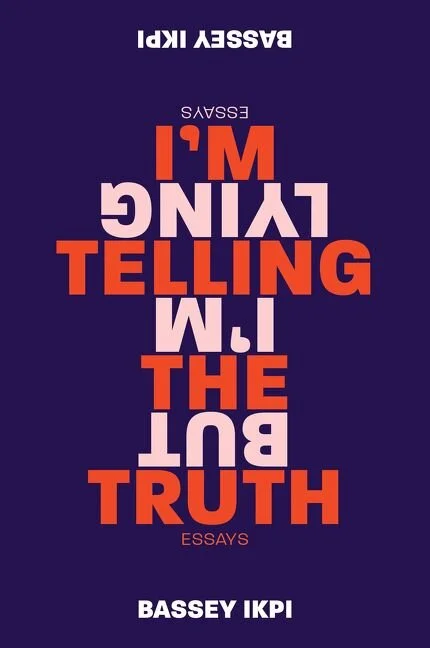
I’m Telling the Truth But I’m Lying by Bassey Ikpi (2019): Been a big debut year! And that includes Bassey Ikpi’s I’m Telling the Truth, which hit the NYT bestseller list deservedly. Ikpi’s background as a poet really does make this standout in the rhythm and cadence she builds. There’s momentum in these essays as well as a rawness to letting others see that bipolar disorder is not easily described. She puts you in her body so you can see why this feels frantic and uncontrollable…because it is. If you haven’t read this one I encourage you to do so, and take your time with it.
Ordinary Girls: Memoir by Jaquira Diaz (2019): Diaz’s debut memoir was much lauded before it even hit shelves. This is because Diaz’s essays have been making a mark for the impactful writing she’s built. As she said it’s a story she had to get out of her because it kept resurfacing and to be this brutally honest in nonfiction is no easy feat (also see Ikpi’s book above). Diaz’s work is to be applauded as well as her candidness in the telling.
Pet by Akwaeke Emezi (2019): National Book Award finalist Pet is truly unique. Angels and demons? Creatures born from blood and paint? BFFs forever? Count me in for all of this! Emezi and I had spoken about the importance of friendships in stories, especially for young readers, and how that’s often not showcased. This is a big part of Pet (as well as New Kid and Watch Us Rise) which I think is why I took to these titles so much. Wanting to be good and do good and protect those we love is inherent, who couldn’t relate to that? In Pet, Emezi raises the stakes yet never loses the emotional impact.
Dominicana by Angie Cruz (2019): A much hyped book online, offline, and on TV—hey GMA Book Club—Angie Cruz’s latest novel takes you through many emotions as Ana’s journey is not only across land and sea, but internal when she experiences marriage and love (not necessarily with the same person), the harshness of responsibility, and the toll of immigration. This is not a preachy novel at all, it’s a completely immersive one. I couldn’t put it down so I dare you to once you pick it up.
Heed the Hollow by Malcolm Tariq (2019): I happened to pick up Tariq’s debut at a BEA party; I am so glad I did. Blackness, queerness, masculinity, and so much more is encapsulated in this collection. It’s been put in comparison with Jericho Brown and Danez Smith, but Tariq really does hold his own as those poets do as well. Savor this one as it’s meant to be savored.
When Aidan Became a Brother written by Kyle Lukoff, illustrated by Kaylani Juanita (2019): I don’t put picture books on my lists enough, but I read several a year. This book was one I bought several copies of: one for myself and others for those I knew with little ones! The story is so lovely and deep. It’s the perfect way to introduce kids to understanding not to make assumptions and to allow children to be themselves without judgment or dismissal. I loved the family dynamic of how everyone learned together. A HUGE fave and a BIG recommendation.
The Girl Who Drank the Moon by Kelly Barnhill (2016): Yes, I am late to the Newbery party on this one. I had it in my stacks for a bit and am so glad I took a moment to read it. I loved Barnhill’s style in this one, how she went about narration, how she didn’t hold back in the difficulties of raising a child with (unlimited) powers, and the lengths that people in power will go to stay in power. At heart it’s a story about love in all ways and that pierces through the whole plot. I adored this book and it deserved the Newbery honor.
Red, White and Royal Blue by Casey McQuiston (2019): I read several romance books for a Publishers Weekly feature earlier this year and McQuiston’s debut, along with another listed below, were my FAVES! McQuiston’s is truly a rom-com through and through hitting all the notes with an initial love-hate turned love-love relationship between the First Son of the US and a Prince of England. Hijinks ensue when they’re thrust together for a PR conciliation tour and wow does this become one of the most heartwarming, funny, and deep romances I’ve had the opportunity to read. I need to get back into the genre. This one has been well hyped for a reason and I was one of those cheering it on.
Magical Negro by Morgan Parker (2019): I really really enjoyed Parker’s latest collection. The title alone had me sold but then I read it and woooo this is some deep stuff. Too much to encapsulate in the amount of space I have in this post. What I will say is she pulls no punches and holds nothing back. Her work not only fresh air but freshness. Don’t believe me? Read it for yourself.
Truly Madly Royally by Debbie Rigaud (2019): I read a bit of romance because I also got to read it for the Publishers Weekly feature on royal romance. I ended up gobbling it up in one evening because I just had to know how this would end. The coupling is great. The Black girl independence and her being desirable—by a prince by the way—is refreshing! The main character has goals, social justice goals! She doesn’t need a man but dagnabbit if she doesn’t deserve to be treated well. This is the type of book I want more young Black girls to read and I think Rigaud did an amazing job showcasing this.
The Old Drift by Namwali Serpell (2019): The Old Drift is one of the longest books I read this year and it’s worth it! What Serpell does is take us from dark times to dark times spanning a couple centuries. There are no boundaries and reality includes folklore that works incredibly well in the world she divined. Speaking to her more about putting Zambia at the forefront of a historical, contemporary, and futurist story it feels like parts of Africa should inherently be part of every futurism read.
New Kid by Jerry Craft (2019): I was lucky to get an advance copy of Jerry Craft’s latest book and it’s one of my faves this year for a reason: plenty of heart and humor which isn’t always easy to balance period, especially for young readers. Jerry mentioned he actively wanted to make something lighthearted that also spoke to what Black kids deal with when you’re “out of your element.” If you’re from NYC many of these jokes will land extra hard. I recommend this one to everyone’s kids! It’s been wracking up some great praise.
How to Sit by Tyrese Coleman (2018): As I said on Twitter I am upset I didn’t get to read this book when it first came out. A PEN Award finalist, deservedly, Coleman’s debut mixture of stories and essays (you don’t know which is which) is fascinating, relatable, and expertly crafted, as well as succinct! It’s a great study in how to play with form and subject. Add this to your shelves!
Severance by Ling Ma (2018): Ling Ma’s debut was one of the first books I’d read in 2019. I’d heard so much about it and usually when that happens I hedge on whether it’s really as good as everyone says—at least in my opinion. Turns out it was! Zombies or at least an apocalypse are my jam and the subtlety in this one was great. Not to mention the main character is a production editor, like myself, so I totally fell into the details of her mundane life while the world was actively going to hell. Don’t expect blood & gore but do expect to be creeped out.
Homie by Danez Smith (2020): As I keep saying, who knew I’d love a poem about trees?!? Smith’s latest quantifies them as a poet of multitudes! Language, geography, identity is all revealed throughout poems of relationships and growth, looking at the past and experiencing the present. These are sounding boards for deep observations along with clear dedications to the beauty of so much that encapsulates Blackness. The collection’s “real” name is My Nig, but out of respect, please refer to this as Homie and Homie alone.
Books I also thoroughly enjoyed this year include: Renee Watson & Ellen Hagan’s Watch Us Rise, Rion Amilcar Scott’s new collection The World Doesn’t Require You, Crystal Hana Kim’s If You Leave Me, Morgan Parker’s debut YA Who Put This Song On?, Long Live the Tribe of Fatherless Girls by TKira Madden, and Diversity Inc. by Pamela Newkirk.
I Am an Activist
When first told "You're an activist" I was very hesitant to take on this "title" but in examining the work I believe in and my role to it (be it large or small) realized that it's not unfair to be called one and I shouldn't shy away from being an activist.
Last year I became involved in two projects as the Diversity Debate waged on with BookCon's lack of diverse panelists seemed to be the straw that broke the camel's back for some. One, is We Need Diverse Books (a non-profit) and the other was co-creating a podcast to talk with minorities in publishing about the lack of minorities in publishing. (I believe you know what the name of that podcast is.) As I've done interviews and spoke with fellow writers and journalists about this that at one point someone said to me "You're an activist." And for a moment I said "Oh no, I just believe in [so on and some such]..." I don't know why I was hesitant to "accept" being called an activist. I think it may go hand in hand with why some may be hesitant to call themselves a feminist even today. The idea is that an activist or feminist or anyone with a "title" is militant. Hardcore. They are immovable in their beliefs and fit a physical stereotype for some. Some who do call themselves activists have proclaimed that I may not be one because my beliefs aren't as staunch or as narrow or as confining in instances.
So, in that moment I thought "I'm not an activist because I haven't marched, I haven't worn a shirt proclaiming myself one, I haven't done something extreme to show my activism (queue images of PETA's extremism)." But when speaking with the person interviewing me some more she said "You're doing something."
I couldn't disagree with that. I was doing something. I'm active in We Need Diverse Books and have specific roles for initiatives and day-to-day online presence. For Minorities in Publishing I do production, help find guests and create questions. I'm a planner through and through. I want to buy books by diverse artists and get their work out there. I meet people and put their events in my calendar so I can tweet and Instagram them to those who follow me. I donate diverse books to my library so that they're available. I buy diverse books. I take pictures of me buying diverse books to post and tag the publisher. I'm happy to interview or give advice or engage with anyone who wants to talk about publishing, writing, being a minority and being an artist, and so on. I want to engage in this conversation and get that conversation out in the public so it doesn't ever die. And it hasn't. You can steadily see material every week in various forms of media discussing that people want to see diversity.
In Bad Feminist Roxane Gay notes the idea of misnomers and how people with these "titles" are supposed to act or are assumed to be but that there's no right or wrong way to be a feminist if you believe, wholeheartedly, that women should be treated equally as men in all aspects of life. Simple as that.
I guess the interviewer was right to call me an activist. I've come to realize that once anyone believes in something and is willing to act on it that makes you, by nature, an activist. If you're not willing to sit and moan about the issues but get up and do your part, hire more people of color, get invested with organizations making something happen, encouraging more diversity to your bosses, asking allies to help in this, writing about it, posting about it, putting money behind diversity, speaking loudly to publishers about this and not being deterred when it seems to fall on deaf ears. These are aspects of someone being active. So don't let anyone tell you you're not an activist when you're working towards what you believe. And don't, like me, not feel you're doing enough. There's always more you could do. Donate more money. Donate more time. Give more of yourself in many ways but if you're doing so at all it's a credit to your beliefs. But in taking the small steps those lead to bigger ones. By me staying in an industry and working my butt off to be considered a highly employable person that adds numbers to an industry that does not have them. That one step lead to me being more vocal, more passionate, and more (say it with me now) active. Take it day by day but do make a move. Take that first step and see where it leads you.