Your Custom Text Here
Fave Reads of 2020 (#Bestof2020)
I had drafted this list in late 2020, but hadn’t gotten a chance to finish it. Better late than never, no? My 2020 fave reads included books by Danielle Evans, C. Pam Zhang, Akwaeke Emezi, Jerry Craft, Varian Johnson, Samantha Mabry, Natalia Sylvester, and more!
I did mean to publish this end of 2020/early 2021. I had 80% of it drafted and everything, y’all! As the saying goes: better late than never. So here are my faves of 2020.
#
From 2020 draft: I’m gonna say something similar that many have said this year: I had a hard time. With a lot of things but especially my tried & true love: reading. Jess Zimmerman at Electric Literature wrote a really good post about having a hard time reading due to the events of 2020 that are also bleeding into 2021 and will be in our psyche for a long while.
Now, I did start and stop many books. Some that I just didn’t have the bandwidth to finish due to content but were/are great reads and others I just wasn’t feeling and gave up on 50 or more pages in. If I had included those my tally would’ve been 50+, which is still less than my 62 aim for 2020. Perhaps next year I’ll go above and beyond my goal or perhaps I won’t and may get stymied from our current situation extending. Who knows? I do know that by not reading, notice the dearth of poetry on this list (sigh), really hampered my own creativity. I get SO much inspiration from arts and not being able to go to museums or live shows, socialize, or read steadily/daily impeded other ways I was absorbing methods for my own artistic expression. TV and film can do but so much. And a hope I have for 2021 is to not only be healthier by moving/exercising more in my current WFH life but to also carve out time to read at least 45 minutes a day to help get the mind percolating. Wish me luck! Now on to some of my favorite reads of 2020.
The Illness Lesson by Clare Beams (2020): I believe this may have been one of the first books I read start to finish in 2020 and I was surprised how much I enjoyed it. The premise had me intrigued and the writing dug the hooks in so that I couldn’t stop. I even wrote an essay about the themes in Illness Lesson because Beams’ prose really tapped into how much the world can beat you down and make you second guess yourself.
Infinite Country by Patricia Engel (2021): The writing is sparse but the emotions run high in what would become an immediate bestseller for Engel. This is the kind of book you can also learn from, tightly packed, clear details, sensory utilized consistently. So beautiful and not a “typical” immigration story as labeling it as such is not only inaccurate but a limitation. Really enjoyed this and can’t wait for more from Engel, and to read her backlist.
Tigers, Not Daughters by Samantha Mabry (2020): I am a huge fan of Mabry’s National Book Award longlisted YA novel All the Wind in the World. So I was pleasantly surprised when I received a copy of her latest book smack dab at the start of quarantine. This was one of the first books I read start to finish once quarantine was officially in play throughout the United States and Mabry did not disappoint! Mabry’s writing is always excellent and her sentences are to be savored. Get this one if you hadn’t already.
Class Act by Jerry Craft (2020): I wouldn’t dare compare the bestselling Class Act to the bestselling/award-winning New Kid because they stand solidly on their own. This was exactly the type of book I needed during quarantine. Graphic novels in general have, finally, been more sought out by major publishers. And I’m glad because books that combine humor, commentary, and put you at ease like this one are really great for kids, especially Black kids, to have when times are dreary.
Twins by Varian Johnson & Shannon Wright (2020): As I mentioned, I craved graphic novels as we headed into fall and several months in quarantine. I needed the visuals and “lighter” fare. So you’ll see a few on this list because I wanted more and more. I loved the sisterly bonds in Twins and how their love for each other, even as they were coming into their own never wavered.
A Is for Audra: Broadway’s Leading Ladies from A to Z by John Robert Allman and Peter Emmerich (2019): Emmerich’s illustrations really make this book for me, no offense to the wonderful rhyme from Allman, connecting each letter and person(s). It’s so vibrant and encapsulates the beauty of Broadway that I miss so much. Whether you’re a fan of Broadway or not I highly suggest this book as a celebration of women in the arts.
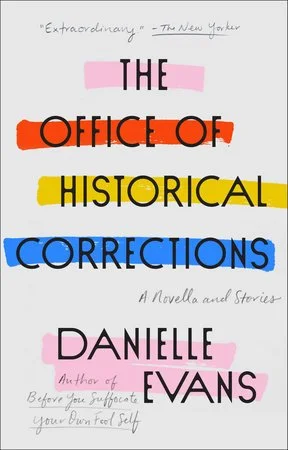
The Office of Historical Corrections by Danielle Evans (2020): I’m a big fan of short stories and wish I had been able to read more or had more on my radar. Either way, Evans’ latest was a great read utilizing humor and reality and, on occasion, turning the world on its head slightly to show how what we’re dealing with now has been part of a larger history. Read this and her debut Before You Suffocate Your Own Fool Self ASAP if you hadn’t already.
The Vanishing Half by Brit Bennett (2020): One of the biggest bestsellers of 2020, Bennett’s second novel was one everyone heard about. And it is a lovely and piercing read. Switching POVs over time—and you know I love multi-POV stories—as well as looking at passing and giving us a bit more context from a contemporary lens, though a good chunk of the story is in the past/recent past, outside the Harlem Renaissance tomes, Bennett’s look at two sister’s choices in how to live their lives doesn’t skirt hard truths.
Max & the Midknights by Lincoln Pierce (2019): Another graphic novel! And a fun one to a bestselling series from Pierce. Max and his merry friends are on a mission and it’s great to see a kind of Scooby Doo gang vibe in this medieval look at young people finding their destinies. Super cute and funny.
How Much of These Hills Is Gold by C. Pam Zhang (2020): Longlisted for the Booker Prize and shortlisted for the Center for Fiction First Novel Prize, Zhang’s debut is phenomenal and a great first read of 2020. I’m hoping we’ll see a worthy adaptation of this to the screen because Zhang’s storytelling is absolutely cinematic.
Running by Natalia Sylvester (2020): Sylvester’s YA debut is just the book we need. As the daughter of a conservative politician comes into her own politics and beliefs there’s a lot to traverse. You can love folx and also disagree but this is hard. How much have people sacrificed for other’s dreams and what about broaching hard conversations? In Running, there are no easy answers, which is why I love this book and what it provides for young readers who are more politically aware than I was at their age.
The Death of Vivek Oji by Akwaeke Emezi (2020): As always Emezi’s prose is pristine, taut, and emotionally charged. The beauty of Vivek Oji is the love for a character we know from the start will pass, but has such a bright life on the page as a corporeal being and in the after life.
Other enjoyable reads in 2020 include: Real Life by Brandon Taylor, Memorial by Bryan Washington, Ways to Make Sunshine by Renee Watson, and Stamped: Racism, Antiracism, and You by Jason Reynolds & Dr. Ibram X. Kendi.
Happy reading!
Powerful Short Fiction that Inspires
Since my main writing genre is short stories, and it's a form I try to perfect regularly, I wanted to share some of my favorites that have simply blown me away. Form, function, content, all of it works to make your jaw drop and wonder: How did they DO that? Hope you'll take a look at some (or really all) of the ones listed.
If you listen to recent reports short stories are apparently making a 'come back.' Collections are being nominated for more literary awards and winning them in instances as well. Most recently George Saunders collection Tenth of December was on multiple BEST lists last year. I don't think short fiction is making a resurgence per se, rather it's being acknowledged again as a powerful form of writing that is accessible, and, short. Short stories are what are often heavily studied in graduate programs and most often what is encouraged for critique in workshops because you can presumably review the whole thing in a session whereas a longer work would need a longer parsing for feedback and analysis. I'm entering year 7 of working on my linked short story collection and have been reading more short stories to get inspired by form but also by technique and the way the writer attacks characters and a subject. I see what works for me and what doesn't and the conciseness that can feel complete in a short story is something that does need to be studied and is helpful in all forms of writing.
So, here's a list of short fiction that bowled me over and that has definitely helped me to see the possibilities in the truncated form.
- "Brokeback Mountain" by Annie Proulx - If you compare the story to the movie (or vice versa) you'll feel like you've gotten a full glimpse of the life of Ennis Del Mar and Jack Twist. Proulx's story is a bit long at 30 or more pages (typeset) but it spans a whole romance/lifetime. In as much as a paragraph Proulx manages to capture the physical details, emotions, the entirety of a meeting with Ennis and Jack so that you as reader feel as though you've watched a drawn out scene. To me, this story is one of the pinnacle showcases of a beginning, middle, and end. It encapsulates both men's struggles. Proulx succinctly describes people and actions with details like "indian burn" to a moment of strife and that's all you need. Silence is a powerful component as is brutality and "Brokeback Mountain" explains so much without being overdrawn. In the acknowledgments of her collection Wyoming Stories, Proulx notes that short fiction is hard for her, yet looking at this story in particular it seems as though she's a master of the form barely breaking a sweat.
- "Cry, Cry, Cry" by Sherman Alexie - This story is hilarious with heart. The narrator reflects on his drug addicted cousin, watching the steady decline of a family member, and how he may have betrayed him. Alexie is great with brevity as well, providing snapshots as unique as "Shit, we got fake Bloods fake-fighting fake Crips. But they aren't brave or crazy enough to shoot at one another with real guns. No, they mostly yell out car windows. Fuckers are drive-by cursing." Mixed with the wit and wavering of a man not knowing what to do because he's expected to stand by his family out of obligation even when he knows it's bad for him and his soul. There's a connection to the voice and to the cousin from the first line and the pacing is perfect speedy yet languorous in the way you move through this world.
- "Hurt People" by Cote Smith (One Story Magazine) - This was one of the stories that stuck out to me when I subscribed to One Story and I still have it to this day. Surprisingly this was Cote's first publication. To me this was a perfect story, a dark story, and a well-told story of two young boys left to their own devices. The title itself elicits not-so-good thoughts and from the first lines of seeing the dank living circumstances of these boys and what type of person their mother is has you clinging to the hope that they'll be okay. Smith makes you care for these characters from the start which is immediately effective and masterful for an emerging writer. I'd urge you to look up this story and read it because it's a testament of how you can find your voice.
- "The Things They Carried" by Tim O'Brien - Whether you're an English major or not you've more than likely read this story or the entire collection by award-winning writer Tim O'Brien. The reason for this is because of the tie-in. The description of each character by what they take with them in a time of battle, what represents them and what doesn't. What keeps each character going and how it can weigh each man down in various ways of what they may lose, have lost, or are scared of losing. The clipped illustrations are the most powerful part of the anthology by O'Brien, being in the muck and crap of these men and knowing that some won't make it. It's a story that has so many brilliant pieces you can't just choose one. To me, "The Things They Carried" is like a crash course in short story writing. Each line necessary, each one providing so much weight and promise. It's freaking brilliant.
- "Good Country People" by Flannery O'Connor - O'Connor is considered one of the best writers of short stories. And it's understandable why. Her stories tend to be bleak, but real. Her characters are always alive and what I love most is her first lines, especially in this story of noting how a character had two methods of operation "forward and reverse." The briefest of descriptions that gives a reader everything they need to know about a person straight off the bat. I'd encourage you to read all of O'Connor's fiction because her stories rarely go where you expect them to, and while characters may surprise you it's never out of context of the world she's built.
- "The Pura Principle" by Junot Diaz - It's things like "The Four Horsefaces of the Apocalypse" that stick with you in a story like this one. Looking at the last months of his older brother's life the narrator notes a relationship of his brother and a woman who is downright toxic while also doing a balancing act of the brothers relationship and the mother/son relationship as people disappoint, just downright hurt one another, and deal with forgiveness knowing that time is short. Diaz's voice is distinct and confident and clear in all his prose and to me he just gets better and better.
- "You Never Knew How the Waters Ran So Cruel So Deep" by Roxane Gay - I noted that Gay's debut was one of my fave reads of last year. And one of the stories I pinpoint is this one, that is a list. With 3 columns titled Date, Item(s), and Price, Gay reflects on the lengths a man will go to find freedom and take his wife there and how much he loses. It starts off hopeful and as the reader sees the price and items the list keeper tracks it becomes more and more realistic of how hard this voyage for freedom will be and whether the relationships that seemed tight initial will hold by the time you reach the last row.
- "Great Rock and Roll Pauses" by Jennifer Egan - Another visual story that breaks the mold of story telling is short and really relies on a brevity of text and the graphics of a PowerPoint presentation to fully convey the relationships in a family that is troubled but not in trouble. The PPT is created by the teenage daughter who is witnessing it all and providing a journalistic play-by-play of her autistic brother, overworked father, and doting mother as they navigate how to get through a cruel world and the narrator sees how much weighs on her parents, her father specifically as a medical professional.
- "Speaking in Tongues" by ZZ Packer - "Brownies" is the Packer story often found on BEST lists but I think this one is a standout from her debut Drinking Coffee Elsewhere. It's one of the longer stories in the collection and to me the most roundabout. In it a teen girl named Tia in search of her mother believing the grass is greener on the other side. Of course some stuff ensues and she gets entrusted with prostitutes and older men and her own sexuality (and ignorance of it) before realizing that she was better off in a world dictated for her than the one she thought she could navigate. This is a story with a journey that the character goes on that is rough at times and realistic and would also have some tsk at Tia's actions yet understand them all the same. This piece feels utterly complete.
Those are just some of my suggestions. I have a few more story collections to read on my shelf (many in my to read queue) and many lit mags to delve into so that I can find and learn from more to come.
Your mission if you choose to accept it: NYC Midnight Short Story Challenge
The deadline for the first round of the NYC Midnight Short Story Challenge just ended and I (and others) had a doozy of a time completing our challenge on time and with confidence.
Yesterday at 11:59 pm the deadline for the first round of the NYC Midnight Short Story Challenge concluded. I and thousands of other writers toiled for eight days to successfully, or by the 11th hour mark, complete said challenge. There are various heats where writers are placed in and you must do your best. Genres range from comedy to historical to political satire to horror to suspense to romance and so on. My designation was romantic comedy and the subject I had to write about was 'a first impression.' When I first saw my heat I was a bit disappointed, but then figured this wouldn't be so hard after all. I write about relationships and have snippets of comedy in said pieces so how could I fail?
Well, day one brought me several ideas I scribed down and for more than two hours I started an idea I thought would work. But after said two hours (and those following me on Twitter can attest) I was not feeling said story and started another one. When this second piece didn't gel I took a break and did a virus scan on my computer and watched television. (Haha the perfect procrastination method.) After all was said and done I thought about taking snippets from a novella I wrote as my graduate school thesis and cut and paste some pieces to look at later.
Day two had me looking at the novella and creating a situation with two characters from this piece who had a romantic flirtation going on. Again, a few hours went into working on said piece and again there was no love for it. Yet another draft put aside.
Day three had me start something completely different this was draft four if memory serves and after a few pages this wasn't working either.
Now, by day four I had given up and decided to just wallow in sugar and Modern Familyand get some rest. I'd been carbo-loading all week so energy was low as was morale.
Day five had me consider my options as things were swiftly coming to a close. Reading and connecting and commiserating with other challengers who were still attempting to finish a draft let alone piece together their own ideas I realized that while I had great hopes of getting to the second round and showing off my, what in my mind are, superb writing skills I may just have to get used to the fact that what I submit may not be something I'm happy with. It's kind of like being all those people in the marathon who prepare for it knowing they won't win but just need to finish. Well, on days six and seven consider me on of them. Those people who run across the finish line by the time the television cameras stop paying attention to who passes that big ING (or whoever sponsored the event) arch.
The last day I woke up with an idea. Something I figured would work and I actually liked. I wrote said piece in a couple of hours and was over the limit. After letting it marinate for another couple of hours I cut it down to the requisite 2500 words then submitted. After that I rewarded myself by watching Paranormal Activity on Netflix.
Well, I was not happy with what I submitted. I knew it was subpar and not all that funny or romantic but at least was in the realm of what I was designated to do. I tweeted with a few other participants--cool people might I add--and realized that we probably aren't all too happy with our end result. Never having been in a writing challenge I knew it'd be difficult to create something based on specific designations. Working with prompts I've sometimes gotten my best work, I think, but being told what genre and subject to write about narrows down the field quite a bit and forces us writers to get out of our comfort zones.
I'm an avid watcher of romantic comedies and appreciate ones that really hit the nail on the head. As a writer of dramatic events I realized romantic comedy isn't that far off from drama. You take a dramatic situation and add some funny elements. Does it have to be funny throughout? Not necessarily, but it has to make the reader chuckle more than cry. I think I definitely came to appreciate those who consistently take to these challenges and also the thought process overall. When I write I tend to take an idea and just scribe and scribe and scribe and see what happens. It'll flow eventually or it won't. If it doesn't flow than it goes to the writing graveyard, that place where you may save items you'll never look at again or may delete into that nice trash can icon. But when it does flow man you get something going! You ask others to look and let you know what they think if it works and soon you want the whole public to see it! When it flows you love it and want to nurture it like a child until it flourishes into that piece of art you want it to be. Sometimes it takes days, weeks, in my case months if not years. But in the form of the NYC Midnight challenge you get a little over a week if not less.
I look forward to the feedback I'll receive for this challenge and think that the story I submitted is one I may go back to and try to tighten because I do like it. At best it's the stepchild I may consider nurturing as my own if not the one I gave birth to and feel a strong affinity for. So, we'll see. I know I'm not headed to the second round for sure, but look forward to other challenges and seeing how I may progress or stay still. We'll see what the genre fairy deems fit to give me next time around.
Good luck to everybody and I can't wait to see what goes to round 2!