
BLOG
#LA14SCBWI, L.A., Emerging Voices, and Inspiration
SCBWI Summer Conference in LA where I got to meet writers, illustrators, agents, and editors in a sea of welcoming faces and artists all pursuing work we love. These artist communities can be great and SCBWI was so reinvigorating I cannot wait to go back.
It seems a long time since the Emerging Voices Award was announced (8+ months to be exact). So, while I didn't forget about SCBWI's Summer Conference I was so inundated with life (moving, finishing freelance deadlines, residency applications, more freelance work, unpacking still, and somewhat noisy upstairs neighbors) it's easy to forget that such an honor was bestowed and that the prize was about to come to fruition. A week before the conference Dow Phumiruk and I received an email from the founder of the Emerging Voices Award Sue Ganz-Schmitt about having lunch and we were bowled over. It was getting really real now! I was about to head to a conference I had heard so much about but was a newbie at. How would this all go down? I've been to Book Expo and other more focused and smaller conferences but SCBWI, this was a big deal.
Travels to L.A. were fine but the L.A. traffic was something I experienced firsthand even at 8pm west coast time. From the time I figured out the shuttle situation to getting a shuttle and then getting to my hotel it was about 2 hours. I was tired. Technically it was 3 hours ahead so really 1am and not 10pm even though my watch and the clocks around me said different. I was hungry (airlines don't feed you for 6 hour flights!) and I was hot. Humidity came to L.A. But I got to my hotel and was given a super nice room and then plopped myself down in bed and attempted sleep for a big first day.
Sleep was an enigma while in California. I continued waking up in the middle of the night because my body said "Hey! It's 7am get up!" And my mind said "Shut up body!" Anywho, Friday was the first day, registration day and the schedule was packed from 8:30am to 8:30pm. SCBWI had you covered. Free tea, coffee, and hot cocoa to start. As I went on line Dow ran up to me and we embraced! It was SO good to see a familiar face and to finally see that lovely face in person. Dow and I sat and talked and it was like we'd known each other for years.
Afterwards executive director Lin Oliver started things off. Lin's speeches throughout were light-hearted and warm reminding us that at any stage of your career there'll be struggles and successes and sometimes it seems completely insane that we pursue art when there's no guarantee of monetary compensation or an audience but that we continue to pursue it because we love it and can't live without it. As the days went on many established authors/illustrators would reiterate this to a packed house of over 1200 attendees that "You are not alone" "We're in this together" and "Never give up."

Attendees of the conference have the option to request a manuscript consult (for an additional fee) and intensives on Monday after the main conference has ended (also an additional fee). As winners of the Emerging Voices award Dow and I had these included with our all-expense paid trip. So, you can say I was a teensy bit spoiled going to SCBWI and being able to take advantage of everything offered. Just a tad bit. My manuscript consult would be on the first day and I'd be the first meeting with...Laura Rennert! Don't worry, y'all, I played it cool. Like Fonzie cool. I did not freak out when I learned this. I did internally but my external self was composed.
Laura is Maggie Stiefvater's agent and I love Maggie's work. Laura was also my dream agent when I was making a list of people to submit to. And in meeting Laura and getting her feedback and encouragement I found that she's an amazingly kind and generous person. Her feedback was constructive and incredibly helpful and at no point condescending. She really can see potential in work and point out very specific points to look out for. And the next day when we met again on the coffee/tea line she initiated convo and was quite welcoming. I know us as artists, especially aspiring/emerging ones, look at people in the industry as untouchable but Laura continued to disprove that myth by being very outgoing. Even on panels many said "She's so nice! She seems like she'll fight for her authors." And that's the type of agent you'd want.
Dow and I also got to meet with Sue Ganz-Schmitt who kindly treated us to lunch. And then I introduced her to the French macaron which she loved so I feel my work is done here. Friday included a great panel lead by We Need Diverse Books was on Friday where authors Lamar Giles, Linda Sue Park, Meg Medina, and Sharon Flake, along with agent Adriana Dominguez furthered the discussion of the need for diversity in literature and for attendees to sit and consider what's been said. Afterwards was the PAL signing & wine and cheese mixer where SCBWI members with books can sell them and we can get autographs. Dow and I got a copy of Sue's new book with Chronicle Planet Kindergarten. I adore this book. So cute and a wonderful tale, with illustration that perfectly captures Sue's voice. After that I did yoga that they offer on Friday and Sunday which is a nice time to meditate and get away and exercise. Lori Snyder lead it to some nice jams and afterward I was relaxed and ready for bed.
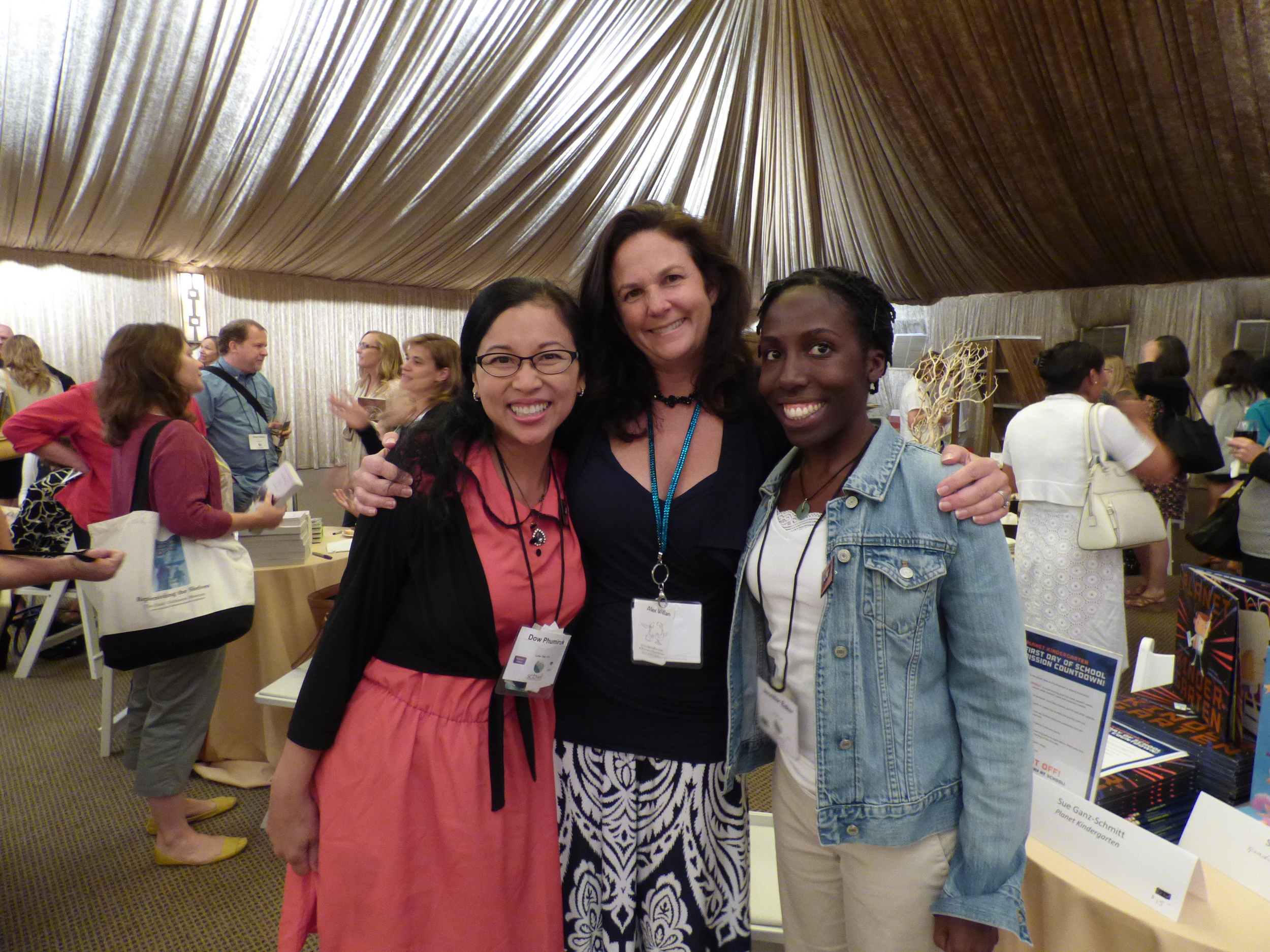

Saturday proved to be getting things into high gear and I was still on partial sleep. My friend Malaika and I went out for breakfast and she introduced me to The Griddle Cafe. I heard editor Justin Chanda's state of the state of the industry that publishing is here to stay and will continue to go through ebbs and flows and reinventions. Workshops (or talks) take place in the morning after keynotes and in the afternoon with additional chats/keynotes inserted in between to give you time to stretch your legs.
At this point is when I'd suggest taking breaks. Admittedly I missed a couple panels I would've liked to see to hang out with friends I haven't seen in years and that's okay. You can't do it all and sometimes if you do you may find yourself a bit overwhelmed and stifled being in a conference hall for 3-4 days straight. So seeing West Hollywood and Beverly Hills and eateries my friends were dying to show me proved a nice reprieve from the constancy of thinking and talking about the industry and allowed me to attend sessions renewed and wide-eyed and ready to engage with others, especially at the We Need Diverse Books poolside diversity chat where I got to meet Cindy Pon in person!

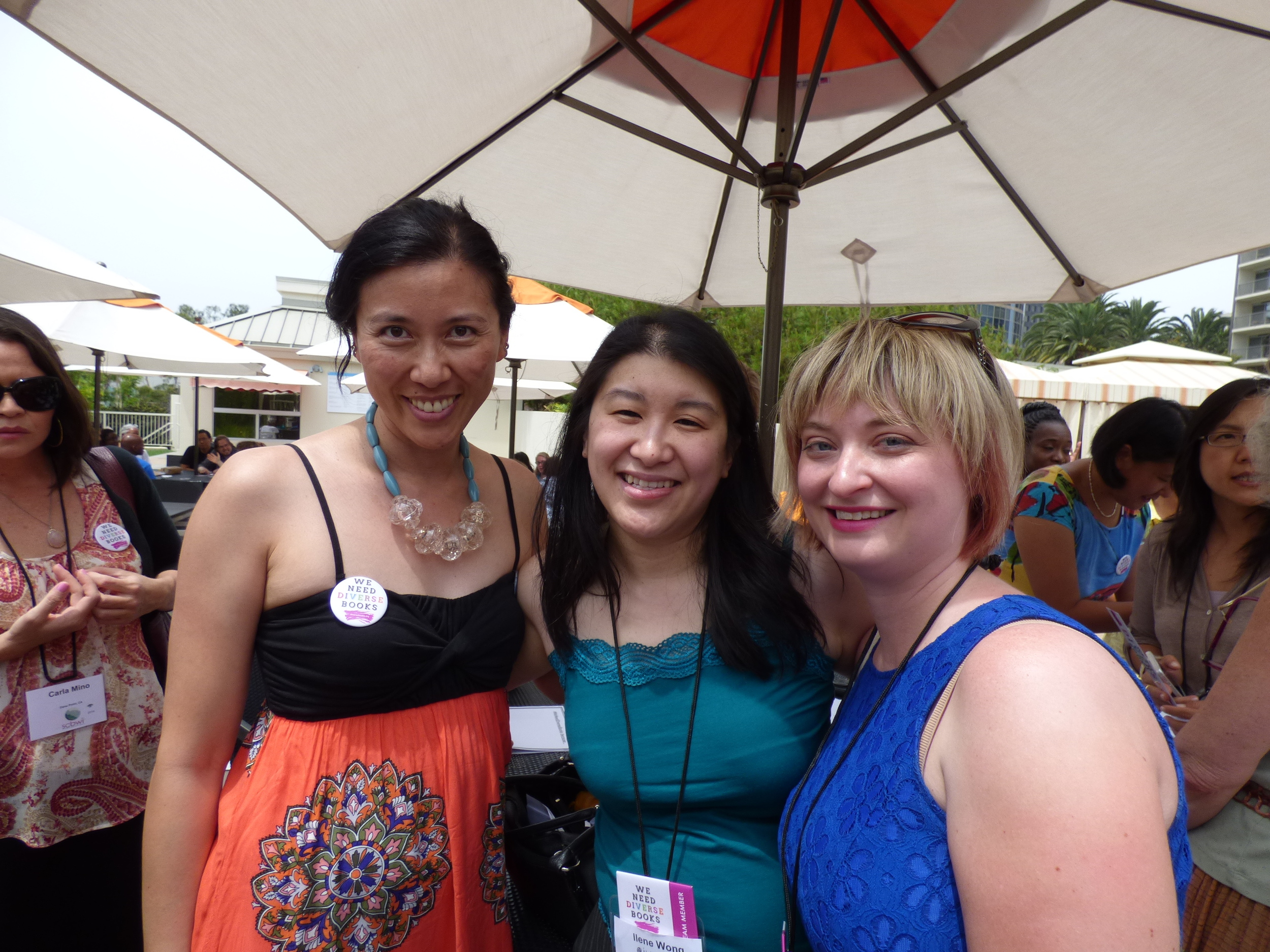
Saturday evening brought party time with the Poolside Gala that was also Tomie Depaola's 80th Birthday Bash. Unfortunately Tomie couldn't attend because he got sick before the conference but that didn't stop the celebration or well wishes for Tomie whatsoever. I got into the party in time for when people broke it down and also the costume parade that Sue and Dow entered. (Congrats Dow on getting 3rd place for the Leaning Tower of Pisa costume! Handmade by the way.)

Sunday was a day that brought some anticipation because Dow and I would be recognized for the Emerging Voices award at the Golden Kite Luncheon where other published authors were receiving awards for their books in categories of picture book, nonfiction, and fiction, as well as humor.
The main room for keynotes was turned into an awards hall with tables and us being served by waiters in fancy suits. Dow and I got to sit in front in the reserved section with other honorees and would be brought onstage for applause and pictures. We sat with Sue and her husband Martin, but also Lisa Yee, Arthur Levine, Bill Konigsberg and his super cool/friendly husband, and EB Lewis. And we were sitting right next to Judy Blume! Judy Blume was like Meryl Streep where everyone who went on stage gaped at her and said "I love you!" at some point. She's super sweet and friendly too so that basically makes it so much easier to love her.
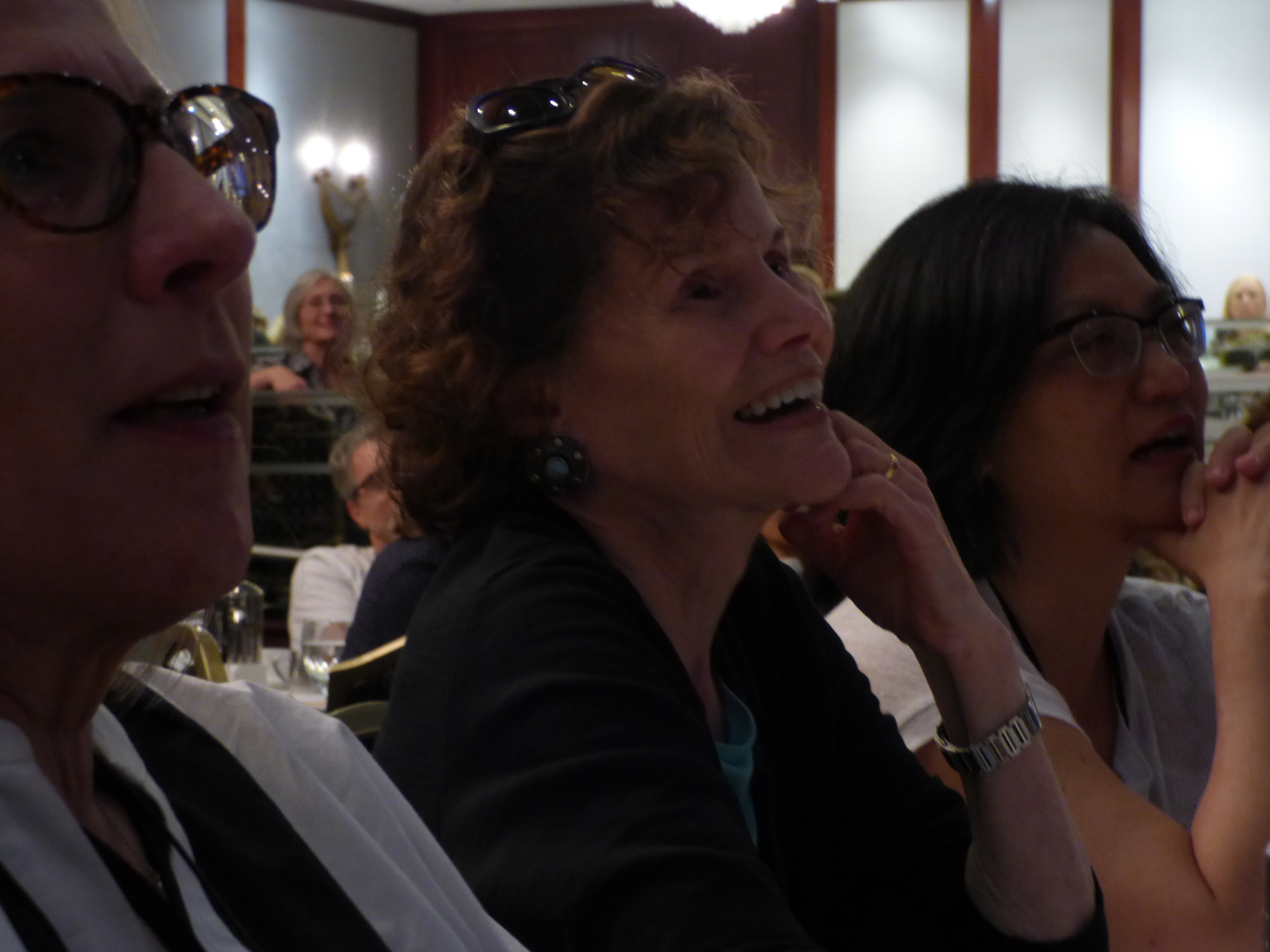
As awards were announced and other honorees got stood up to receive applause Dow and I heard our names and got a bit verklempt as some would say. My mind was on simply not tripping up the stairs or on cords or anything. Big smile, arms around Dow and Martin for the picture, huge applause, a hug with Sue on stage, down the steps. No tripping! It was surreal and went by quickly but was also a moment Dow and I realized must be how other literary events feel like when you get honored for your work and people see your face and for a moment, if fleeting, you feel like your work has reached a milestone and you simply have to keep going.
As the honorees went up each said something funny, inspirational, and all-around appreciative of SCBWI and the chance to share their work and find an audience. Afterwards I was approached by two attendees. One an older Black female whose hand I gently took in my own. She shook a bit but had a smile as big as mine as she said "I wanted to make sure and say congratulations. We're counting on you." It's a lot to take in when someone says that to you and you feel the weight and honor of it. My work will always encapsulate diversity, I am an African American and my hometown is one of the biggest mixed salads of culture in the world. I'm honored to be from NYC and it makes sense, to me, that my work will always reflect the diversity of the life I've lived and I want to share that with others. "We're counting on you," even hearing it from one woman means that I understand that my work matters even for one person at one time it matters.
Now, I wasn't going around thinking I was a big deal at all but I was flying high yet also a tad bit bummed because tomorrow I'd be flying home and deal with more jetlag and not being fed on planes and not be in the vicinity of so much encouragement and understanding of other artists. To get congrats from Sharon Flake and Linda Sue Park and Bill Konigsberg's husband and other SCBWI attendees who wanted to know more about my writing was just...wow. So uplifting I can't even tell you.
Monday! Time to pack. Time to do my AM intensive and unfortunately miss the PM one with Maggie (Thanks time zones) and then head home for work in the early morn. Awesome. But first, first ten pages intensive with Kelly Sonnack!
Funny enough when I came in the lady taking the tickets proclaimed "You won that award!" to faces turning around to face me. Wow, slight celeb status. Thanks. :-) Kelly started off the intensive reading the first page of several books she'd recommend in YA, MG, and picture book genres for us to get a sense of how to take hold. She broke down what we as writers should be seeking to do in these first pages to hook not only an agent but readers. After about 30 or 40 minutes she allowed us to read the first page or more of our work and have us all give immediate feedback. Me not being shy I raised my hand first to read from a new YA suspense I'm working on. I read the first page and got very intrigued questions and was told by Kelly I hit all the points for the most part and could rejigger a couple things but that she (and everyone in the intensive agreed) would continue to read after the first page and a half. I even got an applause. Such a nice way to leave SCBWI.
And that "sums" up my trip (Yeah, in 2000 words so far but it was 4 days!). I am so grateful to Sue and Martin for creating the Emerging Voices Award and for SCBWI believing in diversity and it's need in more books across the board. I am grateful to Lin Oliver, Sara Ruttenberg, and Kim Turrisi for organizing such a fantastic conference that was well organized and on point. I am grateful for my peers and everyone who said a kind word to me at SCBWI and for Pam, Marquita, Dow, Malaika, Susan, and Erica to see them at SCBWI and LA and to remind myself how much I am surrounded by talent and kindness and how excited I am for our journeys as artists and to share our stories with others. So, I hope to go back to SCBWI next year and maybe every year after that. I'd encourage you to become a member of this wonderfully open society and to take your work seriously and know that even though you may be creating alone that you are definitely not.
#ArtistTherapy: Filling a Niche & Expectation
There's an expectation, a niche, in the artistic world and sometimes you fill it because you love it and often times you may not. What it comes down to is your passion and not filling others' expectations of what you "should" be creating.
"I create [insert material/genre], but I'm expected to create this..." A few weeks ago, I sat down to catch up with a musician/composer friend I met at a writers conference a few years back. During our chat, both of us being female, African American artists, expectation of what we create arose. My friend is a tremendously talented singer & songwriter and she is writing songs that would fit more in the "folk" realm. But, sadly, being African American this is not what is "expected" of her. Just like I get stares when I tell people my favorite genre of music is "alternative" or "rock." The expectation is that I "should" presumably enjoy hip hop, rap or R&B primarily.
My writing doesn't always deal with race. Not every story, essay, article, or blog post will specifically and indefinitely refer to the "struggle" of people of color. But that isn't to say that my work will never reference it either. If racism, sexism, or any -ism is relevant to the larger story I want to tell, you bet your a** it will appear and hopefully enlighten and entertain.
There's been and will continue to be discussion on the race issue. And perhaps this is the post that finally brings this to light. I have friends struggling selling pieces because the race issue isn't pertinent enough or because it makes those of other races feel "guilty" or because it brings up a history that people already "know" about but can't truly comprehend in this digital age. There's a struggle to create what you want to create because there are gatekeepers with expectations that your work should be "more" this or "less" that and it may not at all fit in with your perception or overall vision for the work.
The stories I am working on about an interracial family do not all stem from racism. For some characters it is a very real aspect of their day to day having grown up before and during the Civil Rights movement. For other characters it's more about identity which may be attributed to race but is not the sole proponent. For some pieces its all about familial relationships, strained and suffering. For some it's about romantic ones. But in the end, for me, not every piece I write will be filled with characters that are stereotypically this or going through a constant "struggle" of being a particular race. I want to create people who are real, living beings and not seen as other but seen as like. And it is in this vain that it can be hard to stay true to your art when the niche to be filled is something that's been done and has proven profitable, something that is assumed, something that is not at all like what you planned your piece to be but the expectation of what a specific group of peoples life is like.
For my friend it's been hard for her to break out when she's not pop, she's folk, she's voice and guitar and minimal. Yet the expectation & what is popular is that she should be Rihanna or Nikki Minaj or whomever is the flavor of the month and will sell. These artists and what they create is not her. And she emphasized this to me. She is not overly aware of her Blackness, but believe me we are aware. And perhaps because of this day and age we do not have it in us to speak to that specificity at this particular time and want to speak more to the point of being someone who has been heartbroken, insecure, distracted, not where they thought they'd be, scared, in love, and so on. These universal ties that can bring us closer to others across the board would be more helpful than ever pigeonholing ourselves over expectations. People are tired of books about homosexuals coming out but what about ones about homosexuals living life? What about books of ethnic characters being superheroes? What about music by the likes of POD a Latino band playing Christian/Hard rock? What about not fitting into a niche and creating one that fits you?
It all comes back to the whole idea of persistence, and also the larger scope of there being a demand. But you have to create to fill a demand that isn't even there. So make what you love. Make what fits in with who you are. And forget what others are creating or what the expectation is. It's about being true to yourself and your art at the end of the day because you are the sole representative for it in whatever form it comes in.
#ArtistTherapy: Subjectivity Can Be Hard to Understand
While I've always known art was subjective I didn't truly realize how much so until I started querying agents and saw that word come up repeatedly in form responses or feedback. The world is subjective and you have to figure out where you fit in but also why you produce the art you do.
"Maybe I'm not your audience..." You've heard this or said it. Let's not argue, I'm sure you have.
This is subjectivity. The thing that makes people wonder why books that are lauded get so much praise when he/she may think "It's alright." Subjectivity is what allows some books to be critically praised and not sell well and vice versa. It's why many things aren't made public and why others are. And subjectivity is not an easy thing to come to terms with as an artist.
Say you've workshopped a piece of writing or got feedback on an illustration or arrangement that was helpful. You revised as far as you could and ultimately got the "okay" from those whose opinion you trust. The work feels finished. So you start sending it out to others for publication or showings/shows (what some of us will call 'validation') and you get back 'no's. And not necessarily concrete ones either. You are not necessarily getting back reasons for why this isn't working or being accepted, but more so you're seeing a trend of "not for me/us" or "I can't champion this the way I'd want" or "didn't grab me" and with that "perhaps someone else may feel differently as this is a subjective business."
Now, you may hear/read this more in the writing world than others but subjectivity applies in all things. Where some like romance novels others like action, where some like their thrillers dark some like them PG-13 with some humor. Where people like sarcasm others like friendly humor and so on. We have our tastes and in all honesty nothing is universal. There is no universally amazing film, book, song, painting. Yes, the Mona Lisa is loved and revered my many. Shakespeare is a man whose work will more than likely always be taught in schools and honored and adapted. And don't even get me started on The Beatles or the Jackson 5.
My point is when I submit work I have gotten the "not for me/us" "not our market" "someone may feel differently" "I like it but..." and where you are attempting to champion it it seems as though you're getting sucker punched repeatedly when there's a non-distinctive reason for the rejection. But why you may be wondering and hell I do wonder it myself. As artists we're used to getting concrete feedback for how to improve, so what is this "subjectivity" business? What do you mean you can't tell me why? From one end it is hard to comprehend. You've put months, years, decades into this work and it's good. You know it's good. It's won contests, gotten praise, portions may have appeared elsewhere, so why is the whole not working? And it comes back down to the S-word and also the L-word (love). It wasn't until I became an even more voracious reader that I would sort books I read into categories such as: like but didn't love, LOVED--tell everyone(!), didn't like, okay and I see the merits of it, and so on. When you absorb as much work as you're producing you can see that there's a precedent and that even you do it as well. If given a book you liked would you champion it? Nope? Well then you can't ask someone else to either.
I'm not going to get into the other aspects like the monetary or the "trends" or otherwise. I'm looking at this as someone who's gotten (and will get more) rejection but who has also had responses of "loved this." I'm here to tell you that subjectivity will be something that keeps you back but will also push you forward. The phrase "there's something for everyone" is not moot, it's real. People fall in love with new work all the time.
So we come back to the L-word. Do you love it? Because that's what matters. I understand, believe me I do, that putting time and effort into something you love but others don't seem to may feel like a waste. It may seem like your time is not being put to good use but it is. Truly it is. Author Maggie Stiefvater revisited a work she had an idea for and attempted but it did not work at the time. Years later and with success in other works she pursued it again because, you got it, she loved the idea and also felt better equipped to make it something that worked. There are authors who shelve that first book (or books) and sell their third, fourth, or fifth and afterwards whip those other ones out and say, "Hey! Happen to have these too. Wanna look?"
Subjectivity can be a somewhat ugly word or a disheartening one to an artist. But it doesn't mean you work doesn't have merit, it simply means you have to push harder to find a home for it. And maybe the home isn't clear but the progress and work put into it is because when you next create perhaps subjectivity won't be what you see in responses but "yes," a resounding "yes."
#BEA14 & #TheBookCon: Not Such a Great Marriage of Events
It's Book Expo of America time! And that means books galore, publishing panels, events, events, events. It's a busy time for those attending and working it and while there were many pluses from years past there were also hiccups as well with the creation of BookCon.
Post-Memorial Day weekend people in the publishing/book industry had to mentally and physically prepare to go into Jacob Javits Center with guns blazing for Book Expo of America. Book Expo took place from May 28th to May 31st, with the exhibition floor opening on May 29th for signings and events. This year I took a much more mellow approach than in previous years having worked the event and attended. I have to say this experience allowed me to get out of tunnel vision and get into the show more widely. I'd recommend this to anyone. Scope out the authors you're really interested in seeing or getting books from and go from there to panels or reviewing the exhibitors and what they're doing. Add that in by going to sit-down lunches with former coworkers and friends, viewing the entirety of the floor, attending panels all made it a much more full experience than standing in line after line after line or running all around trying to make attendees happy.
Let's talk scale. I've been going to Book Expo every year that it's been in NYC since 2003. This probably accumulates to six or seven times and in the span of one decade it has changed considerably, and, in some aspects, for the better. The single exhibition floor was put in place a few years back and serves as a better way to move from booth to signing to panels on the main stages and so on rather than splitting the difference.
The panels, I must say, were a bit disjointed to me in that they seemed very cursory. Understandably one has 50-80 minutes to educate a crowd on a specific topic and the info is really industry specific, however, in panels such as How to Market Authors Who are Inaccessible or How to Better Tag your Metadata, if you're already familiar with this and do it in your day-to-day job you more than likely learned nothing too groundbreaking. Yet, for self-published authors, as it was good to see, this is information that can be significant to how to better establish your platform and understand what's being done on the production side of your book.
Some more technical events happened on Midtown Stage and I was glad to go to one with a co-worker with the head of Adobe InDesign on updates on how to utilize this software to make ePub files in the new Creative Cloud. More technical aspects of the digital world may have you better suited to register for IDPF which often runs a day or so before BEA in Javits on the lower level.
Pavilions can be hit or miss. One can assume that many of the digital vendors are in the Digital Zone when others are spread out in other areas of the exhibit hall. Same can be said for university presses (whose appearances in booths at BEA have been steadily dwindling due to budgets and wondering if the reach is as wide as it is for trade). Vanity presses like Month9Books made appearances on BookCon day but there were many smaller booths that weren't around or were overwhelmed by lines winding through and around their booths from some of the major trade publishers.


When we discuss organization during the event, publishers seem to have gotten hip to the ticket craze. Even in-booth signings have tickets requiring this traded in for a signed book/blad/ARC. Learning from the overwhelming response to Rainbow Rowell's appearance last year Macmillan had tickets for those who wanted a signed copy before her signing guaranteeing you a book and hopefully a shorter wait. Random House had initiated tickets last year and signs held high with author pictures in addition to the listed time of their signings for easy location and no drama or worries.
The autograph area is always somewhat of a zoo, especially for big names like Libba Bray, Ann M. Martin, RL Stine, Holly Black, Maggie Stiefvater, and others (yes, those are all YA authors and their lines were insane).
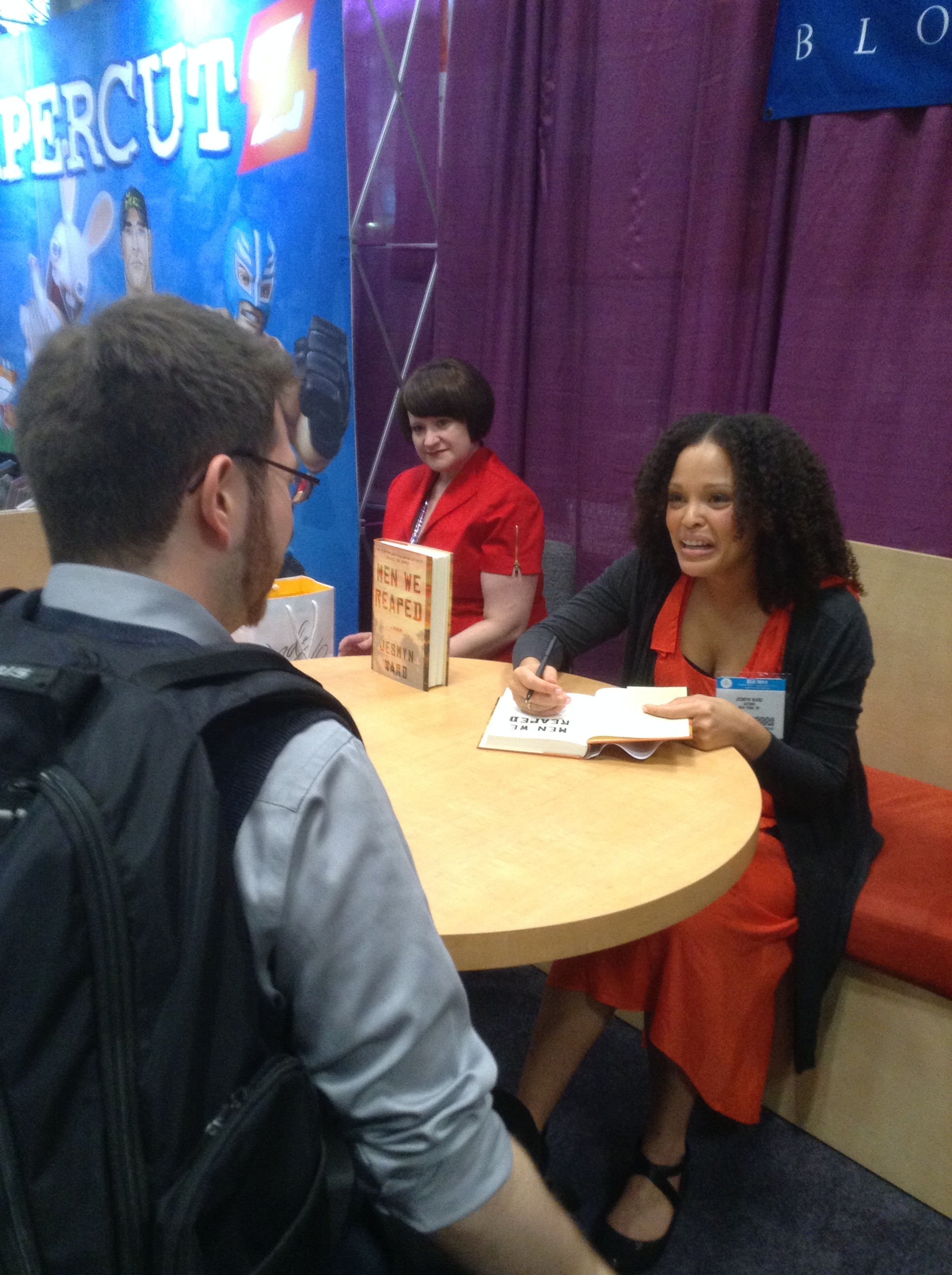
What else is of note is that more and more Book Expo seems to host additional celebrities in conjunction with established authors. Celebrities jumping into children's books or picture books, cookbooks, and memoir. Anjelica Huston and Neil Patrick Harris signed blads of their upcoming memoirs. Debi Mazar signed cookbooks with her husband Gabriele Corcos thanks to the popularity of their Cooking Channel show Extra Virgin. Dominique Ansel signed recipe cards and offered chocolatey treats for an ever-growing line for his "secrets" to his desserts. And Jason Segel co-authored a middle grade series with author Kirsten Miller for Nightmares a book based on a screenplay he wrote when he was 21. But the celebrities don't get all the love.

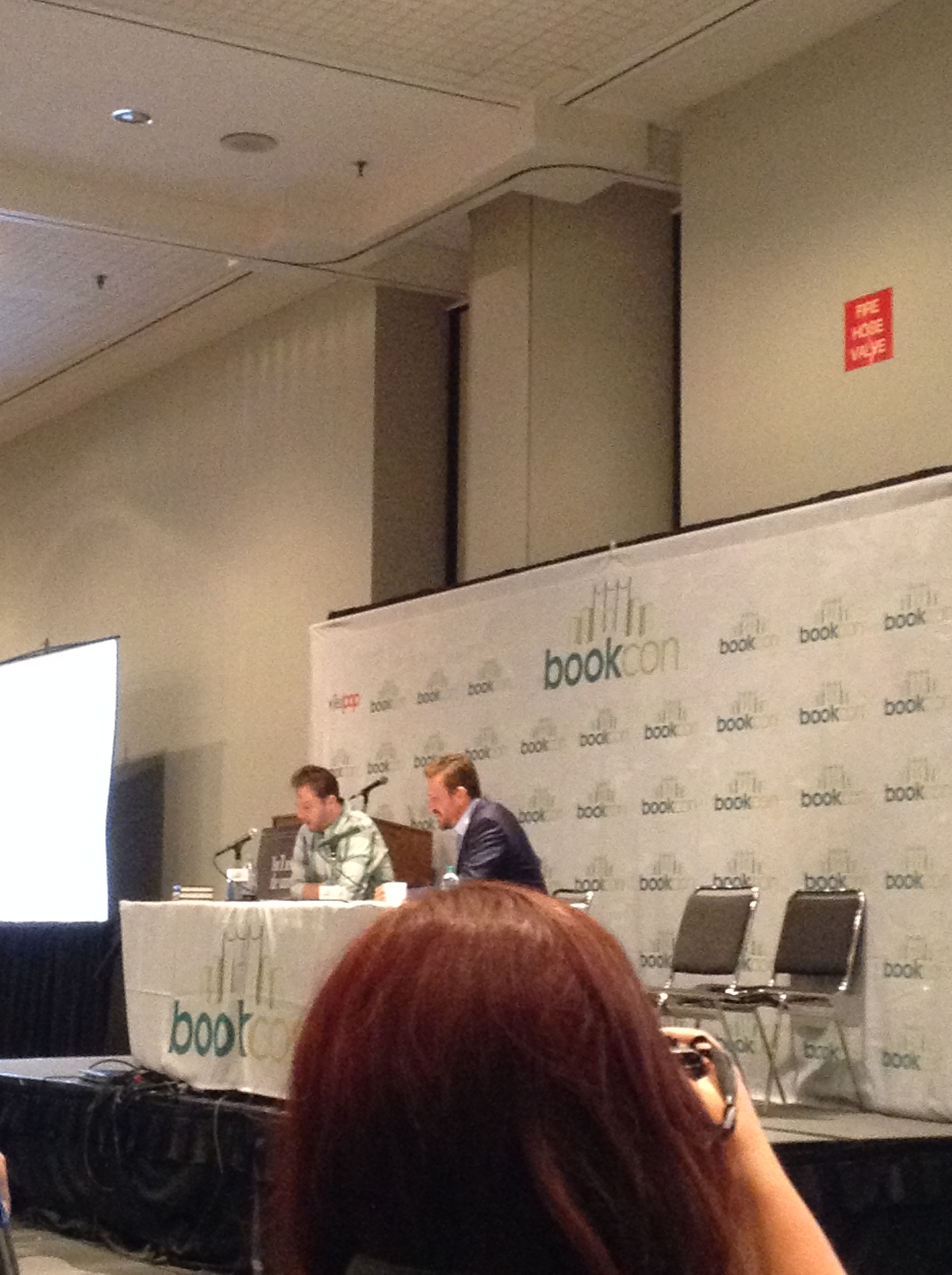
E. Lockhart's new novel We Were Liars cause chaos among bloggers and teens alike with the continued hype of this book. Ann M. Martin's return with a new series Rain/Reign had people of all ages lining up for a chance to see her. Carl Hiassan and David Mitchell, James Patterson and James Frey, Sylvia Day and so on.
While Book Expo is industry specific with bloggers, librarians, booksellers, distributors, media, and others in the industry attending it does reflect the overall excitement and intrigue of an industry that aims to please it's best customers.
This year BEA's Power Reader Day became BookCon. Sadly, BookCon was not worth the hype and what anyone who attended last year as a Power Reader remembers was stripped from BookCon customers.
BookCon (formerly Power Reader Day) opened BEA up to those who weren't in the industry but who were book lovers. It allowed them to get access to an event they wouldn't have been able to see and get freebies and learn more in the same breath. BookCon tix were for one day, May 31st which overlapped with the final day of BEA and they were $30 for adults, $5 for kids. And apparently, there was no cap on how many tickets were sold or how many attendees could fit into Javits.
But let me back up. Javits for BookCon was not the same as Javits for BEA attendees like myself. Oh no, BookCon was cordoned off into a section a bit over a third of the size of the entirety of Javits' main exhibition hall. Many publishers/exhibitors were cut off from BookCon and many, many more BookCon participants were not able to see the rest of BEA. Bulky security in red shirts and black pants loomed over those areas that drew a line between the two conventions. Yes, we were segregated.
I don't know if all exhibitors were made aware of this or not but of those that weren't they seemed surprised, especially with so many families around and potential for sales. In terms of the scope almost 10,000 (or more if reports get solidified) people came to BookCon and in a space significantly smaller than all of BEA this proved a hard maze to navigate through. And it most certainly felt like a safety hazard.
Lines for panels happening in conjunction with uPublishU were not lines but clusters of people positioned in front of a door to try and guarantee them a seat. Others at the Main Event Stage wove through the ground floor and around the registration desks. The line for BookCon attendees to get in was reminiscent of several cronut lines back-to-back. It was insane and the separation to get tickets for autographs in the autograph area was not clear.
As a BEA attendee I had access to BookCon but it did not go the opposite way, which caused much concern and irritation among those who originally purchased a one-day BEA ticket to have that magically changed to this new thing called "BookCon." Friends of mine in attendance for BookCon only insisted that they would not return to BookCon as is. And that they barely got anything due to the numerous lines making it hard to even browse. Another issue seemed to be that there were more publishers selling things rather than giving them away. In the PW BEA Edition organizers wanted to see how BookCon fared in order to decide if they'll have BEA/BookCon happen over 4 days with BEA going from May 28-30 and then BookCon from May 30-31. This, I imagine, would give anyone working these days in both areas reasons to curl up and rock themselves back to sanity.
There are many improvements to be made for BookCon and one I strongly suggest is not having it overlap with BEA if it means cordoning off an area for the attendees and scrunching so many people into a small(er) space. Also, monitor sales! Exhibitor attendance for BEA has gone done yet that doesn't mean attendee numbers should significantly rise!
A highlight for me of BookCon were the panels. Namely the #WeNeedDiverseBooks campaign that had a packed house of intrigued and supportive parties. However, BEA also had a panel held at the same time questioning why there wasn't more diversity with African Americans in publishing consisting of agents, editors, and entrepreneurs. In the BEA program there was a list of some, yet not all BookCon events meaning you had to get the BookCon material day of to discern what was happening. And the apps! The BEA app nor the BookCon app speak to each other making it hard for those who are BEA registrants to be able to see everything in one seamless page.

Oh, I could go on, but a blog post should be but so long. Next year BEA will be in NYC again before leaving after several years in my hometown to go to Chicago. I don't know if BEA will return to NYC or stay in Chicago for awhile, but what I sincerely hope is that if BookCon stays it becomes better organized for the safety and happiness of those who love books. The last thing anyone wants to do is antagonize book lovers because they are what keep the publishing industry going.
#ArtistTherapy: Tortoise & the Hare (Things Take Time)
Slow. Fast. These are words that can set all kinds of insecurities off as an artist. People create when they create and it's done when it's done. Doesn't mean the pressure, or hope, to finish in a speedy amount of time isn't there. But, try to remember: no pressure.
"I write so slow..." I've heard this numerous times from various writers. I've even said it myself. At a writers' conference several years ago I bemoaned the fact that my linked anthology (now in year 7) was taking a long time. (Then I was 3-4 years into it.) The instructor for my workshop did a "real talk" moment. "You're acting as if writing should be an efficient process, Jennifer. It's not."
True words. It's the Tortoise and the Hare scenario of what wins out. Fast or slow and steady? I've met artists who have complained or regretted that they didn't initiate their art sooner. Ones who were frustrated that their art wasn't as good as it could be and why, oh why, was this the case? I have friends who joked that their novel is in it's pre-adolescent stage. I've had critique partners who could draft, revise, and again revise a book in a year or less. And others who've taken a couple years. And several who've taken a decade or more.
I know I am not a fast writer per se. When it comes to short or even flash fiction it can take me months if not years to revise a piece to a point where I (and my critique partners) are satisfied. I have stories that are years in the making and still don't make sense. I have pieces that feel done and may very well not be but we're going to set them aside for now while I work on something that requires some TLC.
Susanna Daniels took 10 years to write her debut Stiltsville. She noted that this was because she wasn't writing the whole time but because life happened amidst her writing. She got married, had a baby, worked. . . . Those outside of the creative world may wonder "Why does [this] take so long?" Perhaps they're picturing you sitting at a desk, on the floor, in the middle of a studio with your creative tool of choice and working on it every day, day in and day out, non-stop. This is not the reality. Even published authors for the most part have jobs. And emerging artists especially, unless blessed with financial backing of some sort, are more than likely working full-time jobs in addition to pursuing their art.
Writing for me is work. It's a job that I do not yet get compensated for. I have bills to pay, a grad school loan, and parents who will not cover my expenses. So guess what? Sometimes work that pays wins out over work that doesn't. And this can stretch into time that is not focused on creation or editing, but on maintaining the life you have. That's the reality.
There are also other realities. Like being stuck. Like not knowing how to follow through on an idea you like/love. Perhaps you don't have the community around you that would help you to follow through on a project (or projects) and this takes away some joie de vivre from the act of creating when there may not be anyone to readily share it with. What if you have no critique partners? What if you're intimidated by the ones you do have? What if you get a slew of rejections that takes some of the wind out of you? What happens when family commitments, tragedies, unexpected occurrences, and so on come into play? And that thing you do, the one that's more than a hobby but is a passion and a need, may get held up.
There are so many factors of why the work itself may not be done in a time allotted. Not everyone has the opportunity that author Harper Lee did where a friend said "Hey! I'll support you for a year but you better finish that book." Not many of us have the knowledge on how to fix a work so readily that we will meet a deadline. It's simply not in the cards for us all.
But what about the market? Timing is everything in the market, right? That's true to an extent. Even recent National Book Award winner James McBride said that timing does play a role. But so does talent. And in the end what do you want out there reflecting your work?
An artist will rarely, if ever, ask, "What's taking you so long?" because they'll understand what can be keeping the work from progressing. Be it personal, professional, creative, or other. Another artist will not pressure you to finish soon, but to finish, period. Hopefully you can relinquish the burden of being fast, of seeing all the sales and figures for people selling things now, of those striking while the iron is hot, hot, hot. It takes how long it takes. Creation is not fast or slow. It's a pace that works for the creator. Supposedly, God created the world in seven days, but I'll tell you what, I bet God wasn't on a deadline or anything.