
BLOG
Interview with Culture NY co-founder Jenny Ammirati (A homegrown business bringing delicious yogurt year-round)
Since Culture: An American Yogurt Company's doors opened in Brooklyn last year it has steadily grown as one of the Best Frozen Yogurt locations in New York City. Co-founder Jenny Ammirati discusses the origins of Culture and how contentment in what you do translates to success in the final product.
At this year's Village Voice Choice Eats festival in the Flat Iron District, Culture: An American Yogurt Company was present offering tastes of one of their signature yogurts as well as cookie yogurt sandwiches and other cool items perfect for a venue heating up with lots of attendees and spicy fare.
Culture has been voted by the Village Voice as one of the 10 Best Frozen Treats, by TimeOut NY as one of the 100 Best Dishes in 2011, and was an Elle Decor staff pick of Where to Eat.
After tasting and hearing about the hype I approached co-founder Jenny Ammirati about doing an interview. (She and her husband Gino make the yogurt and started Culture together.) She was extremely gracious about doing one and in the midst was delayed by the birth of a new child! But she was also kind enough to get back to me soon after such a big life event! So I cannot say how much I appreciate her answering some of my questions about how Culture started and her and Gino's inspiration for what has become a growing treat.
~~~~~~~~~~~~~~~~~~~~~~~~~~~~~~~~~~~~~~~~~~~~~~~~~~~~~~~~~~

One of the consistencies I have found in interviewing and reading interviews of local bakers is that they didn’t always know they wanted to pursue business in the food industry. Often times it’s kind of an epiphany. You had a career in finance before going to culinary school and starting Culture. Do you feel like finding what you want to do after being in a career you didn't enjoy is a way to get closer to your ideal job? Or do you think perhaps this discovery can occur by chance?
Some of my fondest childhood memories are of baking with my mom and my sister. When I was growing up, as often as we could, my sister and I would bake recipes from her Holly Hobby cookbook. (She is still one of the best bakers I know.) When I was eight years old I remember telling my mom that when I grow up I wanted to be a chef. Somehow something changed along the way, after college, I pursued a career in finance and worked in the field for ten years but in my heart I always wanted to work with food. For years I would take part-time jobs in the food industry because it is what I loved doing. Deciding to go to culinary school was really the “Ah ha” moment for me. It is when I felt like pursuing a culinary career changed from a dream to a commitment. It took a long time to get here but I am happy that I am finally doing what I love.
~~~~~~~~~~~~~~~~~~~~~~~~~~~~~~~~~~~~~~~~~~~~~~~~~~~~~~~~~~
Culture NY has gotten a lot of great press as one of the Best Frozen Treats in New York City in TimeOut NY, Village Voice, and New York Magazine. And what’s been noted is the all-natural/organic ingredients, the fact that everything is made on-site from scratch, and great taste combinations available to customers. Was one of your and your partner Gino’s main criteria for Culture making sure that ingredients came from local sources as well as being natural with no artificial sweeteners or additives?
When we began to make our strained yogurt at home we did a lot of testing and tasting of products on the market. We realized that there are a lot of additives, thickening agents, and artificial flavors & sweeteners in most of the products on the market. In general we prefer to avoid anything artificial in the food that we eat and after our taste testing it became clear that we prefer the taste of yogurt without additives. It became a mission for us to be able to make a great tasting yogurt without these additives. Our yogurt starts with great milk from Hudson Valley Fresh (a cooperative of New York state dairy farms producing some of the highest quality and best milk that you can get); we add our special blend of cultures and nothing more to create our yogurt. We take our fresh yogurt and add real fruit or spices to make our frozen yogurt.
~~~~~~~~~~~~~~~~~~~~~~~~~~~~~~~~~~~~~~~~~~~~~~~~~~~~~~~~~~
Something else that’s been noted about Culture’s yogurt is that it tastes like yogurt and not an ice cream substitution like some of the mass marketed yogurt many may purchase in stores. You base your frozen yogurt off of the Greek-style yogurt. Were you concerned that perhaps people’s taste buds may be averse to the more natural taste in that perhaps they’d become accustomed to the sweetened version?
We make our frozen yogurt from our fresh Greek Style yogurt that we manufacture in our store at 331 5th Avenue. We sell both Greek Style and our frozen yogurt in the store. When we decided to sell our yogurt it was because my husband and I thought that we had a great tasting product that we loved to eat. When we made it at home we could not get enough of it (we still can’t) and we were confident that people would like it as much as we do. Yogurt has been steadily gaining popularity in the US since the 80’s and because our frozen yogurt is made from our Greek yogurt our frozen yogurt has the same health benefits as our fresh yogurt including calcium, potassium, high-quality protein and live probiotic cultures. In short, we were not worried about it not tasting like ice cream because it’s cold, creamy, and tastes great to us.
~~~~~~~~~~~~~~~~~~~~~~~~~~~~~~~~~~~~~~~~~~~~~~~~~~~~~~~~~~
Several years ago there was a boom of yogurt chains within the city popping up in Manhattan and extending to the outer boroughs. And in general yogurts found in stores have been pushed as great healthy alternatives in snacking. Gelato shops and smoothie locations have also gotten bigger year after year, particularly with young adults and college students. When you started Culture did you realize that you were picking up on this boom and therefore trying to redefine it?
At some point my husband started eating a lot of Greek style yogurt and decided to make it at home. At the same time I started making toppings to go with the yogurt and spinning it into frozen yogurt with our little ice cream maker. When we decided to open Culture we had been making yogurt at home for some time and we had something that tasted fantastic and we were willing to take a gamble and see if other people agreed with us. Frozen desserts have always held a special place in my heart so the decision to open Culture seemed natural. The fact that it coincided with this boom was more of an accident then anything else.
~~~~~~~~~~~~~~~~~~~~~~~~~~~~~~~~~~~~~~~~~~~~~~~~~~~~~~~~~~
Culture offers a limited number of offerings in yogurt flavors but a bevy of toppings, one of the most notable and lauded is the maple syrup and blueberries, is this so that customers can enjoy the purity of yogurt with a varied style atop it or is it because you want to limit the amount of yogurts made not wanting to fall into the trap of doing seasonal items.
We want our customers to be able to enjoy our yogurt on its own or use the toppings to create any flavor combination they may desire. We offer our fresh plain Greek Style yogurt, in fat-free, low-fat, and organic whole milk plus we offer flavored varieties of the fat-free and low-fat Greek Style yogurt. In addition, we have four frozen yogurt options at a time. We always offer plain, one standard flavor like strawberry or banana, one “lab” flavor that is experimental or a flavor that may not appeal to everyone like strawberry basil, and one whole milk certified organic frozen yogurt option. We try to be seasonal with the flavors when we can be, for example, we offer apple and pumpkin in the fall and we get the apples from our local farmers market. Culture’s own signature toppings like Key Lime Pie and Vermont Maple are available all year around but we also offer two seasonal topping s at a time. This allows us to be creative and take advantage of what is seasonal and local. Raspberry Dream, a combination of a homemade raspberry custard, fresh raspberry sauce, chocolate cookie crumbs and shaved white chocolate and Strawberry Rhubarb Pie, house made strawberry rhubarb compote served with a cobbler topping, just arrived for spring!
~~~~~~~~~~~~~~~~~~~~~~~~~~~~~~~~~~~~~~~~~~~~~~~~~~~~~~~~~~

The key lime pie, as well as the yogurt sandwich cookies, was wonderful offerings at Village Voice’s Choice Eats this year, especially once the heat of many attendees started to build in the armory. It was a good palate cleanser, coolant from the spicy dishes, and an all-around tasty dessert treat post savory goods. Do you think that there are certain flavors that may not be suitable in yogurt form?
One of the perks of making everything from scratch is that you are free to experiment with as many flavor combinations as you want to. We have tried a pretty wide variety. Chocolate is the one that comes to mind that can be a challenge because chocolate is bitter and yogurt is tart so it can take some trial and error to find the right balance but it is not impossible. Personally I usually prefer the more subtle and fruity combinations but variety is the spice of life!
~~~~~~~~~~~~~~~~~~~~~~~~~~~~~~~~~~~~~~~~~~~~~~~~~~~~~~~~~~
Admittedly New York City had a pretty tame winter this past year. But is Culture creating more yogurt-based goods to offset the potential for slower business in the colder months?
We like to stay yogurt centric with our creations because that is what we do best. Our yogurt parfait, made from our fresh Greek Style yogurt, is popular all year-round and our yogurt muffins have developed a fan base of their own. Wash down a house made blueberry yogurt muffin with a drinkable yogurt and you are good to go any time of year. If you are a fan of our frozen yogurt, in the winter we offer special toppings like brownie Sunday supreme which goes great with a cup of our homemade hot chocolate in the colder months.
~~~~~~~~~~~~~~~~~~~~~~~~~~~~~~~~~~~~~~~~~~~~~~~~~~~~~~~~~~
Besides Facebook, Twitter, and www.cultureny.com are the other social media sites you use to gain more updates on Culture, where you’ll be and what you’re offering?
Right now we primarily use Facebook, Twitter (@cultureny), and our website as our social media outlets. So follow us on Twitter and Facebook, or visit our website.
Thanks so much Jenny for doing the interview! Wishing you, Gino, and your new baby a great year and Culture continued success!
The Multi-Faceted Writer
Nowadays authors aren’t only creating the tome you purchase in a bookstore, online, or via your e-reader. Writers are also publicists, web content editors, marketers, and geniuses of social media. And it seems that emerging writers have it even harder these days having to build a base before the work itself is complete.
Nowadays authors aren’t only creating the tome you purchase in a bookstore, online, or via your e-reader. Writers are also publicists, web content editors, marketers, and geniuses of social media. Authors have full websites, many have blogs consistently updating them with new content. Some writers are also illustrators or composers or music aficionados who post music lists they write to, tweet regularly with fans, and host giveaways. Emerging writers have it even harder these days as it seems we have to build a base before the work itself is complete. A former co-worker and fellow writer has a blog, a big Twitter presence, an agent, and a few books under her belt to revise before being sent out to publishers. She writes during her commute to/from work, during her lunch hour, and when she goes home as well as on weekends. She eats, sleeps, and drinks writing, yet also attends networking events, SCBWI conferences, and reads voraciously in her genre. When I asked her about her online presence, as I saw her follower count on Twitter steadily rise past the 1,000 mark, she admitted to me that she enjoys being on Twitter to an extent but she hated writing her blog. She felt she had to write the blog because having an online presence is important, especially for those in the young adult (YA) genre. Word of mouth has helped many books climb the bestseller lists and it is seen as necessary, as she was told, that she garner many followers and gain a web presence to add to the overall luster of her work when submitting to publishing houses.
Another writer friend has spent over 10 years working on her novel and has started to send it out to agents and enter it in contests. She created a website for herself because she felt she had to. There’s no blog connected just basic information about her and her work that she felt was necessary to advertise herself and have a place where one could go and get to know her creative activity. Another fellow writer from grad school, non-fiction, has redeveloped his website to have a cleaner look and updates it with short articles, celebrity obituaries, and such so that his name is constantly out there in terms of content and the freelance work he does on the arts.
When I started my blog five years ago there was no focus. It was a year or two ago that I realized I needed to change that. To have a blog is to have a brand. As artists in the 21st century we need to expose ourselves to be accessible and recognizable. So, I decided to focus on my two loves: baking and writing. From there I hired a designer & coder and voila, the new site you see before you has branded me. :-)
The same founder of a writing group I was in encouraged members to consider creating a character blog to attract interest in our books. Yet another project of developing more content. I initiated this for my short story collection, making the character blog a new goal. I established the URL, sketched out a design, outlined characters to be featured, and even looked into having the designer of my site do icons for each character. But, in time this fell by the wayside as more ideas filled my head and required scribing, residency & conference application due dates creeped up, personal things impeded upon development. Every moment I spend blogging, though it is writing, I am not writing towards my collection or my flash fiction or my YA novel(s). And so the laundry list grows: I have to write short fiction and refine it in hopes of publications to add to my resume. I have to focus on my current website and place that everywhere for people to be able to identify me. I have to increase my proficiency in Photoshop so I can modify photos on my website and add a watermark so as not to worry about copyright infringement. I have to learn HTML5! I have to network at Book Expo. I have to attend a reading in Brooklyn to meet an author I admire. I have to read work from my writing group and critique partners and submit something for them to review. Mind you, this is only the creative items, not the full-time job or the freelance work or the housework and cooking and having been the sole financial earner for a couple as one-half dealt with being unemployed, and other personal issues that may arise.
I’m not saying I don’t enjoy interacting with writers, foodies, friends, commiserates, book bloggers and so forth via the interwebs or maintaining my site. I love it! It’s a great break from the rigmarole, especially when you’re just not feeling it creatively or when you need some sort of cheering on when it comes to the process. But it must be said that now that we rely heavily on the internet to provide our entertainment and information--and some validation in the case of the artist--that it becomes daunting to know that the work itself may not be enough. With publishers having smaller staffs working longer hours, I can attest to this personally, and companies publishing thousands of books a year they may not have time to focus on your book to give it the marketing/publicity campaign and TLC you feel your work deserves. This is where you The Writer come in because no one will be as big an advocate for your work (well, perhaps your mom and dad) as you.
Yet, there are always exceptions. There are many artists, popular and critically acclaimed, who do not have a strong online presence but perhaps more of one when it comes to live events (readings, conferences, courses). Pulitzer Prize winner Junot Diaz has a website but he does not blog. He’s someone you can find via quotes online and at VONA Voices or other writer events in NYC and around the country. Jennifer Egan, another Pulitzer Prize winner, also has a website and a Twitter account but she does not log on to both regularly. She’s on Facebook but even then she keeps her time limited. She’s a mom and a wife and a writer and a reader and so many other things. But she’s maintained her own popularity via her work and her cool, humble, and kind demeanor. These are artists who when they meet you are very supportive and encouraging of your process. It’s in that way that they can serve as a reminder that the work will speak for itself and readers will find it whether or not you tweet about what you’re having for dinner or whether today is a good or bad writing day.
Conversely, YA writers like Maggie Stiefvater and Laini Taylor are regularly in contact with their fans via Facebook and Twitter as well as in live appearances. They blog regularly, host giveaways, and offer chances for other writers to learn their process and realize it’s not exactly easy when you’re published either. Established writers like Colson Whitehead, Tayari Jones, and Margaret Atwood are often visible on Twitter noting appearances, quips, and other information they find interesting as well as asking for advice from followers (Colson had inquired if anyone knew of any good driving schools in NYC).
So much of our correspondence is done online that the inability to see people is often accepted as natural. So when it comes to this additional work of getting to know people (your potential audience) virtually, to know what and who you need to contact to get the word out the artist’s job is so much more than creative, it’s social as well.
Sugar-Free (Reduced Sugar) Baking Month Commences!
May 2012 will mark sugar-free/reduced sugar baking month in my household. As I had done with gluten-free baking month I will bake, at least, four recipes using Truvia following recipes for a healthier dessert option and report back.
Last August was gluten-free baking month in my household and so May will be sugar-free (reduced sugar) baking month! So I have said it, so it shall be done. What initiated this train of thinking was the IACP Culinary/Cookbook Expo I went to last month where I saw a great range of cookbooks and authors. One such author was Marisa Churchill whose book Sweet & Skinny focuses on making sugar-free desserts. Many of her recipes use Truvia brand natural sweetener. Upon receipt of a sample of this sweetener I figured it'd be a great test to try and make sugar-free/reduced sugar desserts.
The goal for the month is to make at least four recipes using Truvia and reporting back on the taste, texture, and ease of baking with this product. If time permits there will be some side-by-side comparisons to these recipes with sugar. However, the main goal is to get a sense of what, if any, differences may abound when using an alternate and natural sweetener.
I will be making a couple recipes from Marisa's cookbook, but will also be making some from the recipes available on Truvia's website.
My first attempt will be these:
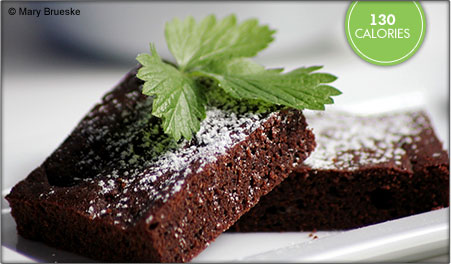
- Fudgy Brownies (photo by Mary Brueske, courtesy Truvia's website)
I'll report back in June. Feel free to follow my Twitter feed for updates and pictures!
Happy baking!
NYC Bake Sale 2012 (The Great American Bake Sale)
April 28, 2012 marked the third Great American Bake Sale throughout the United States! A bunch of food bloggers and foodies and bakers joined forces to sell goods and raise money for Share Our Strength's mission of No Kid Hungry to end child hunger by 2015. And the bake sale went like gangbusters at Brooklyn Flea!
On a sunny, yet chilly Saturday in Brooklyn, NY the Great American Bake Sale took place, part of Share Our Strength's mission of ending childhood hunger (No Kid Hungry) by 2015. Bloggers Without Borders joined in to make a call across the nation for food bloggers to organize and join in! The NYC chapter's bake sale was at Brooklyn Flea in Greenpoint, Brooklyn. Even though the bake sale ended this past Saturday you can still donate to a great cause via the donation page on the NYC chapter's site.
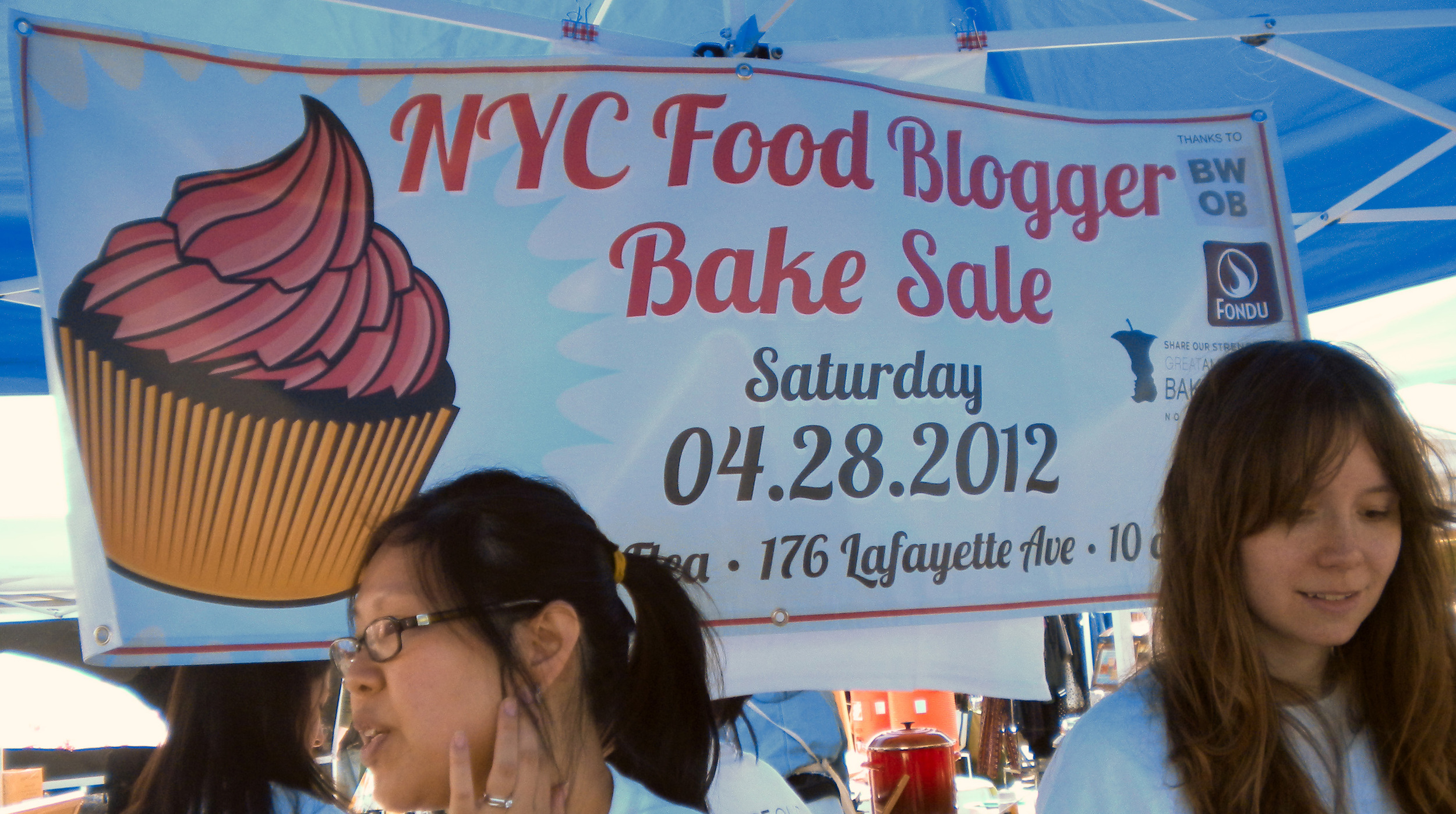
Bakers, entrepreneurs, and all-around awesome people Lillian Huang and Ken Leung were this year's organizers and they did an amazing job! Seriously, organizing so much food, people, advertising, and such was really a show in great organization. It was smoothly run and the volunteers were super helpful and all on the same page in terms of raising money for a great cause.

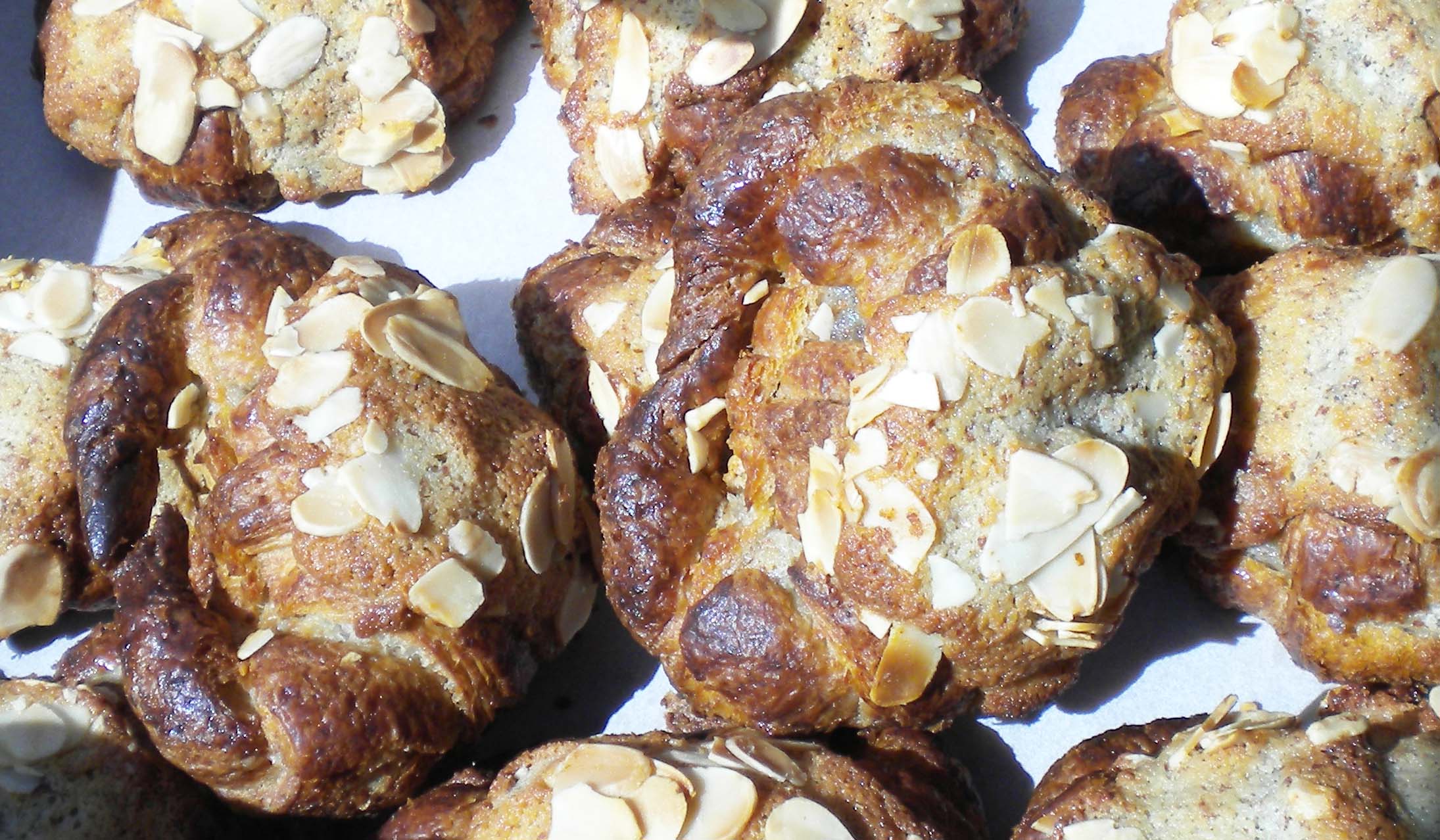
There were numerous donations from local bakers and food bloggers that had us in a sweets wonderland! Chocolate double deckers from Abby Dodge, Baked's sweet & salty brownie, and Michelle Jaffe's (Sweet & Simple) brownies were huge sellers as were many sweet and salty items including Ken's chocolate peanut butter pretzel krispies and Jackie's salted chocolate caramel nut bars (both gluten filled and gluten free) that were ooey gooey messes of goodness. Tasting a sample one customer said "I want to buy what I just had in my mouth!" Liddabit Sweet's bourbon pecan cookie with caramel filling was a fast seller upon tasting. One vendor tasted it, ran back and said "What did I just eat? I must buy it!" All in all there was a cornucopia of amazing goods. There were vegan items, gluten-free, different shortbreads and macarons (both American and French), variations on rice krispy treats, pie, scones, almond croissants from Runner & Stone. We had steady sales throughout the day and got a huge surge of customers once 2 or 3 o'clock rolled around for a post-lunch treat!
Brooklyn Flea was a great venue. The staff incredibly helpful and other vendors supportive, the crowd amazing and generous! Being one of the few vendors selling boku sweets and in such extensiveness we got a lot of customers. With Smorgasburg being the site of mainly food vendors it was a good balance to be around those selling mainly savory items, as well as jewelry, patchwork, offering bike tune ups, selling furniture and art and tea and coffee (great compliments to scones and other sweets).

And it was great to see Ken, Lillian, and Jackie (a great saleswoman), as well as Angela (Mind Over Batter) and meet Meghan (Buttercream Blondi) and Emily & Karen (Mainly Gluten Free in NYC), and Elizabeth (Brooklyn Supper), Betty Ann (Asian in America) as well as many other foodies/food bloggers eager to help the cause and perhaps participate next year.
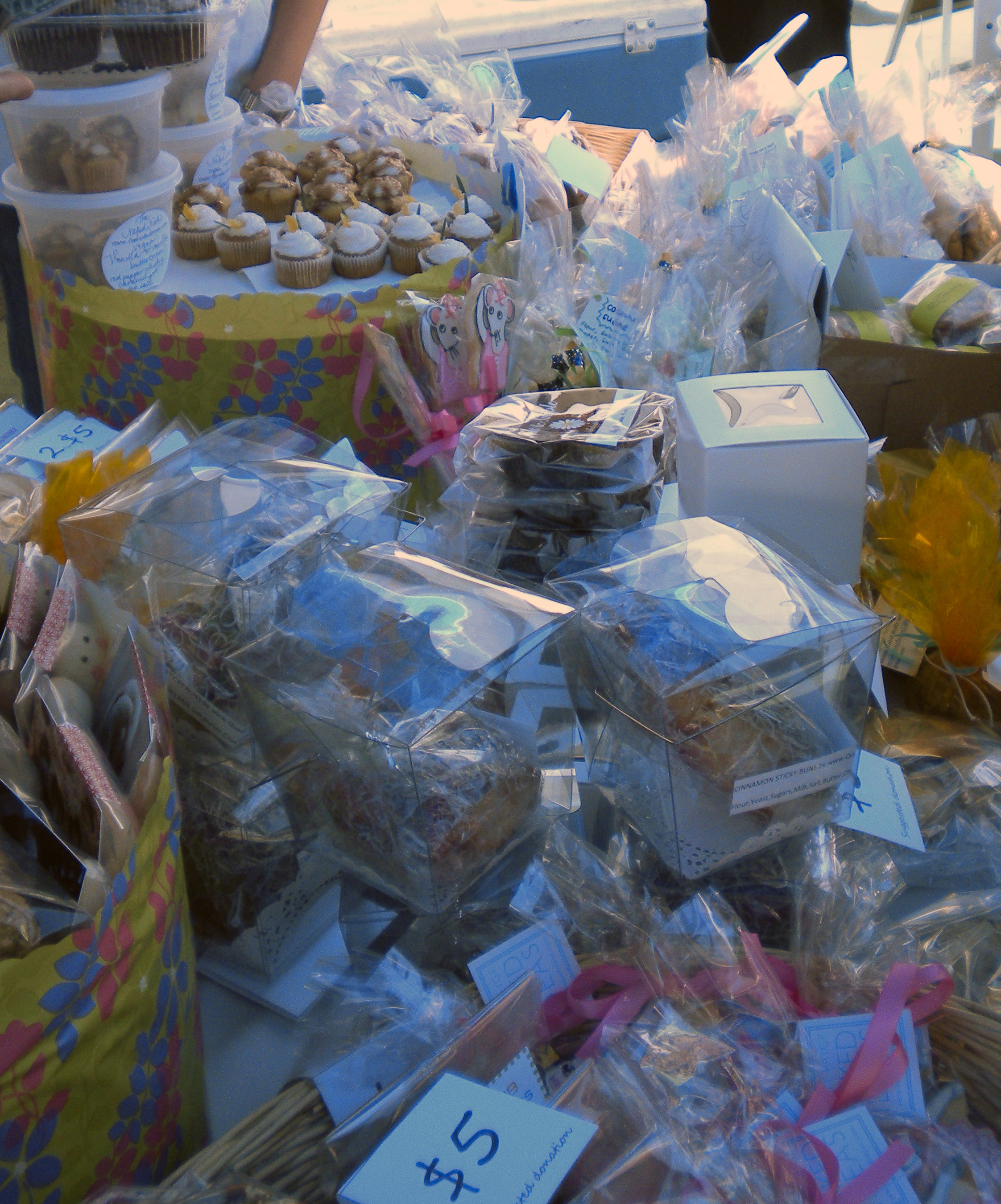
All in all via online donations and what was made at the bake sale we raised about $3,400 to surpass our $2,000 goal! Thanks a bunch to our sponsors Brooklyn Flea for providing us a booth for free, Joe's Crab Shack for the awesome t-shirts, Whole Foods Union Square for the bags, and Fondu for the banner and business cards! Thanks so much to everyone who stopped by the booth and purchased, who tasted, who volunteered, and who donated (especially all the great bakeries for contributing delicious goods) and spread the word! Please keep it up and help us raise more money! You can make online donations here. And when making a donation you can get in on one of many awesome raffles, which means more sweets! How can you resist?
On Writing: Helpful Books for Writers
As a skeptic of writing manuals I have to say three books have been very helpful for me in improving my writing and dissecting it more as a reader and one who critiques.
There are numerous books on the market claiming to help you become a better writer. Any self-help book is set to provide advice as to what tools you need to improve upon yourself, but in this case it’s about improving your craft. Beyond Do-It-Yourself (DIY) type manuals I’m not one to partake in reading books about all you need to know about writing and how to improve. Mainly because no one can teach you to become a better writer. Can someone provide receive guidance? Absolutely! But the sole role of development comes from you and your willingness to take in information and learn from it.
Am I saying that writing books are unnecessary? Not at all. And what does my opinion matter anyways if that were what I was saying? From my viewpoint artists (emerging or established) help other artists, and you can learn & improve at all stages.
What I will say is that how I’ve developed to be a better writer than the one writing Goosebump like stories including her friends from junior high school on is that I’ve read, read, and read some more as well as listened to those I respected and even those whose opinion I didn’t necessarily agree with. Open-mindedness is the best tool a writer can have. And in that vain I have to admit there are books I’ve found helpful that aid in the guidance of improving upon your writing.
Stephen King’s On Writing has been touted as one of the best books on writing in the past several decades if not ever. It’s a short book and is split into two sections. One is his experience becoming one of the best-selling genre writers of this and the previous decade. The second focuses on the editing process on what works and what hasn’t, while also noting there’s no key formula to the overall publishing formula of hits and misses. He speaks on vocabulary (simple is good, if it’s your style), pacing, and dialogue (I think one of King’s strengths).
On Writing is a helpful read for the emerging writer because you learn about how he started out and how his writing was not a career at all but a pastime he believed in. King worked as a janitor to help support his family and made the time to write. Now, his story isn’t one that will happen to everyone who reads this book but it’s always humbling to know that those who have it all today (and by all I think we as artists feel that the art itself will sustain us so that we do not have to have another job to supplement our income and our time) had to clean toilets and change diapers and wake up early or stay up late to get their words on paper and then wade through numerous rejections before finding that one ‘yes’ that will hopefully lead to many more.
Another well known author is Francine Prose. Her book Reading Like a Writer is a great resource because of the fact that the main and consistent advice a writer will always (and yes, I say ‘always’ even though you probably shouldn’t use the word depending on whose advice you take) be to read, read, and read some more. How can you write without reading what’s out there? Whether it be in the genre you write in or others. Should you confine yourself to only reading what you want to write or expand on literary if you write genre, contemporary if you write history, non-fiction and poetry if you only write prose? Yes, yes you should. Read as much as possible people!
Prose delves into portions of writing itself building from words to paragraphs to narration to details, etc. She gives examples from said books in each portion. Prose dissects these sections to help you see what she does when it comes to the overall structure of the work itself and how it helps to get you, the reader, to feel and see what the author’s intent was. She also provides a list of books “to read immediately” via the snippets within the sections she uses as illustration. For me this was a great read because it added to my reading list and I could see if I wanted to pursue reading more from a particularly author she touted or not. I have definitely learned a lot from reading more and seeing how authors manipulate words and choose to be lengthy in their description or not. How to work with gestures and not use them so much as markers but in ways to reveal more about the character when it comes to certain situations.
The First Five Pages by Noah Lukeman is one of my favorite books. Lukeman actually helps more with the editing process whereas other books may be more general. It was through First Five Pages that I realized how much adjectives and adverbs can be overdone when not using them can also pack a punch! He breaks it down into the prelims (presentation, sound, style) to content (hard to follow plot, reading between the lines, providing information) to the overall picture (show vs. tell [a lesson all writers learn at some point], tone, and focus, and--one of my Achilles heels--pacing). Lukeman examines and explains the writing/revision process from the perspective of a prospective agent and what their first impressions will be based off the first five pages of your submission. And believe it or not, with all the submissions agents and editors receive you may only get five pages to impress them enough to read further. Lukeman presents the problem and offers realistic solutions for you to consider when writing/revising. What I also like is that he has End-of-Chapter exercises which often includes taking a piece of work and rewriting it via the parameters of what he’s suggested. First Five Pages is something you can read en route but to really take Lukeman’s advice to heart you have to set yourself down, read it, and then pursue the exercises he’s provided to actually see and hear the difference in your work. I know when I removed adjectives and adverbs it forced me to chose action words that really hit the emotion of the scene hard.
Lukeman offers various books on how to improve your plot, write a great query letter, and use punctuation properly. Lukeman is one-stop shopping for editing and revising. Check out his website as soon as possible!
The books I’ve noted are all relatively short (less than 300 pages) and reasonably priced (none are more than $15) and you can find them anywhere. If you’re skeptical of How to Write books I’d suggest checking these out to at least get some inspiration. Stephen King provides insight as a famous writer who worked hard to get where he is now. Francine Prose examines literature itself and how we can learn from it the more we read. Noah Lukeman reveals insight into the mind of an agent. All of these are great tidbits to strengthen your work and to consider more of what others see when it comes to your writing. The first step is to create and the next one is to revise and edit, then repeat. With writing being a solitary field these books help you feel like you’re not alone.