
BLOG
Pie Party Live 2012 at GE Monogram Design Center (October 25, 2012)
This year's Pie Party Live was held at the GE Monogram Design Center in midtown east in NYC and was divine! Jackie and Ken organized another great event with goodies and good times. Sponsors were GE Monogram Design Center, Smirnoff Vodka, Dub Pies, Harvard Common Press, and KerryGold.
Last year's pie party live was a pie bonanza and this year was no different. It was a very classy event as always and organizers Jackie Gordon and Ken Leung did a fantastic job of gaining support and providing a great, relaxed time for the food blogger and food professionals community in the tri-state area. This year GE Monogram Design Center on East 58th Street was the location and when you arrive you did not want to leave. The ornate and modernly designed space opened up into a series of connected master kitchens that every foodie in attendance fell in love with.

Chef Tageré Southwell gave attendees a nice run through of how to make effective pie crust before the pie party commenced. Many of us were pretty enthused about this since, especially for me, a good crust makes a good pie. One word: butter (KerryGold!) and mix well watching the bottom of your food processor to see the status of your dough. (FYI: A food processor is pretty essential when making dough and after winning my KitchenAid one from Pie Party Live last year I feel quite blessed!)

The bounty was split into savory and sweets sections. As attendees arrived and labeled their contributions we were treated to savory treats including the most succulent hors d'oeuvres made by GE Monogram's Executive Chef Tageré Southwell of battered shrimp, lamb sliders, and eggplant crostinis. We were also able to taste mini DUB (Down Under Bakery) Pies in the form of beef & cheese and/or curry vegetable. Those who attended Pie Party Live last year recall that Dub Pies had also generously donated a variety of their savory pies to the cause. Dub Pies had been at Dekalb Market earlier this year before it shutdown, but now operates in their own store in Brooklyn.
While I made a savory pie, specifically a Spinach & Gruyere Quiche a la Martha Stewart, I abstained from eating savory and went straight for the sweets. I was getting full from the bite-sized savory morsels and wanted to make sure I had room for dessert. (Game plan!)

There were tarts and quiches and mini pies and whoopie pies and toffee crunch and pecan pies and duck pies. Gluten free, vegetarian, vegan, and ones loaded with dairy. You were good on all counts.
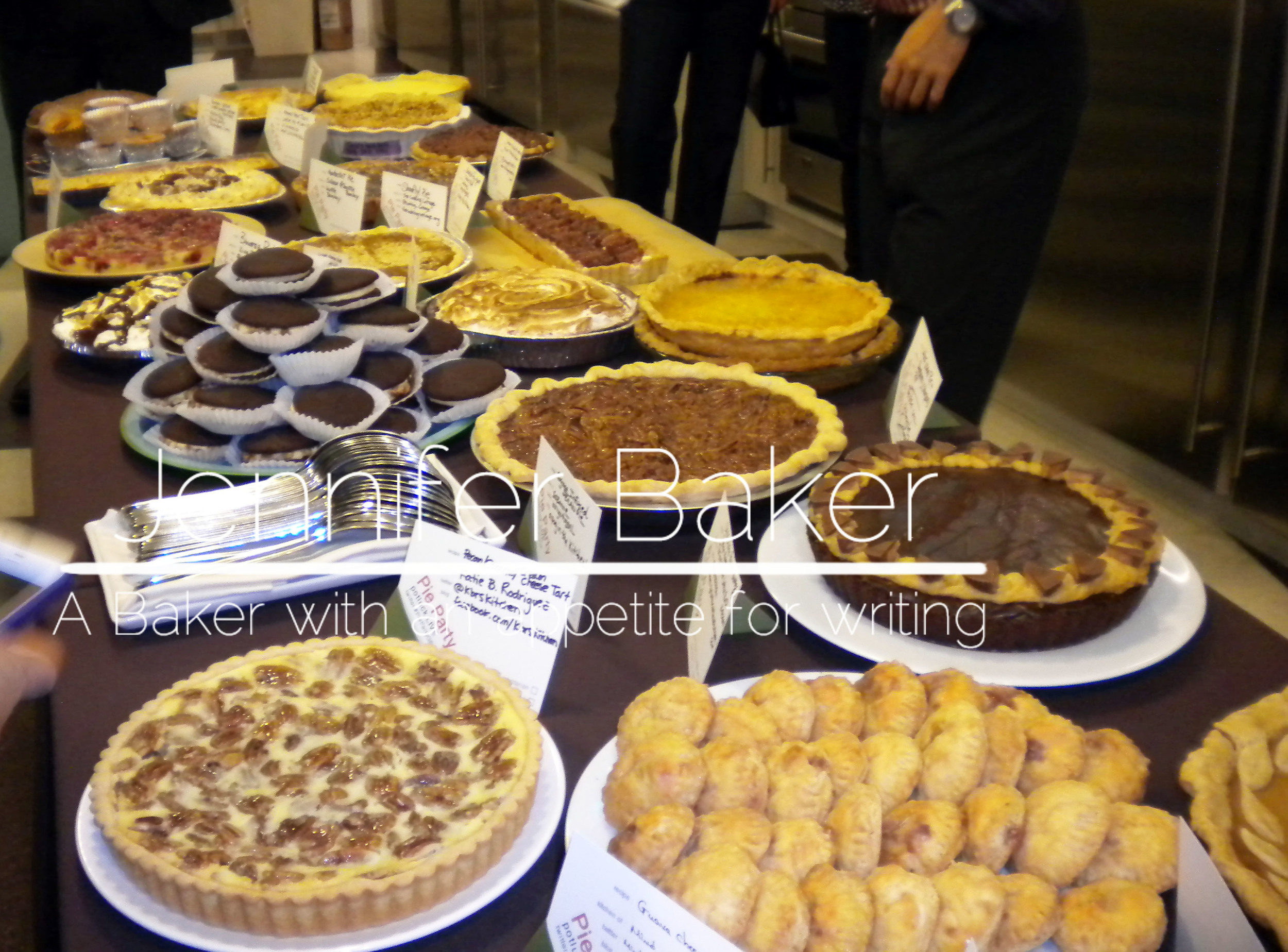
One of the standouts for me was Ken's cranberry curd tart with walnut crust. Not too tart, not too sweet with a wonderfully buttery, crispy, thick crust and a fluffy curd filling. Last year his onion tart was one of my faves and as always Ken doesn't just make it look pretty but also taste fabulous!
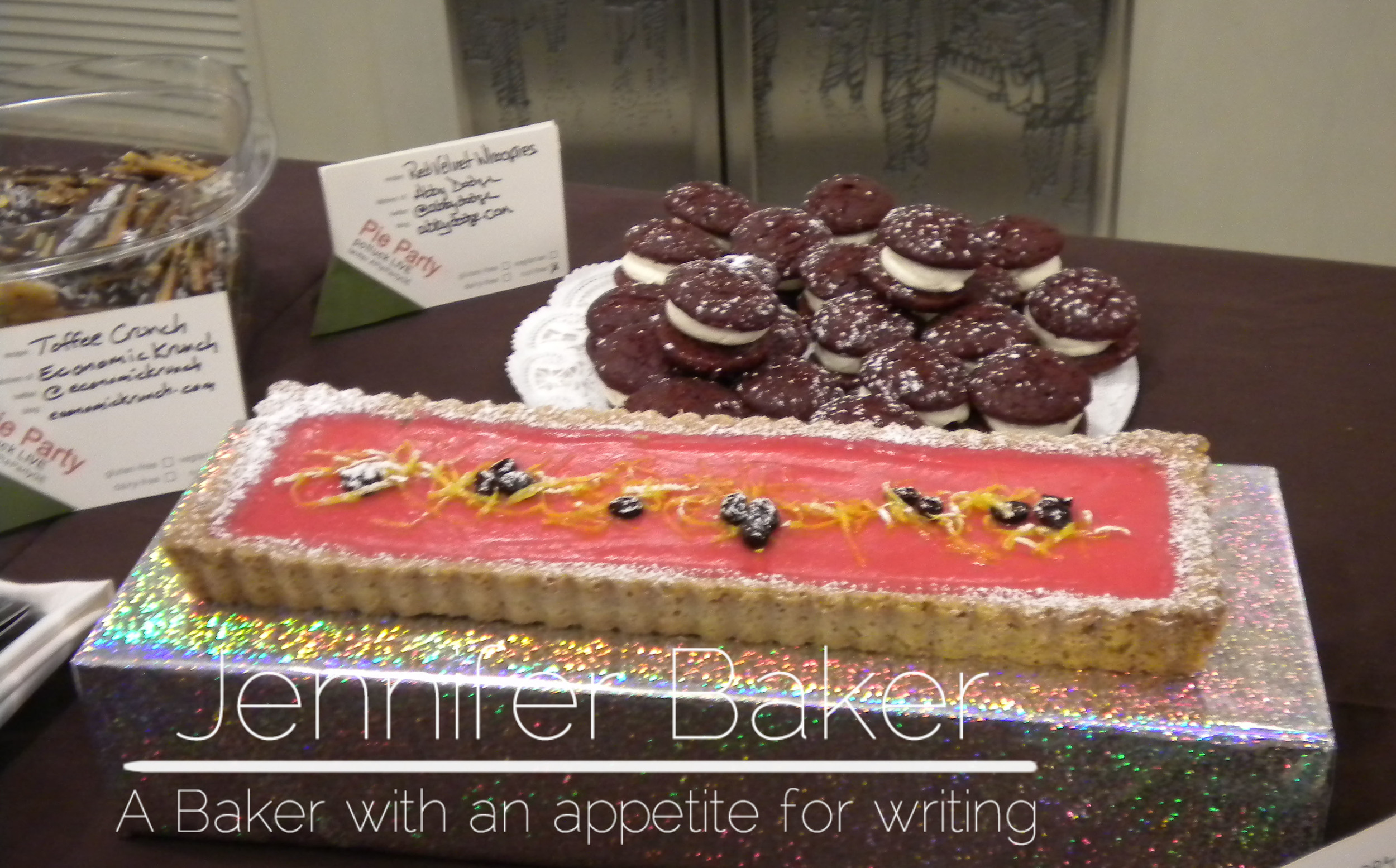
I also enjoyed Lillian's chocolate and peanut butter whoopie pies and the delicious cranberry Nantucket made by Colleen of Souffle Bombay. And the toffee crunch from Tamar of Economic Krunch, goodness gracious! I ate a pear almond tart that was as good as ones I've had from French bakeries and Abby Dodge's red velvet whoopie pies, Angela's guava and cheese mini pies, and my friend Emily's spiced citrus pecan pie. Lordy! I had to tap out after having Ken's salted caramel chocolate tart and Tara's apple strudel pie. But, indeed I wanted more.
My friend Emily provided me a taste of a delicious duck pie by Kathy of The Experimental Gourmand and that one bite was so succulent and perfectly spiced I instantly regretted my game plan to forgo savory.
By night's end the savory section had been decimated. People had their plan and it was to eat dinner than go dessert.
Before we headed out Jackie announced we were getting goodie bags and Kerrygold butter to take home! This was met with resounding excitement and surprise of which I think only the food community could understand. Butter, heck dairy, is expensive! And getting a fabulous brand like Kerrygold is fantastic! I can't wait to make more pie with it, even Chef Tageré complimented the brand as one of her go-to's for making crust and cooking in general.
Part of our goodie bags from our very generous sponsors was two Dub Pies, frozen for reheating later, Kerrygold as mentioned along with a Kerrygold branded recyclable baggie, Abby Dodge's newest cookbook from Taunton Press Mini Treats and Handheld Sweets (of which her fab whoopie pie recipe is included), Fine Cooking magazine, a Smirnoff pie server, GE Monogram measuring spoons, and for some of us bloggers a bottle of Smirnoff's two new flavors (Kissed Caramel or Iced Cake) to take home and do a blog post on (one to come soon from me). After tasting their Caramel Apple Pie drink I was hooked.

I was full, excited, and extremely grateful to reconnect with my food blogger/pie party buds and to have the generosity of these great sponsors in their support of the food blogger community. I hesitated leaving GE Monogram Design Center because, frankly I want that kitchen, but I'll be happy to return and sing their praises and hope to be at another event there soon.

Thanks again to everyone who aided in making Pie Party Live this year a resounding success and thanks again to GE Monogram Center, Gareth of Dub Pies, Abby Dodge and Taunton Press, Kerrygold, Harvard Common Press, and Smirnoff for donating your products and opening our eyes to new flavors! Hope to see you next year!
A Word on Readings...
After discussing pros and cons of being an audience member at a reading I wanted to suggest three things to think about when you pursue reading your work to a larger audience.
A reading is a great way to get noticed and to build an audience. Spoken word artists rely heavily on the reception by an audience--it's in the title of "spoken word" artist that their work is crafted to be performed. And while there is material that is meant to be performed such as music and spoken word there's more subtle poetry, non-fiction, and fiction read aloud. My friend Kim and her friend Kia and I recently discussed bad readings we'd been to. Ones where the reader was monotone in the way they spoke, not changing inflection or diction at all for the piece. And when you have dense material this is very, very hard to listen to let alone get excited about. There are also those who tend to drag on and keep talking and talking because they have people there to listen. And when all these things combine it makes for a perfect storm in terms of the listening experience.
I've experienced the powerful and the painful. I've heard authors read large portions of work where only one sentence stuck with me after twenty minutes or more of listening to them. I've heard authors, published and non, ramble on about life coming to open mics with nothing prepared just hoping it'd flow, it didn't. I've also seen spoken word artists so in tune with their craft that they'll have a standing ovation and fiction/non-fiction authors arouse so much passion and sympathy from listeners that they just sold a good dozen or more copies of their books in the time they read.
Now, I'm not saying everything that is read should be humorous or fleeting and not necessarily be deep or have a connection. What I am saying is that a reader (author in this case) should consider their audience or potential and establish readers (those who do read the book). I think sometimes authors choose material that is the most interesting to them, but again that doesn't necessarily translate aloud.
My first experience reading aloud was in junior high and I was reading a portion from The Fear Street series by R. L. Stine. My mistake was that I read too long and without much oomph. When my classmates heard me rustle a page I heard groans in the audience, they were disgruntled at the fact that I kept going and didn't know when to stop. I went on so long that I bumped someone else out of a reading spot. In my sophomore year of high school I had written a poem for Black History Month and read it so stagnantly that no one paid attention to the words, no matter how 'deep' I thought they were in my adolescence.
By college I had learned a bit more, by grad school I was getting better and more animated, and now--while I don't know everything--I feel much more confident when I go to the mic to read my work. Am I nervous? Heck yeah I am! My hands shake the paper I'm holding so that I'm glad when I have a podium to hide my trembling. But because I believe in my work and the brevity and impact of it I know that even if it doesn't get a good response, it'll be over quickly enough.
My conference experiences attest to most of my recent experience in reading material I was confident in. Most if not all writing conferences with workshops as a focus will have an opportunity for participants to read from their work so that we're not only hearing faculty but the potential future of literature.
Material
My first time at VCFA I read a heart-rendering piece from my Collection that was really sad. It got shocked moans from the audience in places because they felt for the husband at the funeral. The piece has changed dramatically since then, but I knew the impact was there.
At Napa I had two minutes, and went a bit over, to reveal a scene about two men talking about infertility and insecurity, a tete a tete between two brothers. I chose the scene that revealed the most tension through dialogue. My workshop mates enjoyed it and Forrest Gander said he liked the opposition I presented in such a short amount of time.
At the Glen I read the last few pages of another story that my workshop mates and Sara Zarr had read. So I already had partial invested interest from people at the conference. The end was a fight scene. I got laughs in places I hadn't expected to and a nice round of applause. The next day at our farewell party several people came up to me and said they remembered my piece because of the power and tension and clear goal of the character in that portion. I picked it because I knew it was short and contained a moment that may resonate for readers and moved quickly, yet ended with heart for an edgy character.
I could've chosen the pieces that sounded pretty and I had been told 'moved' people and such but if the portion wasn't contained or wouldn't draw interest or couldn't succinctly tell a portion in an engaging way I more than likely won't read it out loud because I don't know if it'll hit the mark or if listeners will enjoy it enough to focus on what I'm saying.
Speech
Something else I've learned and gained control in is how I read. Like I said I started off very monotone with no inflection years ago. With my own writing I know the voices and the characters I have lived with for years, sometimes less. So I aim to capture those moments I want to convey. I can read pissed and lower my voice to a manly bravado.
My friend Ennis has done readings for pieces he's published. He's a former actor and really captures the range in the characters and moments. He's been complimented heavily for this and when he tells listeners he was an actor they aren't surprised.
Is it necessary, changing tones? No, but I think it helps to further show your range and understanding. I think going overboard with accents you cannot master may distract the listener rather than intrigue them. So I don't do southern accents for characters that have them, however I do alter tones when necessary and emphasize where necessary and get into the spirit like an actor would a part. These are your characters. This is your narrator. You know them best.
Length
I have to say that length and timing matter. Do practice reading if you have a time limit and the shorter the better at times. Jennifer Egan tends to read the same story, her first, from The Good Squad. I've seen her read a handful of times since it was released and she often reads that story because it does pack a punch, have interaction within it, and is one of the shorter ones in the collection. On top of that she reads it well. She knows Sasha and she does the voices of Sasha versus everyone and captures all the moments in the story so that after reading it yourself hearing her read it sounds completely new. And that's the effect you want to have on listeners.
I've read my flash fiction at conferences, open mics, and residencies and some pieces hit harder than others and required my audience for the few minutes I was in front of them to not have to pay attention for more than a few minutes. I appreciate the five minute limit because it does allow me to focus on a single moment to draw the reader in without going overboard with background and other instances that may not be of interest to listeners in that moment.
So these are my suggestions if you choose to read your work aloud:
1. Make sure the material will resonate with the reader and is conducive to being read aloud. If it's very convoluted and has a lot of twists and turns it may not be right for an audience to hear, especially if many are not used to listening to work.
2. Try to differentiate how you speak if you have dialogue and try to not sound too professional if the text doesn't require it. Junot Diaz writes in a voice that is similar to his own so that when he reads it's not as though he's reaching. Tayari Jones also is very good at capturing her characters when she reads. She knows them and hearing her read Silver Sparrow going from mother to daughter to father was amazing and put me in the moment. Like the writing the oral voice should be your own but reading it in one way every time may not give readers of your work a new experience.
3. Try to keep it short. Yeah, featured artists don't have that worry so much because they get a good amount of time. Usually twenty minutes or so, sometimes longer. But many people are not used to long periods of listening to something that is not accompanied by visuals and/or music. So if you're going to read for awhile make sure it works in that space of time as well, see 1 & 2 above.
I think these three things can help any artist whether it's doing a presentation or reading creatively. It's nice to hear your own voice but give the audience the respect of being entertained by it. It's not so much about you once you're at the mic but about those who graced you with their presence.
Winner of the "Cake Pops" Cookbook Giveaway!
The winner of my "Cake Pops" cookbook giveaway is announced.
And the winner of Cake Pops by Bakerella is:a Rafflecopter giveaway
Congrats Noreen! I'll be emailing you in a bit to get your address so I can send this awesome book along. Please send pics when you start using it! Such cute pops.
Thanks to all who entered and happy fall and baking!
Winner "Easy Chinese Recipes" Giveway & New Cookbook Giveaway!
Thanks to everyone who 'liked' pages and visited my site and are fans of Rasa Malaysia's site. I'm happy to announce the winner of a copy of Easy Chinese Recipes deemed by Rafflecopter is.... Carmen Nuland.
Congrats, Carmen! I'll email you for your address and will make sure to put the book in the mail via USPS ASAP. Thanks again to Bee for spreading the word and Tuttle Publishing for aiding in this giveaway. And if you didn't win many of these great recipes can be found on rasamalysia.com so you can see how awesome they are for yourself. And I have another cookbook giveaway!

So the deal is that this giveaway officially starts tomorrow at 12:01am (EST) and will end on October 1st 12:01 am (EST). I'll post the Rafflecopter link for entries in a post tomorrow AM.
Happy cooking!
Rasa Malaysia's "Easy Chinese Recipes" & Cookbook Giveaway!
My review of Bee Yinn Low's "Easy Chinese Recipes." And one guess as to how much I enjoyed it... :o) Also a giveaway with the help of Tuttle Publishing for your own copy of "Easy Chinese Recipes."
Being from an urban environment and because of the availability of hole-in-the-wall Chinese takeout stores I have always had a place in my heart for Chinese food. Chicken and broccoli as well as lo mein were staples for me. I never understood why some went straight for chicken wings and fries when you could get that anywhere. For me Chinese takeout meant something I couldn't get at home. Upon expanding my horizons and getting to know friends of East Asian descent and knowing that what we got in the takeout stores didn't resemble the actual traditions, I was interested in having the more authentic brand. But, I was pretty fearful of the process and technique involved in making an East Asian dish outside of one I defrosted.
So hearing the words: Easy. Chinese. Recipes. And knowing Bee Yinn Low (via her website Rasa Malaysia) wrote a cookbook of Chinese cuisine (published by Tuttle Publishing), I was intrigued.
I sat down, I mean really sat down, with Easy Chinese Recipes and didn't just skim it but read the details of what captures flavors I have enjoyed since I was a child--noting that Bee also mentions the difference between the takeout Americans are used to and the more realistic aspects of Chinese cuisine--as well as many of the 'How to's to make dishes similar to the way I'm used to with the right tools, sauces, and preparation.
First off, sauces are not meant to be thick like gravy and dishes aren't doused in them as I am used to. Also there are a handful of key condiments used in these dishes. I knew soy sauce was one but had no idea that oyster sauce was the other or that baking soda was used to aid in the tenderizing of meats when cooking.
I chose recipes that I could make a comparison against, ones that I have had in Asian restaurants/takeout/frozen, so that I had a basis for what I expected the taste to be for the dishes I made.
The Dishes
Beef and Broccoli
Even Bee notes that beef and broccoli is one of the most popular dishes in American takeout stores.
I didn't tenderize the meat (Bee has a section on how to do so with beef, pork, and poultry as well as making shrimp bouncy) for this dish and went all in with cutting flank steak against the grain and marinating (15 minutes). Then I prepped the broccoli, made the sauce and instant rice on the side rather than steamed long grain rice.

Using a large non-stick wok I prepped the beef, blanched the broccoli, added ginger to the oil, returned beef for final cooking, adding broccoli and sauce and voila I had my very own beef and broccoli! The sauce was a mixture of soy sauce, oyster sauce, toasted sesame oil, white pepper, sugar, corn starch, and water and really brought me back to the flavors I have eaten over the years from takeout.
I may have over cooked the beef though. Tenderizing the flank steak may have gotten that smoother texture I'm used to. The main difference between what the frozen P.F. Chang's and the takeout place down the hill and this recipe is the lighter aspect of the sauce as well as the rougher texture I got from the meat. However, if I had had dishes side by side and the meat had been perfect I would've chosen what I made.
Cashew Chicken (sans cashews)
I made this after work as well. And I chose to take Bee's advice and tenderize the chicken before marinating it and making the dish. The additional sides to this are cut up peppers (red and green, but I used red and yellow) and roasted cashews (which I took out since I'm having orthodontic work done), in addition to the sauce. Ginger is prevalent in many of the recipes so make sure to have a bunch of it ready and minced, same goes for garlic.
After tenderizing the meat (letting chicken sit in baking soda and then thoroughly washing before marinating) I half cooked it, added the minced ginger, and then the peppers and re-added the chicken. The sauce was light as well but clings and adds a great flavor (hooray for oyster/soy sauce mix!)

I am IN LOVE with this dish. The chicken was so tender even the next day after nuking it and several days later eating remaining leftovers. The peppers melted in my mouth and all the flavors were amazing! I know one of the best things about Chinese food is texture and if you get that right then everything falls into place. And this one knocked anything I've had in takeout/restaurants out of the park! So I'll be making this again and again and again.
Classic Shrimp Fried Rice
I didn't follow the steps to make the shrimp bouncy in this instance. I had made the rice the night before as Bee suggested and went with brown long grain rice which has a grainier texture than white long-stemmed rice/jasmine.
The seasoning/dressing for this is quite light mainly soy and fish sauce with sesame oil (another new love of mine) and white pepper.
As with all the other recipes I tried you partially cook the protein, in this case you have two proteins with scrambled eggs and shrimp. Cook the eggs first then partially cook the shrimp, take those out and add garlic & ginger, return the shrimp with frozen peas and carrots, cook for a bit then add rice, eggs, and seasoning and mix well.
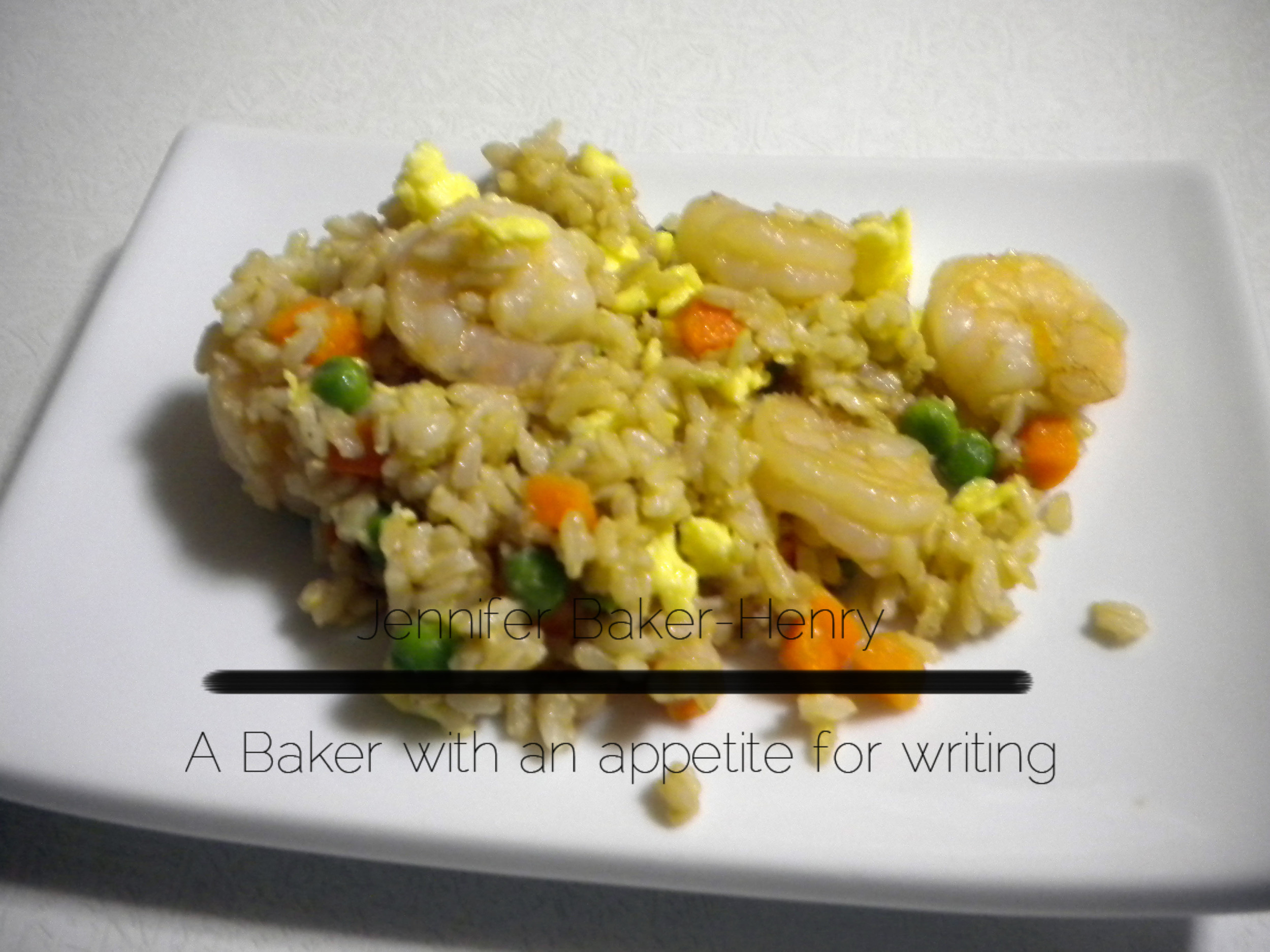
Again: enjoyable. This is best eaten soon after making, not when it's piping hot but still very warm. The shrimp and peas and carrots and egg and seasoning were great with the rice and a nice meal in itself. And what I noticed was that the seasoning was, again, not heavy. I was worried the flavors wouldn't be there. "Less is more" pervaded in all of Bee's recipes, particularly this one. The flavors melded and each one worked together and was not too salty as the takeout you'll get nor was it greasy. I used low sodium soy sauce for all recipes but I think even without it the fact that you're adding light touches really does let the umami flavor break through on the fried rice. Again, I prefer Bee's recipe over takeout/restaurant/frozen foods that I've had of this variety.
Vegetables with Oyster Sauce
In Easy Chinese Recipes this is listed as Chinese broccoli (gailan) with oyster sauce. But since I did not like the gailan I found I went with another favorite, bok choy, and figured I'd see how this worked. I followed all the same steps of blanching the bok choy and cooking the sauce (again oyster and soy) and sprinkled this atop the vegetables. Man, oh man was this great! The sauce is not thick, more watery and you may want to add more bok choy than I did to make sure the vegetable isn't swimming in the sauce. Again, not too salty but with a familiar flavor that compliments the Classic Shrimp Fried Rice I ate it with and the Cashew Chicken I had it with the day after. I love bok choy for it's watery flavor and crispy texture. It reminds me of fennel but less intense in taste and for anyone who has had bok choy in an Asian restaurant you know that it works well with a light, meaty flavored sauce atop it. This is a new go-to sauce for me.

Shanghai Fried Noodles (with chicken instead of pork)
After trying, and failing, to find flat rice noodles I went with this recipe as it reminded me of lo mein.
Shanghai noodles are made of wheat and thicker than lo mein noodles. The base sauce here is significantly soy based (I used low sodium soy and dark soy sauce for color) along with white pepper and sugar (more staples in dishes with sauce in Easy Chinese Recipes).
Instead of pork, which is noted in the recipe, I made it with chicken, tenderizing it again beforehand.
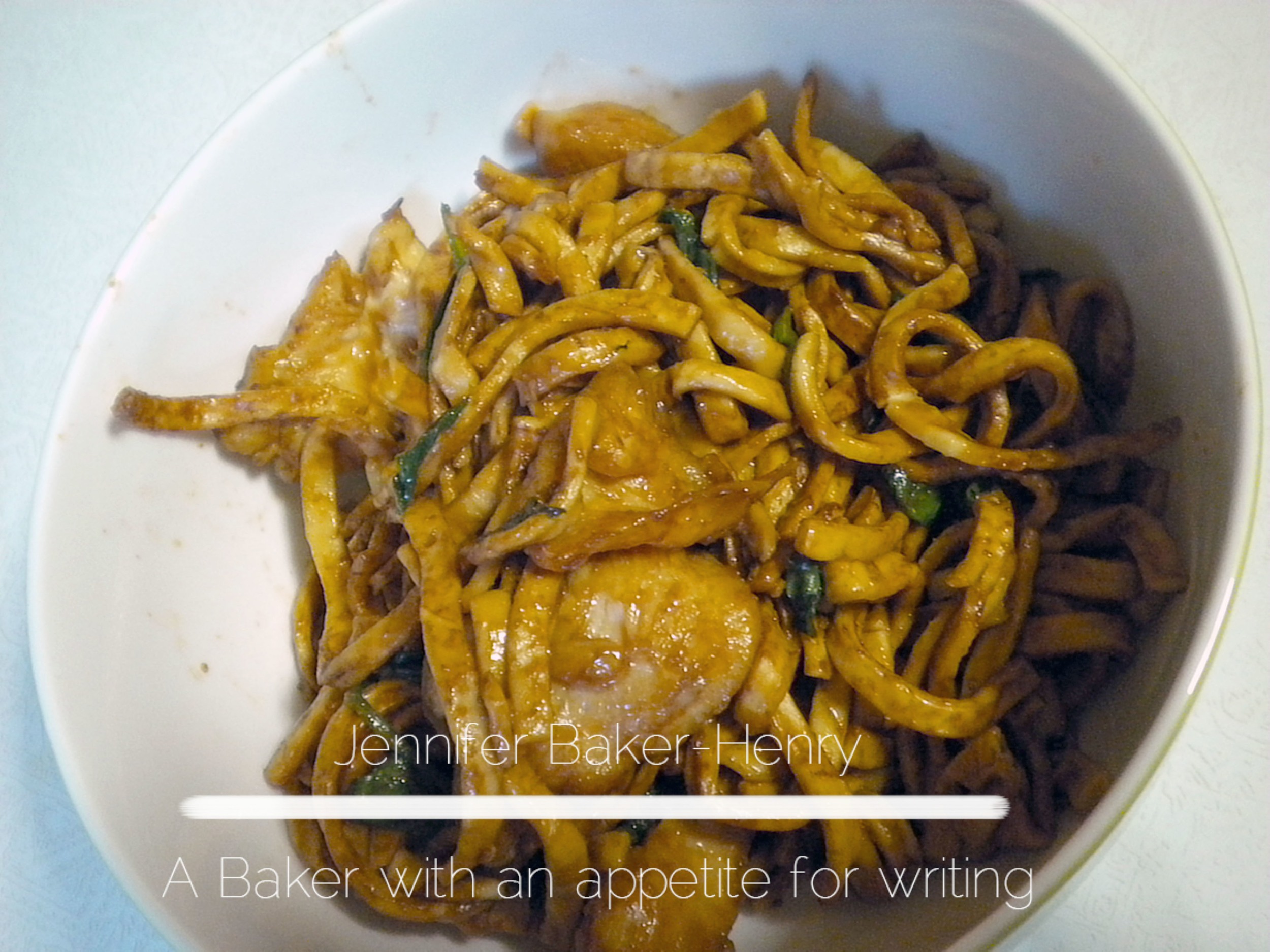
Spinach and green onions are included in this dish and it's nice to have something green in there with all the noodles and protein.
I was worried that all the soy sauce would make this too salty even with low sodium because of the two used. But once I mixed it with the noodles and added chicken and spinach it was not a problem. This is not a slurpy, greasy mess when you eat it at all. It doesn't leave a huge oily mess on your plate but caters to having subtle flavors. The chicken was perfect, lightly toasted on the outside and a perfect moisture on the inside. I was glad to eat this over several nights.
Green Onion Pancakes
This was the most time intensive recipe (not hours or anything just longer than 30 minutes or so), and that is because you have to set the dough aside and also roll several out to prepare pancakes for frying. Also, I lost track of what stage I was in so re-rolled some balls more times than necessary.
I was worried that I didn't put enough green onions (scallions) into the dough. The basis for the dough is flour, water, and salt with little more additions besides the scallions and a brush of oil then more for deep frying. Scallions are darned strong (in smell and taste). I've always enjoyed eating scallion pancakes when going out for dim sum with friends. That with some hoisin sauce...awesome.

The frying went quickly. You have to make sure not to overdo it which may be hard as the oil gets hotter and hotter the more you cook. They came out golden brown then a bit browner and my whole apartment smelled of scallions (not complaining).
I waited a few minutes for the first batch to cool and then took a bit. I don't use acronyms when describing things but O.M.G! These were just as good as the ones I've had in restaurants and, you know what I'm going to say, less greasy. The grease factor may be because I often let things sit on paper towels and pat them to get rid of as much oil as possible where you may get the pancakes right out of the fryer in a restaurant. But the flavor even with less scallions than I had thought (because I had cut them up a bit bigger) was there! It pervaded in every part of the pancake but not so much you felt a need to hold a hand up to your mouth to cover up your breath. Minimal salt and accompanying sauce was unnecessary. It worked on its own.
The Verdict
After eating each meal I didn't feel too full or lethargic, nor was I too thirsty which can happen with the overly salty ways and MSG found in many takeout eateries (though many may proclaim they do not have MSG). Specifically the fried rice and green onion pancake were lighter for me compared to their restaurant/takeout/frozen counterparts. The flavors weren't too bold in that they overwhelmed but each had a distinct taste I could place that was effective and delicious. I really, really enjoyed every dish I made. No offense to the places I've grown up eating at but I'll probably be making these dishes on my own from now on unless a major ennui hampers me in the kitchen.
Bee's book helped me realize that Chinese cooking can be easy and healthier and tastier! Easy Chinese Recipes also gave me a lot of faith in myself, of being able to make a quick meal for friends and family and have it be better for them than what we've grown up with in NYC. What is also great is that many dishes serve two so making them won't leave too many leftovers in the homestead if you're cooking for yourself.
The only critical thing I can say is, as someone who bakes, I wouldn't have minded a larger dessert section. Easy Chinese Recipes is divided up by appetizers, dumplings/dim sum, entrees (pork and beef, chicken, seafood, vegetable, noodles & rice), and dessert/drinks. There are five dessert recipes in total, including custard tarts and shaved ice.
However, the major benefit of Easy Chinese Recipes is the amount you learn and the fact that you get wonderfully tasty sauces and succulent meats goes beyond any critical thing I could say.
The Giveaway
I definitely want to share my new love and ease of cooking Chinese food at home. And I'd like to thank Rowan at Tuttle Publishing for being generous in helping me with this giveaway.
So here's the deal, from September 3rd to September 17th (12:01am, EST) I'll be running a giveaway. There are a few ways to enter: make a comment on this post (once a day if you like), liking Tuttle Publishing's and/or Rasa Malaysia's Facebook page and noting both via Rafflecopter (below). Rafflecopter will choose a winner at random and I'll be in touch about an address and send the book to you via USPS.
Check out Rasa Malaysia for new recipes and some from her cookbook. Also check out other cooking titles from Tuttle Publishing. Personally, I'm really looking forward to Paleo Indulgences. :-)