Your Custom Text Here
A Word on Readings...
After discussing pros and cons of being an audience member at a reading I wanted to suggest three things to think about when you pursue reading your work to a larger audience.
A reading is a great way to get noticed and to build an audience. Spoken word artists rely heavily on the reception by an audience--it's in the title of "spoken word" artist that their work is crafted to be performed. And while there is material that is meant to be performed such as music and spoken word there's more subtle poetry, non-fiction, and fiction read aloud. My friend Kim and her friend Kia and I recently discussed bad readings we'd been to. Ones where the reader was monotone in the way they spoke, not changing inflection or diction at all for the piece. And when you have dense material this is very, very hard to listen to let alone get excited about. There are also those who tend to drag on and keep talking and talking because they have people there to listen. And when all these things combine it makes for a perfect storm in terms of the listening experience.
I've experienced the powerful and the painful. I've heard authors read large portions of work where only one sentence stuck with me after twenty minutes or more of listening to them. I've heard authors, published and non, ramble on about life coming to open mics with nothing prepared just hoping it'd flow, it didn't. I've also seen spoken word artists so in tune with their craft that they'll have a standing ovation and fiction/non-fiction authors arouse so much passion and sympathy from listeners that they just sold a good dozen or more copies of their books in the time they read.
Now, I'm not saying everything that is read should be humorous or fleeting and not necessarily be deep or have a connection. What I am saying is that a reader (author in this case) should consider their audience or potential and establish readers (those who do read the book). I think sometimes authors choose material that is the most interesting to them, but again that doesn't necessarily translate aloud.
My first experience reading aloud was in junior high and I was reading a portion from The Fear Street series by R. L. Stine. My mistake was that I read too long and without much oomph. When my classmates heard me rustle a page I heard groans in the audience, they were disgruntled at the fact that I kept going and didn't know when to stop. I went on so long that I bumped someone else out of a reading spot. In my sophomore year of high school I had written a poem for Black History Month and read it so stagnantly that no one paid attention to the words, no matter how 'deep' I thought they were in my adolescence.
By college I had learned a bit more, by grad school I was getting better and more animated, and now--while I don't know everything--I feel much more confident when I go to the mic to read my work. Am I nervous? Heck yeah I am! My hands shake the paper I'm holding so that I'm glad when I have a podium to hide my trembling. But because I believe in my work and the brevity and impact of it I know that even if it doesn't get a good response, it'll be over quickly enough.
My conference experiences attest to most of my recent experience in reading material I was confident in. Most if not all writing conferences with workshops as a focus will have an opportunity for participants to read from their work so that we're not only hearing faculty but the potential future of literature.
Material
My first time at VCFA I read a heart-rendering piece from my Collection that was really sad. It got shocked moans from the audience in places because they felt for the husband at the funeral. The piece has changed dramatically since then, but I knew the impact was there.
At Napa I had two minutes, and went a bit over, to reveal a scene about two men talking about infertility and insecurity, a tete a tete between two brothers. I chose the scene that revealed the most tension through dialogue. My workshop mates enjoyed it and Forrest Gander said he liked the opposition I presented in such a short amount of time.
At the Glen I read the last few pages of another story that my workshop mates and Sara Zarr had read. So I already had partial invested interest from people at the conference. The end was a fight scene. I got laughs in places I hadn't expected to and a nice round of applause. The next day at our farewell party several people came up to me and said they remembered my piece because of the power and tension and clear goal of the character in that portion. I picked it because I knew it was short and contained a moment that may resonate for readers and moved quickly, yet ended with heart for an edgy character.
I could've chosen the pieces that sounded pretty and I had been told 'moved' people and such but if the portion wasn't contained or wouldn't draw interest or couldn't succinctly tell a portion in an engaging way I more than likely won't read it out loud because I don't know if it'll hit the mark or if listeners will enjoy it enough to focus on what I'm saying.
Speech
Something else I've learned and gained control in is how I read. Like I said I started off very monotone with no inflection years ago. With my own writing I know the voices and the characters I have lived with for years, sometimes less. So I aim to capture those moments I want to convey. I can read pissed and lower my voice to a manly bravado.
My friend Ennis has done readings for pieces he's published. He's a former actor and really captures the range in the characters and moments. He's been complimented heavily for this and when he tells listeners he was an actor they aren't surprised.
Is it necessary, changing tones? No, but I think it helps to further show your range and understanding. I think going overboard with accents you cannot master may distract the listener rather than intrigue them. So I don't do southern accents for characters that have them, however I do alter tones when necessary and emphasize where necessary and get into the spirit like an actor would a part. These are your characters. This is your narrator. You know them best.
Length
I have to say that length and timing matter. Do practice reading if you have a time limit and the shorter the better at times. Jennifer Egan tends to read the same story, her first, from The Good Squad. I've seen her read a handful of times since it was released and she often reads that story because it does pack a punch, have interaction within it, and is one of the shorter ones in the collection. On top of that she reads it well. She knows Sasha and she does the voices of Sasha versus everyone and captures all the moments in the story so that after reading it yourself hearing her read it sounds completely new. And that's the effect you want to have on listeners.
I've read my flash fiction at conferences, open mics, and residencies and some pieces hit harder than others and required my audience for the few minutes I was in front of them to not have to pay attention for more than a few minutes. I appreciate the five minute limit because it does allow me to focus on a single moment to draw the reader in without going overboard with background and other instances that may not be of interest to listeners in that moment.
So these are my suggestions if you choose to read your work aloud:
1. Make sure the material will resonate with the reader and is conducive to being read aloud. If it's very convoluted and has a lot of twists and turns it may not be right for an audience to hear, especially if many are not used to listening to work.
2. Try to differentiate how you speak if you have dialogue and try to not sound too professional if the text doesn't require it. Junot Diaz writes in a voice that is similar to his own so that when he reads it's not as though he's reaching. Tayari Jones also is very good at capturing her characters when she reads. She knows them and hearing her read Silver Sparrow going from mother to daughter to father was amazing and put me in the moment. Like the writing the oral voice should be your own but reading it in one way every time may not give readers of your work a new experience.
3. Try to keep it short. Yeah, featured artists don't have that worry so much because they get a good amount of time. Usually twenty minutes or so, sometimes longer. But many people are not used to long periods of listening to something that is not accompanied by visuals and/or music. So if you're going to read for awhile make sure it works in that space of time as well, see 1 & 2 above.
I think these three things can help any artist whether it's doing a presentation or reading creatively. It's nice to hear your own voice but give the audience the respect of being entertained by it. It's not so much about you once you're at the mic but about those who graced you with their presence.
Jentel Artist Residency: Week 4 (Heading out)
As much as it pains me to write this, we're in our last week here at Jentel and man did that get the creative juices flowing! Our regular gatherings diminished (though we did cook regularly for the group) in lieu of everyone wanting to work, work, work. Me, I definitely pursued morning (kinda), afternoon, and evening hours. Where as we started on a kind of 9a-5p grind that quickly moved to a 9a-11p grind with the reality settling in that we wouldn't be here much longer! (insert sad face here)
As much as it pains me to write this, we're in our last week here at Jentel and man did that get the creative juices flowing! Our regular gatherings diminished (though we did cook regularly for the group) in lieu of everyone wanting to work, work, work. Me, I definitely pursued morning (kinda), afternoon, and evening hours. Where as we started on a kind of 9a-5p grind that quickly moved to a 9a-10p grind with the reality settling in that we wouldn't be here much longer! (insert sad face here) So what have I been working on while in Wyoming? What is this Collection I've mentioned? Well, in my attempt to summarize, I am writing a linked collection of stories based on a biracial family in Long Island (where I was raised for the first eight years of my life) that transcends generations. Consider it Contemporary Literature akin to Olive Kitteridge (a tome that inspired me during the revision process) and even A Visit from the Goon Squad. This Collection became my passion project soon after I finished a novel that got lukewarm responses and continues to be after more than three years. The Collection began as one short story about a girl trying to find out more about her deceased mom and sprouted into a beast within itself. In the past year I have to credit my peer group buddies and workshop group with helping me whittle down fifteen imprecise stories to eight focused pieces. I have to credit Writer's Digest with reminding me to start from the latest point allowing experimentation as I pursued revisions of every story in this collection (and thusly thank my aunt for her gift subscriptions over the years to Writer's Digest). I have to credit the Postgraduate Writers' Conference and Ellen Lesser for helping me see the full potential of this project and to streamline what's happening. And also to Ellen, Jeff Renard Allen, and April Davis for recommending me for this residency.
I have to say the surroundings here in Banner and via Neltje's great skill in design and comfort, inspired me with the collection and I feel like I have a lot more focus on it than I did a year ago. By the end of this trip I completed complete revisions for each story and am pretty confident at least three are near completion. I've also been inspired being around such phenomenal visual artists and another great writer in that I found myself writing some poetry (April was National Poetry Month after all) and Karen's son is a poet so she shared some of his work and others she really liked with me which fueled a fire.
But, enough about me, there were good times to be had! Lisa, Joyce, Karen and I went to the Occidental Hotel in Buffalo for their weekly jam session and met some wonderful people. The food was your usual bar food fare, no more no less. I ordered a grilled Caesar salad and was brought a hunk of iceberg lettuce charred around the edges. This, I had to send back. And my options were few. I ordered coconut calamari and was informed they don't cut it up, they serve you the squid whole. (sigh) Okay, so fried shrimp and onion rings it is!
The music was great and the jam session was just that, musicians coming in and out for songs and slipping into the rhythms easily. They all know each other and upon speaking with a fiddler the following day was informed that sometimes musicians just stop by for a week, jam, then leave. Awesome? Yes.
The weekend brought the rare opening of Neltje's antique shop to the public (no appointments necessary). I hoofed it up the hill for 1.6 miles to the destination in harsh winds. When I got there it was like a mini mall but more homey. The staff was uber friendly and I went in with the intention of buying nothing. This did not happen. And for an antique opening they know how to welcome you! There were snacks and offerings of dip they sold so you can taste it. There's everything from cards to pocketbooks to cookbooks to scarves to all kinds of furniture and homemade art by Neltje herself. And everyone is really nice! A couple who passed me on the road offered me a ride back to the residency and we talked about their son who happens to be a sculptor. I urged them to urge him to apply to go here.
Yet again, the kind people of Wyoming never fail to astound me with their generosity. A good day.
We headed to Lulu's Cafe in Sheridan on Saturday. A place we've been trying to go to since week one. They serve all organic food, homegrown. I had a salmon burger that was ridiculously good. I dreamt about it the following night and had a nice mint blueberry margarita (though it tasted more like a mojito). Either way it was very satisfying and sweet. Everyone loved their food. The gluten free desserts left a bit to be desired texture-wise but you can't beat the service and feeling like you're being welcomed in someone's home. The owner, Lynne (not Lulu), was like a mom who wanted to make sure you were comfy at all times. Small and exquisite describes Lulu's to a T.
And then came Open Studio! This is kind of tradition where everyone welcomes the other residents to their studio to see/hear their work. Lorraine and I went to the artists studios and were astounded by how much they've done and the differences in everyone's work. Karen worked on many black and white items, large and small. Joyce had a variety of intricately painted nests as well as adorable matchbook paintings that we got to have. Rachel did some amazing work with fabric in vibrant colors, also doing a trek around the land where she photographed one of her pieces in the midst of the terrain surrounding the residency. Brilliant. And Lisa showed us her work on a smaller scale that had a lot of vibrant colors of red and green (one of my faves). The artists each gave us gifts to take with us. Here's Rachel's.
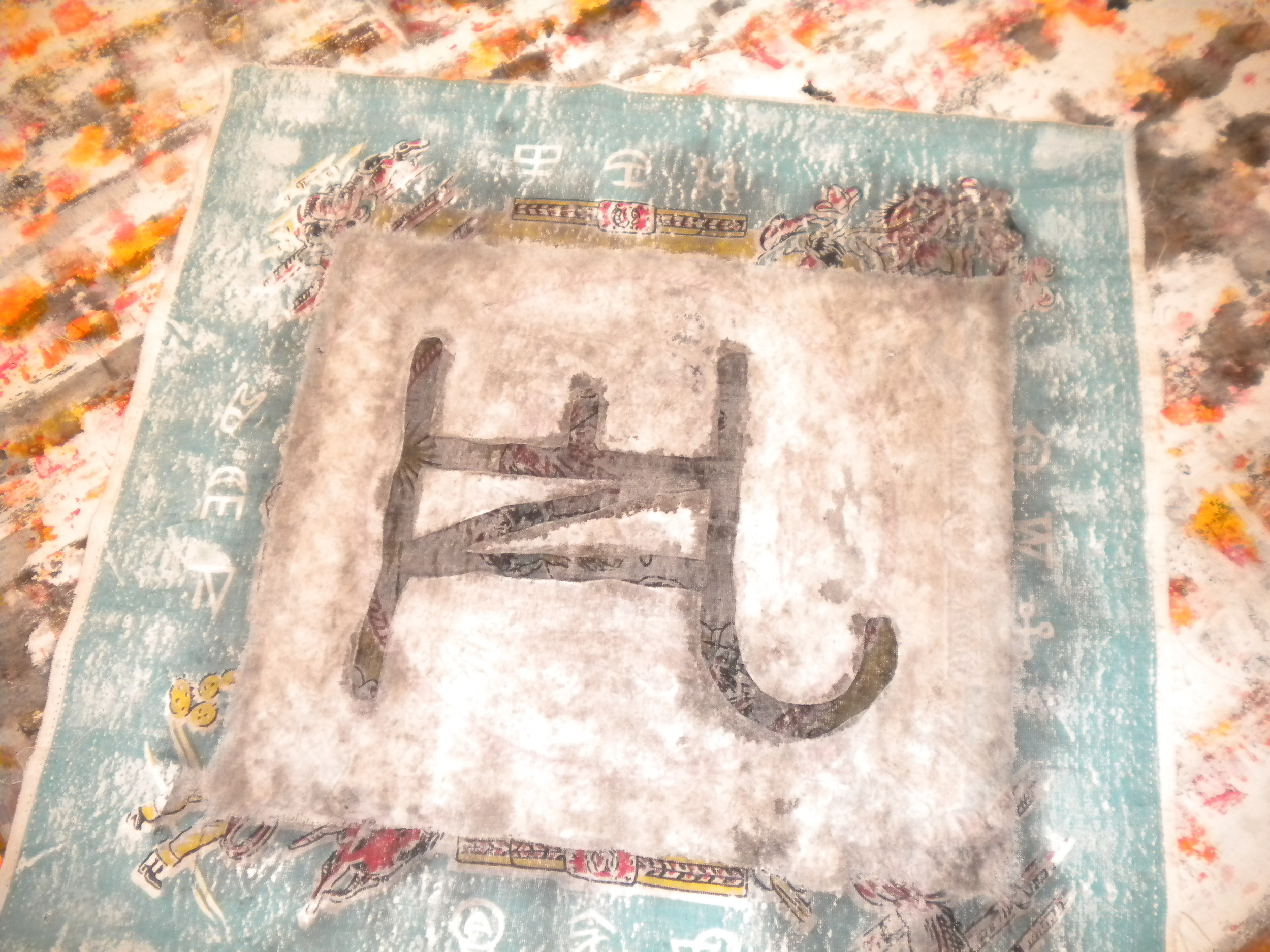
She made a Jentel/Neltje brand for us to have. I'm so excited to show their work in my office.
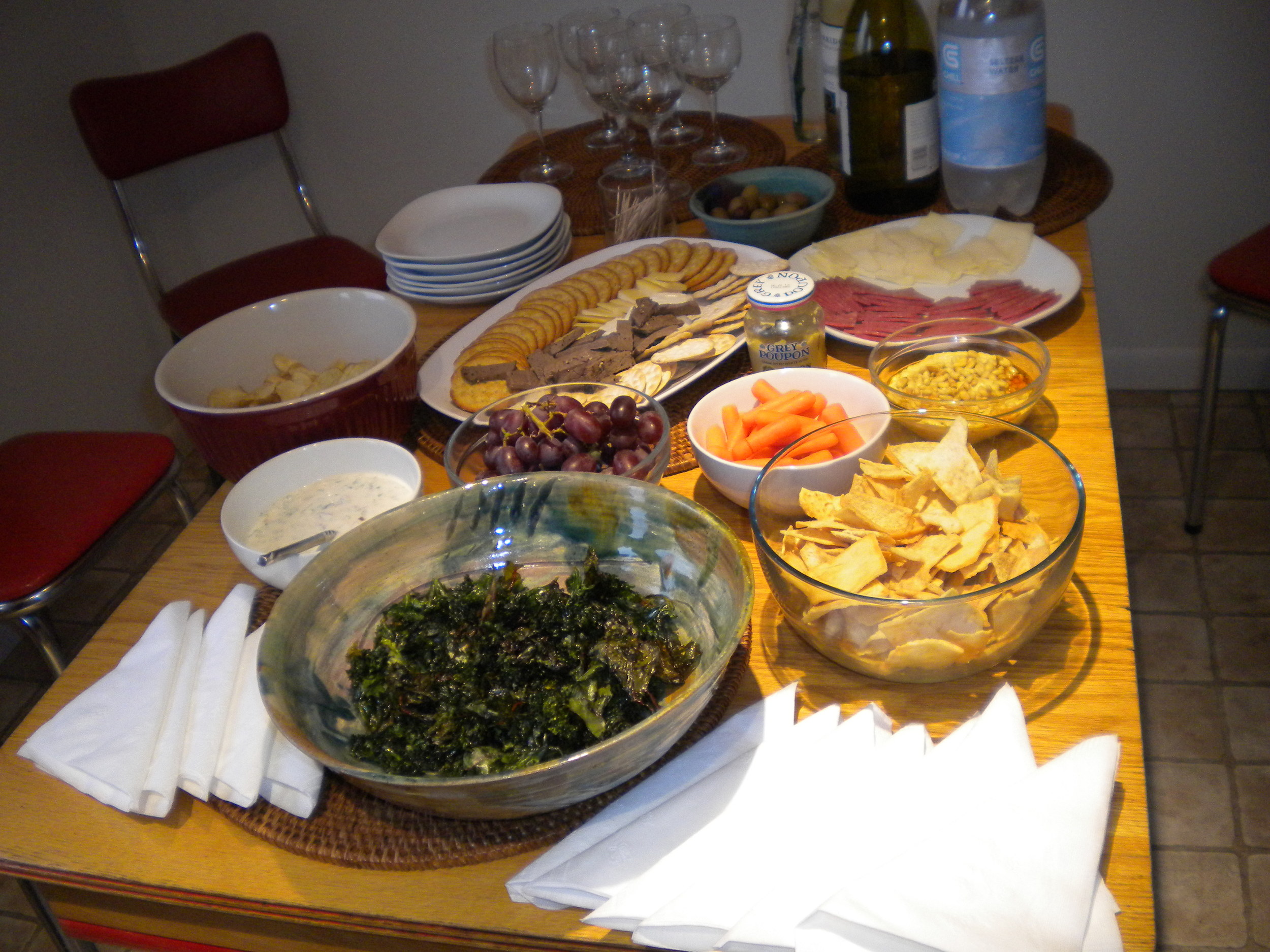
After snacks (see gratuitous food shot) we went to the media room where Lorraine and I read work we completed (thus far) while here. Lorraine's also working on a linked story collection so we got to hear more of the travails of her protagonist. And Lorraine is an amazing reader, she inflects the right words and also acts out moments. I love the times we've gotten to hear her read. She knows how to paint a picture with words.
I read the ending of a story I completed here and am quite happy with the voice and tone. Apparently, I captured the angst of a seventeen year old boy pretty well.
Monday and Tuesday were cloudy and rainy and windy unfortunately. But we looked forward to sunny skies that came upon us slowly on Wednesday and full on on Thursday post-errands. There was hulu hooping and dance music and more cooking on our last evening with Lynn. We each got gifts! Here's mine:

Since Joyce was a second-timer she got something even cooler!

As we consider everything it's been an amazing time and I feel extremely blessed to be surrounded by such amazing artists and women. Great! Some things I want to make you aware of when/if you come to Wyoming:
1) Winds are way worse than the "wind tunnels" in New York City.
2) Buy hiking boots (props to Northface for their wonderful boots that got me through many excursions.). No, seriously, buy hiking boots and good ones.
3) Be nice to everyone. Pay it forward, people.
4) Bring bug repellent in the warmer months.
5) Cows and horses will stare you down, so show no fear.
6) For God's sake enjoy the landscape and relax! There be mountains!
7) When driving, beware of wayward deer, moose, antelope, and wild turkey (not the drink).
Below are the links to the websites of the artists I got to spend time with in Wyoming during these past four weeks. People I admire, and respect, and miss terribly.
Lisa Buchanan: www.lisabuchanan.com Joyce Ely-Walker: www.joyceelywalker.com Lorraine M. Lopez: www.lorrainelopez.net Karen McAlister Shimoda: www.mcalistershimoda.com Rachel Meginnes: www.plainweavestudios.com
Check their work out, buy it, follow them (on social networking sites, not in life per se), contact them, visit their gallery openings or readings and continue to support the arts! If it weren't for amazing residencies like Jentel (and amazing people like Neltje, Mary Jane, Lynn, Matt, Donna, and Debbie) many of us would never get our foot in the door. So it means a lot to have this support and acknowledgment that you have a story to tell whether it be in words or illustrations.
Postgraduate Writers Conference (2010 Edition)
After such a splendid time last year I decided to return to the Vermont College of Fine Arts for the 15th Postgraduate Writers Conference (PWC) in Montpelier, Vermont. The Postgraduate Writers Conference targets graduate students as participants, thought it is not a requirement for entry. Something that I do enjoy about this conference is that entrance is not based on writing samples, but on interest. Montpelier is a great location, quiet, serene, and away from major urban areas, so you can utilize the atmosphere for being creative and focusing. Just as I did last year I ended up holing myself in my dorm room with my laptop and flash drive and just worked away.
Of course, I wasn't the only one. The population for this conference is an older crowd, retirees, parents, full-time workers, and so on who utilize this time away from home and responsibilities to really focus on writing and revision. Revision of course being one of the most daunting parts of writing.
After speaking with several people on their graduate school and writing conference experience it stood out even more that PWC is one of the tops from the participant perspective.
Many conferences pack your day with events so that you may have to pick and choose what you want to attend and what you want to forgo. And when you're a first time participant you may not want to forgo anything unless you feel yourself nodding off or the strong, strong need to write compels you to type away on the keyboard or scribble on a notepad. This year the conference director, Ellen Lesser, did some finagling of the schedule to make sure no events overlapped. So you could go to a lecture at 1:30 on writing in the real word and then one of film editing as it may relate to editing a poetry compilation at 2:45. You want to do some freewriting before workshop on Wednesday? Sure! We'll have a "yard sale"! Want to do a quick hike before going to workshop to work off all those pancakes with Vermont's own maple syrup? Done! Oh, did you want to visit the Montpelier Farmer's Market this morning, then workshop, then go swimming this afternoon? Bam, at your leisure!
I found it very pleasant to have the option of not having to pick and choose, though like I said, I was writing most of the time and missed many events but those on the final days.
While there are always hiccups when organizing something where people come in from places all over the country and need to organize room & board, daily activities, food, and so on and so forth. But the fact that it's easy to get in touch with either Ellen or conference coordinator, Anne, who are the most pleasant women you'll ever meet and no matter how frazzled they are never shut your needs down is something I highly appreciate.
Sometimes good experiences can make you ignorant to the bad ones out there as well. One of my workshop mates and another woman working on her novel had both just come from horrific experiences at the Wesleyan Writer's Conference weeks prior. They both had the same instructor who barely acknowledged or viewed their work, felt that faculty and students were segregated at all turns (in particularly during meals), and that the conference coordinator who seemed so kind and informative via e-mail was cold and dismissive in person. Since the Wesleyan conference has no workshops, mainly lectures and a one-on-one conference with a published instructor/writer on your submission it was devastating to learn that not only did they feel unwanted, but their work itself was not even read--more than likely skimmed--is a great blow to someone who may not have shown their work to anyone before then and is trying to grasp at any positive reinforcement you can get because you have no one else to help you can cause one increasing self-doubt if not all together dash their dreams.
I was glad that the two women I spoke with came to PWC after such a bad experience and got to experience how a conference should be. That your workshop leader is more than happy to sit with you during breakfast, lunch, or dinner and discuss their obsession with Facebook. That they are willing and wanting to extend class discussions during lunch while interrupting discussion to get a piece of peach cobbler real quick. That they hold extraneous lectures or writing sessions to get the mind, blood, and hands flowing before a 2+ hour workshop. That these published writers we may look on in awe (or perhaps skepticism) are truly invested in your work, sitting proudly and listening to your piece at the participant readings and giving you a standing ovation when you're done.
So, that's my second plug for the Postgraduate Writers Conference. While I don't know if I'll attend again next year due to finances or pursuing other opportunities to write and critique during the summer, I do know it will be at the top of my list to return to for it's affordability and comfort. And I always get so much writing done when I'm there, major bonus!