
BLOG
Design Post: Let's Talk Book Covers
The visuals of a book mean as much as the content. The saying "Don't judge a book by it's cover" is apt in many instances but when it does come to books, let's be frank, that what we see does draw the eye. So, I wanted to look at a few book covers that appeal to me as someone who works in the industry as well.
As you may or may not know I am a typesetter. Part of my job as production editor is to layout the interior of a book in InDesign from MS Word, contributing to the design aspects of what goes where and how it lends itself to the text. I work with designers, often, have friends who are designers and artists, and know that for my personal taste when I pick up a book I never heard of what draws me first...is the cover. From there I read the copy and if it interests me I'll add it to my list to read or just buy it on the spot if I've read some lines and am intrigued. But again, what first drew me to pick up this book? The cover. The initial aspect of marketing that you as customer see. What we in publishing aim for is to make the cover/book jacket appear inviting or intriguing, enticing or exotic, unique or fitting in with the trends so it's recognizable. Sometimes we want to shock other times we want something subdued. Of course the author's input counts but doesn't always translate to what makes it to shelves and what you see online.
For me, a cover should capture the intent. As should the interior and the fonts used. I may be getting a bit insidery here, but we think about these things, often. Publishers want to sell books and cater to what makes it different. We want to make the author happy and appeal to an audience while maintaining company style and getting hip with the times. There are a lot of variables when it comes to covers. So I wanted to take a look at some covers I think hit the spot in terms of catching my eye and also in matching the content/tone of a book. I'm going for books I have read so that I can attest to the interior and cover being complementary. (You'll notice that they're pretty current covers.) Here are some faves:
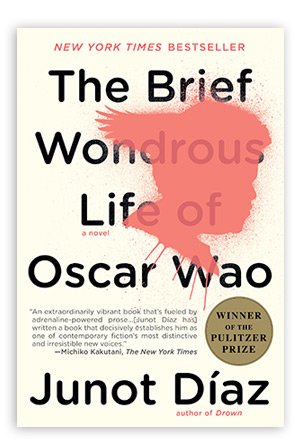
Junot Diaz's covers from Penguin. This is a new 'branding' for his books from his publisher and I like how they match (font, background) so that it becomes uniquely attributed to Diaz as author while also tacking onto a specific element and not being too busy in the front. And particularly I dig Oscar Wao's cover because it maintains the original outline of Oscar's face yet fits in more with the style of the rest of his books.

The Hunger Games series (U.S. covers). I like that even though the hero is a female she's not smacked onto the cover looking perfect and sorrowful. The symbolic nature of the designs illustrates how much the mockingjay pin/symbol plays throughout the series is important and the colors, as you may note, get lighter as the series goes on. From the bleakest of bleak in black, to red which can also mark the blood shed in Catching Fire, to the blue of Mockingjay that is soothing and calm not too bold like a navy blue but more a powder one gives some hope and shows the mockingjay not as pin but as a living bird in flight. Symbolism up the ying/yang! If you take a look at some of the international covers you will see some with a young girl in the woods of the first book or a young man and I think it takes away from the detriment when you can see the characters' faces for this particular book. The elements that signify the change and rebellion of Panem work well with the backgrounds, colors, and metaphors.
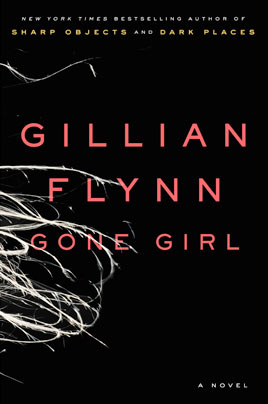
Gone Girl. In a word: creeptastic. The title itself is eerie and leads me to think nothing good, add a cover of a black background and strands of hair leads you to also think "not good." Gillian Flynn's previous books (Sharp Objects & Dark Places) also got a cover redesign to fit in with a kind of theme just like Diaz's publisher did for his. Hers are black backgrounds and again a single element tying into the content of the story and the representation of a dreary world and the people that reside in it.

Tampa (UK cover). Well, considering the content that UK cover is another note on the representation that is subtle yet all the more alluring. The innuendo is evident and works as a wink to the reader of what we can/can't say. Also, the pink! That color shirt and the open button hole hit the aspects of the protagonists unbridled and unashamed desire perfectly. Fantastic.

Lucy Variations. I like the cover because of the simplicity of it but also how the elements and colors work and how, unlike many YA covers, it focuses on what the character lost by showing her hands at the piano. With Lucy Variations the piano is at the heart of Lucy's story and it fits in while standing out from what else is out there for YA books.

Between Shades of Gray (original hardcover, U.S.). The wires, the ice, the one colorful sign of life growing through the snow/ice lends every bit of sorrow and hope to this tragic story. It enhances and symbolizes what Ruta's novel is, which is harrowing but able to find a brightness to it. Love it.
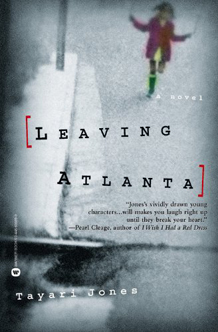
Leaving Atlanta (hardcover). Another cover that portrays the ominousness of Tayari Jones' debut well, especially with the font having a typewriter style which can be seen as dated (which the story is looking back at murders of children in Atlanta in the 1980s) to also reflecting the fact that this was a major news story. The grays and darker tones add to the bleakness of the story but then you have a cute child in a red jacket skipping down the street. This seems like the calm before the storm and definitely helps depict the innocence of children and the danger of the time.
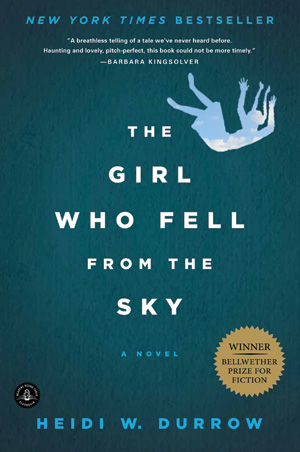
The Girl Who Fell From the Sky. This cover illustrates the content well and I'm a fan of teal in general. What the paperback copy does well is that it also includes the sky as the interior to the image of the girl falling, a nice touch. The book centers on the main characters coming-of-age as a teen being raised with her grandmother after her mother did a pretty brutal and tragic thing to her children. As sole survivor this girl is known as the girl who fell from the sky and survived and it's a hard title to carry as you're trying to come into your own. So the cover and title clearly illustrate the protagonists past and how that may define her future.
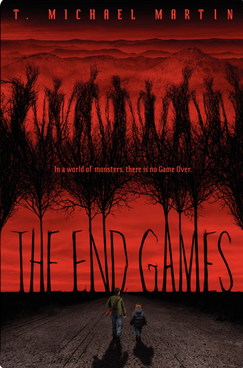
The End Games. When Mike first showed me this cover I was bowled over. The illustrations, the background, the horrible eerie things stretching out of the land noting how the terror can be outside and in your mind along with the red makes it a real standout. And you don't see as many illustrated covers these days. The two brothers, one older protecting the younger heading into the unknown is the epitome of what a good horror story should invoke.
Fave Reads 2013 Edition
Annual wrap-up lists have posted or are posting and so here's mine for my favorite reads of the past year.
This year I read some books that disappointed by authors I like, but I was also introduced to some fab reads by new and established authors, and am very much looking forward to a new year of new books as well as new characters and worlds to get immersed in. Bring. It. On. Literature. My standout reads read in 2013 (not necessarily published in 2013) are as follows and are in no particular order:
- The Coldest Girl in Coldtown by Holly Black (2013): A friend lent me the ARC for this one. Holly was a big draw at BEA this year and this was my introduction to her writing. It's one of the first YA books I've read with vampires. Yes, the first. I have to say the standout characters in Coldtown definitely make this a solid standalone book to the fantasy arsenal while showing a narrator making mistakes, reflecting on her life and losses, and willing to do what it takes when she realizes what she truly wants. The alternate POVs and narrative voice that goes from Tana to the company she keeps is enthralling from page to page.
- The Best American Magazine Writing 2012 (2013): Since I was introduced to this anthology reading the 2009 collection I have made it a point to read each year's anthology and enjoyed this one with the variety of journalistic perspective from those taken advantage overseas and attempting to gain justice to those just trying to get by to race as it stands for Asian Americans in the U.S. Nonfiction brings a truth to our lives that we don't normally see/hear about and every year this collection engages and increases my knowledge and thirst for more knowledge about what goes on not just around me but in the world.
- Gone Girl by Gillian Flynn (2012): This was the book that almost everyone I know has read and enjoyed or partially enjoyed, but the fact is everyone was talking about it. So of course I read it to see what the hype was about. I enjoyed it, even knowing an important fact about the story I enjoyed the utter despicableness of these characters and people willing to do whatever it was to get what they felt they deserved. I get that some people would be turned off because it's about "privileged White people" in a way, but it's not because these people were on a pedestal and then promptly had that pedestal kicked out from under them to reveal their truest selves. And that, was enjoyable to see play out.
- This Is How You Lose Her by Junot Diaz (2012): Yes, Diaz is a genius. Yes, Diaz has a great style. Yes, Diaz's latest collection is good, very good. And yes this is one of the few literary books I read this year by a writer I admire that did not disappoint, but had me like him even more. My favorite story of this collection was the "Pura Principle." Diaz shows characters at their worst and also shows people fighting day by day to survive and admittedly has some people come to terms with who they are through others problems and faults. Junot is a great artist and a respected person and I look forward to whatever else he contributes to the literary cannon. I don't care if it's a haiku.
- Tampa by Alissa Nutting (2013): Another hyped up book because of the content mainly. This book is about a female pedophile. This book may make you cringe and throw the tome away. This book may make you feel a lot of things but it will make you feel something. The prose is directly from Celeste. A well off, beautiful, and yes conceited woman who knows who she is. Celeste knows her desires are bad but she doesn't give a damn and she goes after them with so much force you are thrust into the craziness of her situation and mind for the full ride. Nutting's success is in getting you in there and understanding Celeste. Not liking Celeste or relating to Celeste but understanding her need and that's what makes this book successful. I have not read Lolita. And there's been extensive comparison of it to this book but I think Nutting did something on her own here and the fact that it's a woman in 21st-century America may make people biased but hey it's not like there aren't other books with similar subject matter out there.
- Go Down Together: The True, Untold Story of Bonnie & Clyde by Jeff Guinn (2010): This was a bookclub pick so I may not have found it had it not been on our list. But I am glad I did. Guinn reveals the true Bonnie & Clyde to be hapless, lucky (and unlucky in their demise), unorganized, flashy criminals who are villainized a heck of a lot more in their death than they were in actuality. Accidents resulted in their infamy but really they loved their families and just couldn't get a break. That's not to say they, mainly Clyde and his gang, didn't do bad things and people didn't get hurt. But when push came to shove they were not cold-blooded killers as portrayed in film and even in the miniseries that came out late last year. It's good to have extensively researched material like this to provide a glimpse of reality to characters who were real people.
- The 5th Wave by Rick Yancey (2013): As far as series go I'll admit that I am getting kind of tired of them. BUT, 5th Wave for me was a standout that got me excited again because of Cassie and Zombie. The gradual reveal of how the waves took down society and how each of these characters lost their families, the feeling of kids being brought up for killing and rage. So many things keep you interested in what the larger war will end up being in this book that I wanted more and I wanted it ASAP and I will gladly, but impatiently, wait for the next two books in this trilogy. Keep up the good work, Mr. Yancey!
- Eleanor & Park by Rainbow Rowell (2013): More hype! More deserved hype! E&P as it's been affectionately known as was something I heard spread through wildfire via Twitter from book bloggers and avid readers who loved this book. And Rainbow is so sweet and has such a nice Twitter presence, and that cover!, so I bought the book and totally saw what everyone else did. Eleanor & Park is a love story that takes place in the 80s between a red-headed girl and a biracial boy trying to find themselves in high school and thus find each other and love and heartbreak and so many things! It's a tender story that anyone can relate to on so many levels between Eleanor hating her body and hiding it to Park feeling like his family doesn't understand him and rebelling and each of them losing a lot in that time period they find each other. Such a sweet and compelling read I urge you to delve in.
- The Dream Thieves by Maggie Stiefvater (2013): 2013 was a good year in YA as far as I'm concerned and as you can see from this list. Maggie's sequel to The Raven Boys had me staying up to reread sections and going on Twitter to ask who else read it so I could discuss and Maggie herself saying "I read it." And me gushing how much I loved it and went back to book 1 to see her subtle hints. Well played, Maggie. This book follows Ronan primarily and while he was a sullen, angry man in book 1 you learn why in book 2 and see so much potential for heartbreak with him and others as the story careens to it's last two books. Man, I am getting ready for heartbreak myself but with Maggie's literary style and way with characters I think I'll enjoy the ride.
- Two Boys Kissing by David Levithan (2013): Long-listed as a finalist for the National Book Awards in Young People's Literature Levithan wrote a beautiful and elegiac story with a chorus of deceased gay men to a younger generation in this story that winds separate lives during one event that feels huge for these teenage boys. It's just beautiful. Beautiful, beautiful. For some it may be too "preachy" or too "hopeful" I think we need more books like that done this well. Not everything should be dark. And I should know, I write a lot of dark stuff.
- Tiny Beautiful Things: Advice on Love and Life from Dear Sugar by Cheryl Strayed (2013): This is the collection of questions and responses from when Strayed was Dear Sugar for the Rumpus. If you've heard Cheryl read live she has a soothing, maternal voice that you want to just have her hug you and promise everything is okay. She maintains this voice in Tiny Beautiful Things but also hits you with some realness and tough love as well. Her experiences really aid in understanding her responses and in fact make her one of the most perfect people to have been Dear Sugar for her thoughtful and careful responses to serious and sometimes not so serious questions, but all are reflective and will lead you, they did me, to really sit and take her advice to heart and learn from it.
- Icefall by Matthew Kirby (2011): I had the ARC for this middle grade novel for a bit and finally delved in and enjoyed it thoroughly. Icefall follows a group, some we'll note are Vikings, as their world comes to war but is narrated by eleven-year-old middle child, Solveig, who does not know her place in her family. Her older sister is the pretty princess to be married off and her younger brother is heir to the throne, but what is Solveig's place in her family? Kirby does a great job of keeping up the tension and building the mistrust of those Solveig cares for and is unsure of resulting in some surprising results. Interspersed with the action of hiding in ice while awaiting news from her father are the stories told by the Storyteller who has a role in not just being entertaining but building morale. It's a really good coming-of-age novel that shows growth of a character and the realization of close ties.
- Ayiti by Roxane Gay (2011): I was mainly amped that I got to meet Roxane Gay at AWP let alone get a signed copy of her first book. This is a collection of stories and you know I love my collections but Roxane does different styles with each not just telling you actions with prose but giving you poetry or lists or sections/scenes like a screenplay, journalistic versions and so forth that succinctly get into the minds of these characters and their experiences. I read all of Ayiti during my train ride home from Boston and have to say the standout to me that had me smacking myself with "How the hell did she do that?!" was "You Never Knew How Deep the Waters Ran So Cruel So Deep." That is a story in LIST form. Read it. Fantastic.
- The Art of Fielding by Chad Harbach (2012): It took Harbach 10 years to finish this novel and it was well done in that time. Fielding isn't about baseball it's about people. It's about being scared of growing up. It's about failure. It's about realizing your limits and not taking it seriously. There's a robustness to Fielding and the characters in this text that makes it standout as a debut and may also be considered, by some, a coming-of-age novel for the collegiate characters it follows. I think the main female character of Pella could've been given a bit more in terms of strength but she carries herself and grows into herself and Harbach shows that growth, in a way. I love Schwartz. Love him. I want to date him and marry him. That's rare in fiction.
- Complications: A Surgeon's Notes on an Imperfect Science by Atul Gawande (2002): This was the first book I read last year in full and it was fantastic, and scary. A National Book Award Finalist in Nonfiction, Gawande writes about why and how physicians can make mistakes. He's a doctor writing about how things can happen, how illnesses can be overlooked, how much residents push to try and be taken seriously but will often be passed over by experienced doctors who can still make the tiniest of errors that can be quite costly. I was into this book from page 1 to the acknowledgments and want to read everything by Gawande now.
Other notable reads for me this year were Men We Reaped by Jesmyn Ward (2013), The Evolution of Mara Dyer by Michelle Hodkins (2012), How to Save a Life by Sara Zarr (2011), Hyperbole and a Half by Allie Brosh (2013), and Fangirl by Rainbow Rowell (2013).
Happy reading all!