
BLOG
A Word on Readings...
After discussing pros and cons of being an audience member at a reading I wanted to suggest three things to think about when you pursue reading your work to a larger audience.
A reading is a great way to get noticed and to build an audience. Spoken word artists rely heavily on the reception by an audience--it's in the title of "spoken word" artist that their work is crafted to be performed. And while there is material that is meant to be performed such as music and spoken word there's more subtle poetry, non-fiction, and fiction read aloud. My friend Kim and her friend Kia and I recently discussed bad readings we'd been to. Ones where the reader was monotone in the way they spoke, not changing inflection or diction at all for the piece. And when you have dense material this is very, very hard to listen to let alone get excited about. There are also those who tend to drag on and keep talking and talking because they have people there to listen. And when all these things combine it makes for a perfect storm in terms of the listening experience.
I've experienced the powerful and the painful. I've heard authors read large portions of work where only one sentence stuck with me after twenty minutes or more of listening to them. I've heard authors, published and non, ramble on about life coming to open mics with nothing prepared just hoping it'd flow, it didn't. I've also seen spoken word artists so in tune with their craft that they'll have a standing ovation and fiction/non-fiction authors arouse so much passion and sympathy from listeners that they just sold a good dozen or more copies of their books in the time they read.
Now, I'm not saying everything that is read should be humorous or fleeting and not necessarily be deep or have a connection. What I am saying is that a reader (author in this case) should consider their audience or potential and establish readers (those who do read the book). I think sometimes authors choose material that is the most interesting to them, but again that doesn't necessarily translate aloud.
My first experience reading aloud was in junior high and I was reading a portion from The Fear Street series by R. L. Stine. My mistake was that I read too long and without much oomph. When my classmates heard me rustle a page I heard groans in the audience, they were disgruntled at the fact that I kept going and didn't know when to stop. I went on so long that I bumped someone else out of a reading spot. In my sophomore year of high school I had written a poem for Black History Month and read it so stagnantly that no one paid attention to the words, no matter how 'deep' I thought they were in my adolescence.
By college I had learned a bit more, by grad school I was getting better and more animated, and now--while I don't know everything--I feel much more confident when I go to the mic to read my work. Am I nervous? Heck yeah I am! My hands shake the paper I'm holding so that I'm glad when I have a podium to hide my trembling. But because I believe in my work and the brevity and impact of it I know that even if it doesn't get a good response, it'll be over quickly enough.
My conference experiences attest to most of my recent experience in reading material I was confident in. Most if not all writing conferences with workshops as a focus will have an opportunity for participants to read from their work so that we're not only hearing faculty but the potential future of literature.
Material
My first time at VCFA I read a heart-rendering piece from my Collection that was really sad. It got shocked moans from the audience in places because they felt for the husband at the funeral. The piece has changed dramatically since then, but I knew the impact was there.
At Napa I had two minutes, and went a bit over, to reveal a scene about two men talking about infertility and insecurity, a tete a tete between two brothers. I chose the scene that revealed the most tension through dialogue. My workshop mates enjoyed it and Forrest Gander said he liked the opposition I presented in such a short amount of time.
At the Glen I read the last few pages of another story that my workshop mates and Sara Zarr had read. So I already had partial invested interest from people at the conference. The end was a fight scene. I got laughs in places I hadn't expected to and a nice round of applause. The next day at our farewell party several people came up to me and said they remembered my piece because of the power and tension and clear goal of the character in that portion. I picked it because I knew it was short and contained a moment that may resonate for readers and moved quickly, yet ended with heart for an edgy character.
I could've chosen the pieces that sounded pretty and I had been told 'moved' people and such but if the portion wasn't contained or wouldn't draw interest or couldn't succinctly tell a portion in an engaging way I more than likely won't read it out loud because I don't know if it'll hit the mark or if listeners will enjoy it enough to focus on what I'm saying.
Speech
Something else I've learned and gained control in is how I read. Like I said I started off very monotone with no inflection years ago. With my own writing I know the voices and the characters I have lived with for years, sometimes less. So I aim to capture those moments I want to convey. I can read pissed and lower my voice to a manly bravado.
My friend Ennis has done readings for pieces he's published. He's a former actor and really captures the range in the characters and moments. He's been complimented heavily for this and when he tells listeners he was an actor they aren't surprised.
Is it necessary, changing tones? No, but I think it helps to further show your range and understanding. I think going overboard with accents you cannot master may distract the listener rather than intrigue them. So I don't do southern accents for characters that have them, however I do alter tones when necessary and emphasize where necessary and get into the spirit like an actor would a part. These are your characters. This is your narrator. You know them best.
Length
I have to say that length and timing matter. Do practice reading if you have a time limit and the shorter the better at times. Jennifer Egan tends to read the same story, her first, from The Good Squad. I've seen her read a handful of times since it was released and she often reads that story because it does pack a punch, have interaction within it, and is one of the shorter ones in the collection. On top of that she reads it well. She knows Sasha and she does the voices of Sasha versus everyone and captures all the moments in the story so that after reading it yourself hearing her read it sounds completely new. And that's the effect you want to have on listeners.
I've read my flash fiction at conferences, open mics, and residencies and some pieces hit harder than others and required my audience for the few minutes I was in front of them to not have to pay attention for more than a few minutes. I appreciate the five minute limit because it does allow me to focus on a single moment to draw the reader in without going overboard with background and other instances that may not be of interest to listeners in that moment.
So these are my suggestions if you choose to read your work aloud:
1. Make sure the material will resonate with the reader and is conducive to being read aloud. If it's very convoluted and has a lot of twists and turns it may not be right for an audience to hear, especially if many are not used to listening to work.
2. Try to differentiate how you speak if you have dialogue and try to not sound too professional if the text doesn't require it. Junot Diaz writes in a voice that is similar to his own so that when he reads it's not as though he's reaching. Tayari Jones also is very good at capturing her characters when she reads. She knows them and hearing her read Silver Sparrow going from mother to daughter to father was amazing and put me in the moment. Like the writing the oral voice should be your own but reading it in one way every time may not give readers of your work a new experience.
3. Try to keep it short. Yeah, featured artists don't have that worry so much because they get a good amount of time. Usually twenty minutes or so, sometimes longer. But many people are not used to long periods of listening to something that is not accompanied by visuals and/or music. So if you're going to read for awhile make sure it works in that space of time as well, see 1 & 2 above.
I think these three things can help any artist whether it's doing a presentation or reading creatively. It's nice to hear your own voice but give the audience the respect of being entertained by it. It's not so much about you once you're at the mic but about those who graced you with their presence.
Napa Valley & Santa Fe: Two Conferences, Two Perspectives
This year I did not one but two writing conferences back-to-back on the west coast. This called for lots of heat and water and immersing myself in the arts. I was glad to do so, but after a couple weeks did miss home, sort of.
As noted and noted again I am officially back from my self-dubbed "writing conference tour"! (echo, echo, echo) I applied to, and was happy to get scholarships, two conferences to be in classes with two writers I have admired for years.
My first stop was the Napa Valley Writers' Conference (NVWC). I'll gloss over my frustrating travels in LGA, almost missing my connecting flight, and my new good buddy Barbara and I suffering in 100+ degree heat in California traffic as we crawled from Sacramento to St. Helena. Meeting my workshop mates and workshop leader, Tayari Jones, more than made up for it. As did the wine! (One of my faves of the week was Stein Family Wines Rosato.)
Workshop groups met for a bit to get a sense of what we wanted from the week and why we were there. Before the conference began Tayari was very hands-on in regards to getting a better sense of our work, requesting statements of intents on what we were hoping came through in our pieces and what the overall story was about. This proved to be incredibly helpful when discussing the work so that we could lead into whether or not the bigger picture was being captured.
From the start I felt a very positive vibe from the group and as the remaining members arrived over the next couple days our camaraderie was solidified.
Tayari is a great mentor. What stood out to all of us was her problem-solving skills. Sometimes you're in workshop and while what doesn't work is pointed out it's up to the writer to figure out how to fix it. Not a bad thing, however coming up with resolutions can be more time consuming for some than others. With Tayari, bam, you get insight and fixes.
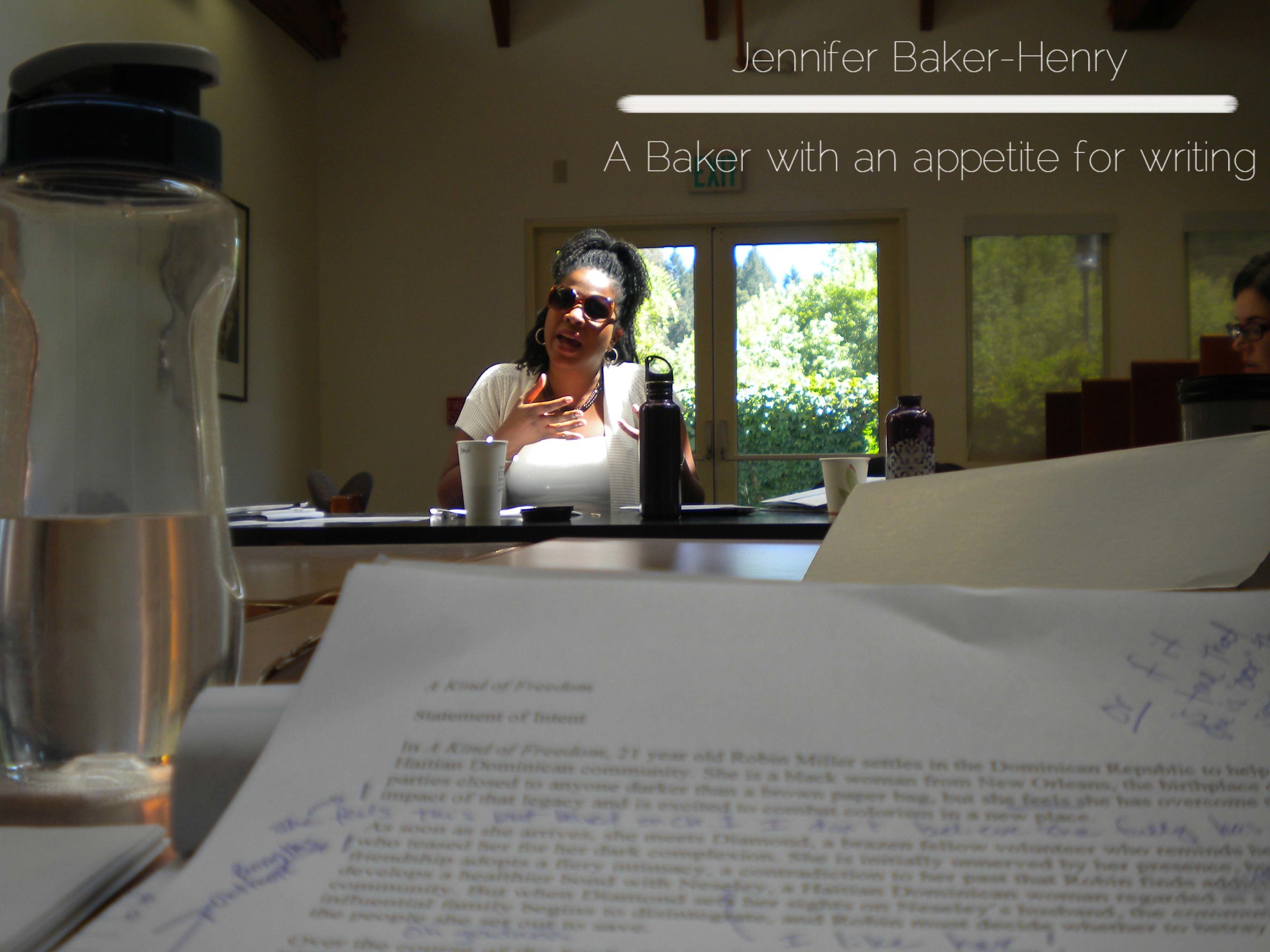
Amongst ourselves we all agreed, "Damn, Tayari's good."
Tayari had outlined whose work we'd be discussing on what day and had a whole strategy on why certain pieces had been grouped. From the get-go we knew she cared. This was further solidified in the way she spoke at length about our pieces and in the time she took to make comments (via colored pen and sticky notes) and in the one-on-one sessions we had with her the day after being workshopped. Being complimented by an author you admire is one of the highest forms of praise and also one of the best motivators you can get and I think, no I know, we're all flying high after this.
Fast forward to the events. Poetry lectures every morning, a fiction lecture every afternoon post-lunch, and a wine tasting (hey, it is Napa Valley, well St. Helena, after all) followed by a reading.

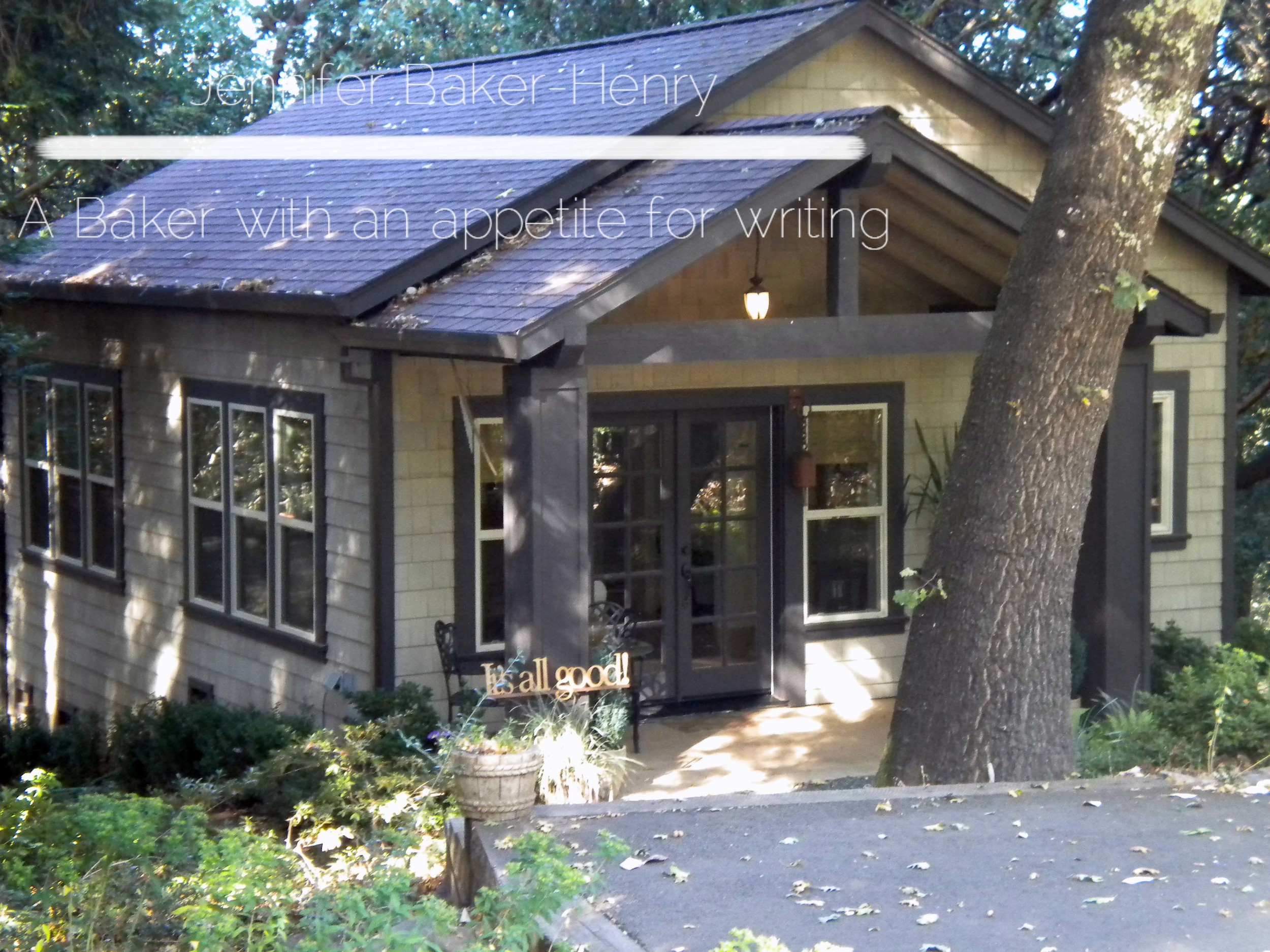
I was very lucky to receive community housing and stayed in a lovely cottage not too far from the Upper Valley Napa Valley College campus. And it was even luckier that my ride to the conference happened to be staying half a mile away down the road to pick me up every morning. (Thanks again, Barbara!)
Food provided was breakfast (buffet style) and lunch (portion controlled) by the Culinary Institute of America in St. Helena. Breakfast included hard-boiled eggs (from chickens on campus), steel cut oatmeal and fixings, fresh juice, poached fruit, fresh fruit with basil, and homemade pastries which included croissants (dense and buttery), bear claws (with almond paste inside), and savory bread pudding (with and without bacon). For the most part all meals were vegetarian fare, but at the picnic on the last night there was meat! Meat in various and glorious forms such as lamb meatballs, beef strips, roasted duck, and chicken cutlet portions all so delectable it melted into your mouth! And, of course, dessert was at every lunch and dinner. Limoncello pie! Freshly made ice cream with caramel sauce! Brownies! Caramel chocolate bars! Yes, yes, and yes!
I had a great time, a great class, and a great mentor. And I'd like to add that poet faculty such as Forrest Gander and Brenda Hillman were super nice, supportive of all attendees, and very gracious and funny. They were at every event. Forrest even came up to me after the participant reading and said he enjoyed the scene I read from my Collection. A Pulitzer nominee said he liked my writing. Well, knock me over with a feather...
The weather was hot but pleasant and often there was a breeze. It did cool down in the evenings so a sweater/jacket was necessary. The wineries were gorgeous, the people of Napa and St. Helena pleasant, and the surroundings were lovely. My workshop mates and I also became hardcore fans of Gott's Roadside as a dinner option. Went twice (back-to-back days). No regrets.
After a near miss in terms of catching my flight to Albuquerque (for once I am thankful for plane delays) I had a bit of a segue way in Albuquerque before heading to my next conference.
Cue Segue way:
Native American Food Shacks (Pueblo Jemez)!

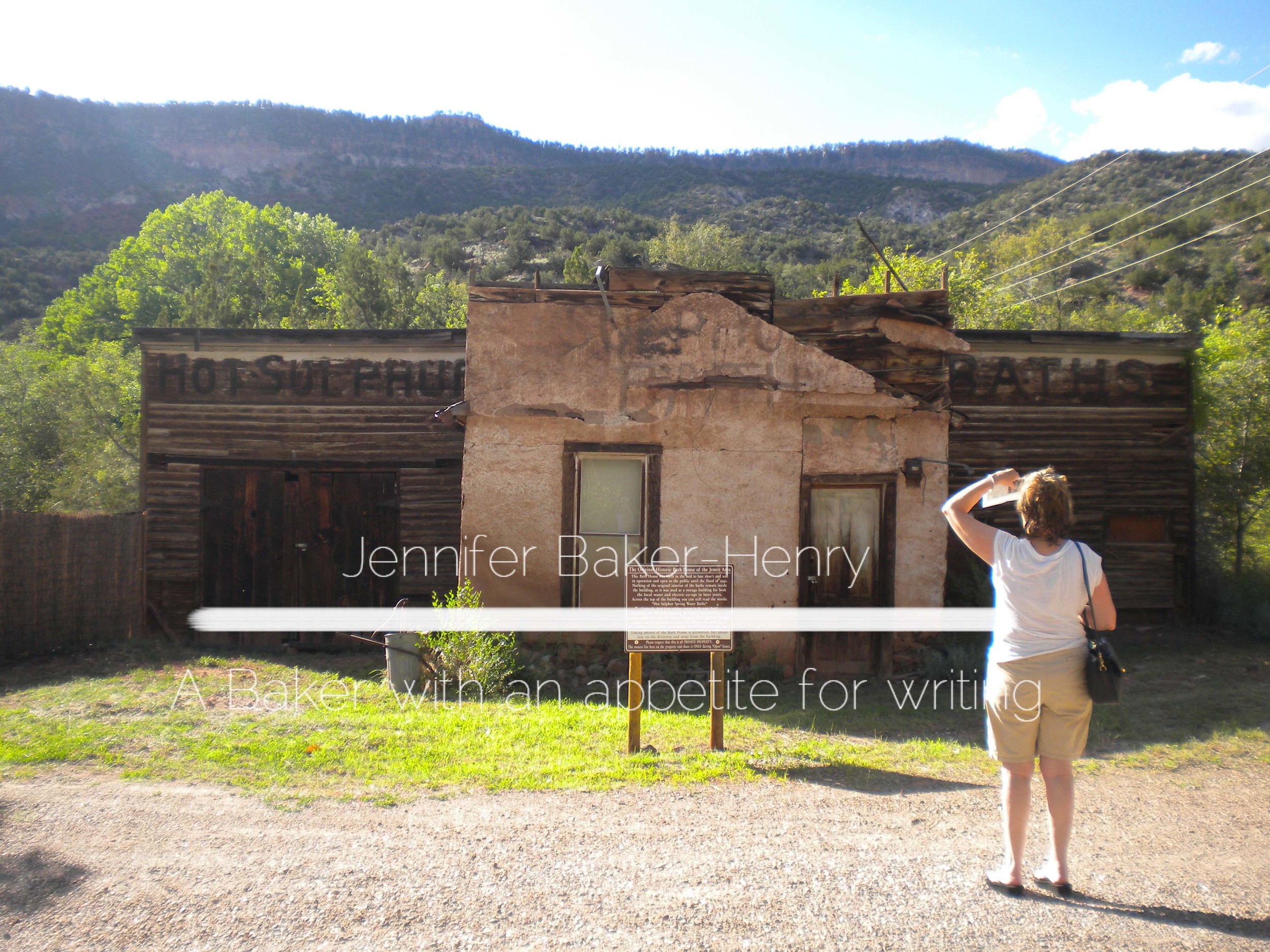
Hot Springs (Pueblo Jemez)!
Spanish Market with Local Artists (Santa Fe)!
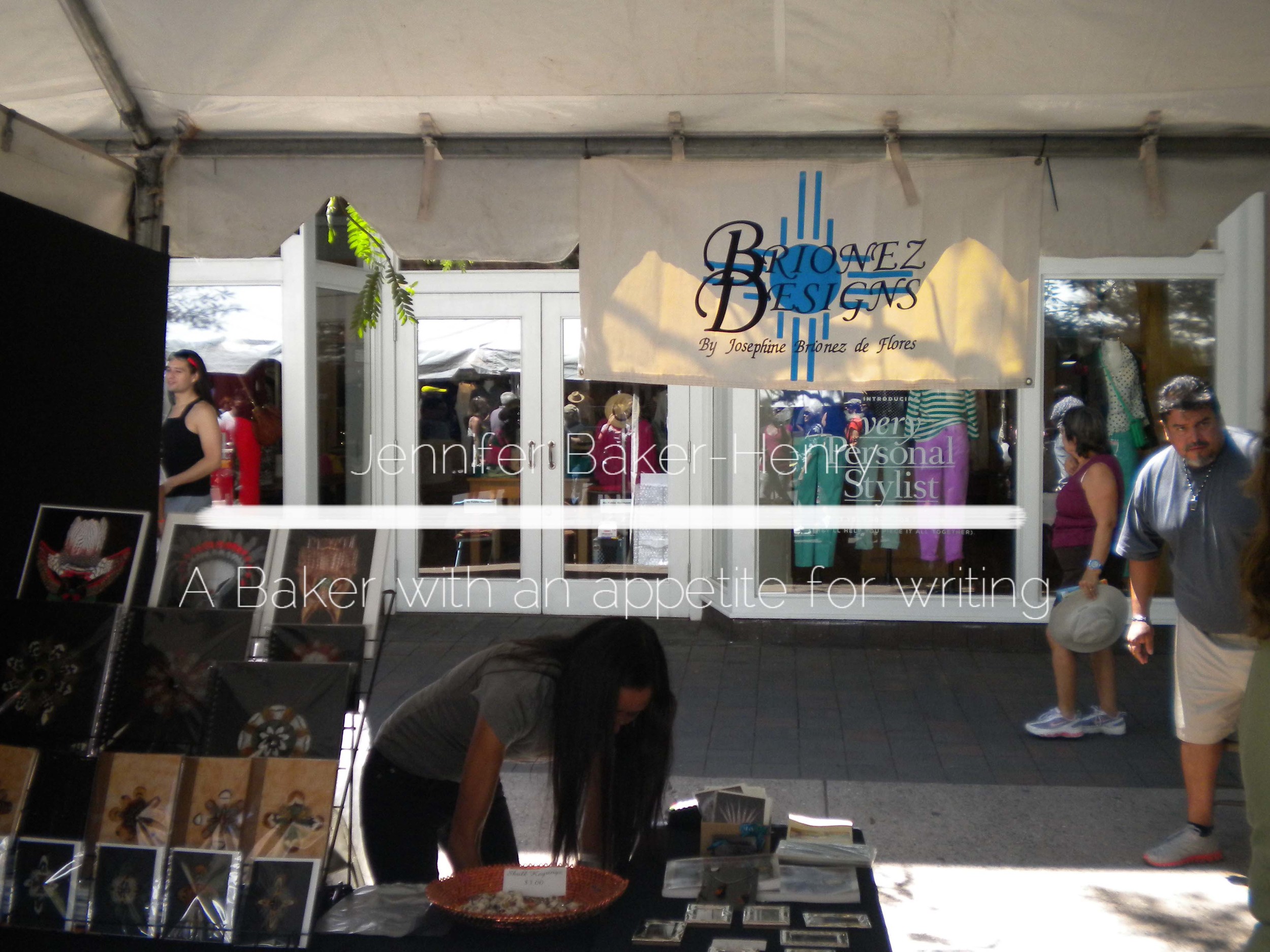
And then we make our way to St. John's College for the Glen Workshop West (aka The Glen). After walking around Downtown Santa Fe I was greeted by friendly volunteers but man was I hot! Not humid, just hot! The sun is In. Your. Face. in Santa Fe. Literally, it winked at me.
As I headed up for registration I saw my instructor, Sara Zarr. And you know what? She recognized me! And you know what else? She hugged me straightaway! I almost begged off, embarrassed I was sweaty and she said not to worry. How cool is she?! I also met my workshop mate T. Michael Martin (expect his book The End Games next May). I heard some of it...awesome.
So after getting my packet and such I got some help from Greg's (Image Journal founder's) son Benedict (Ben). Super nice guy. Very helpful and seeking to pursue sculpture. Go Ben!
Attendees were warned, on more than one occasion, and I was warned by those from desert areas that I would need to adjust to the elevation. No joke. Ben and I were huffing our way to my dorm, which wasn't even that far in all honesty. But the high elevation (over 7,000 feet) and the thinning air made it a challenge for us low-landers.
Going from a cottage to a dorm is an adjustment, but I liked the size of my room and the fact that we were provided towels and bedding and such. I was out of the sun but it was warm. My roommate Raina was super nice and often not around so I had the space to myself often and where I was off at events in Napa, I got to utilize downtime in Santa Fe and get writing/reading done on a daily basis.
In Santa Fe water became a second appendage for those of us around campus.
"Where you going?"
"Bathroom."
"You really need that water bottle, it's down the hall?"
(Clutches water bottle/kleen canteen) "Never know."

Three meals (with vegan/vegetarian options) were provided on campus in the cafeteria. The Glen participants also shared time and space with visiting MFA students. Our schedule was thus: first breakfast, three hour workshops, then lunch, then break, an afternoon reading/lecture, dinner, then an evening reading/lecture, worship (where Scott Cairns talked about how one can mix their faith and their art), and then on a few days the open mic (prose, poetry, song, and visual) for participants. On the first day was a wine & snacks party and the last evening a wine & snacks and dance party!
Yes, I did say worship services. The Glen is a workshop organized by Image Journal and one of their goals is that "[T]hrough a commitment to artistic excellence and religious truth, Image has taken its place on the 'public square' and is poised to make a lasting impact on the future of our national culture." For those who are non-religious or agnostic, like myself, I want to convey that The Glen is not a workshop that centers around religion. It's about finding a balance in faith and art. And if you do not feel especially close to a particular faith do not feel like you'll be judged or preached to. It's a very comfortable environment where everyone listens and respects one another and for me I became even more intrigued by the mixing of faith and how everyone uses it to push their work. I even found in myself that I do subscribe to a faith of being good to my fellow man and woman and wanting to create the most honest portrayal of culture in my art.

Sara had been in touch with us prior to The Glen with an outline of what to expect and just to say "hello!" On the first day we relaxed, got to know each other, and did writing exercises. After that she scheduled work with groupings to talk about some things but also in what may work with each other. It was a relaxed style where hand-written critiques weren't necessary but a discussion always keyed up with someone saying "I loved this..." and others echoing that statement along with support on how to make certain aspects stronger and resonate more with the reader, while also helping the writer to feel more confident about pursuing their work and honing in on what the heart of the story is.
Sara was very generous with her time and even spoke with me afterwards about my story and my overall concerns with balancing personal changes in my life with focusing on my art. I can't thank her enough for the time she gave while at The Glen and the interest she showed. And have to extend another thanks to my workshop mates who liked Calvin and Kayla's relationship and gave me more to consider in revisions. Thanks y'all!
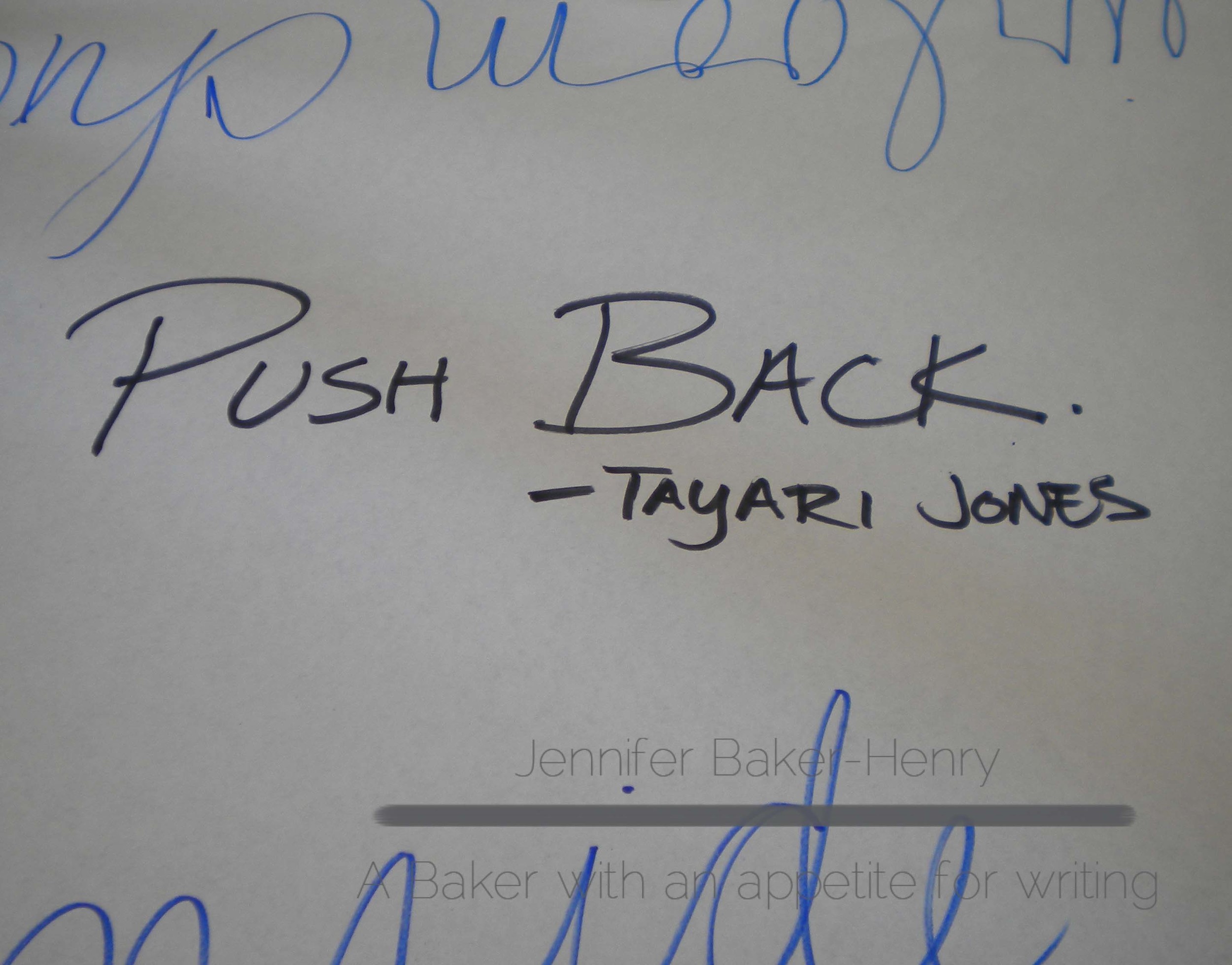
Both NVWC and The Glen offered something different but incredibly helpful and introspective as I shared different pieces from my Collection. In Napa people felt for the pain of a woman dealing with a miscarriage who's uncertain about where her life is going. One of the best pieces of advice I got from Tayari Jones on how to fix this in the revision phase was to "add some happiness" into her life so that the pain would pack a harder punch.
In Santa Fe I shared a portion of the life of an angry teenage boy whose love for his little sister trumps all but even he messes that up. His is a story about the inability to forgive and forgiveness and chaos and everyone in Sara Zarr's workshop got that. From Sara I got a great idea on how to tie up loose ends so that the reader will still stay with the main character even when he can be dislikable.
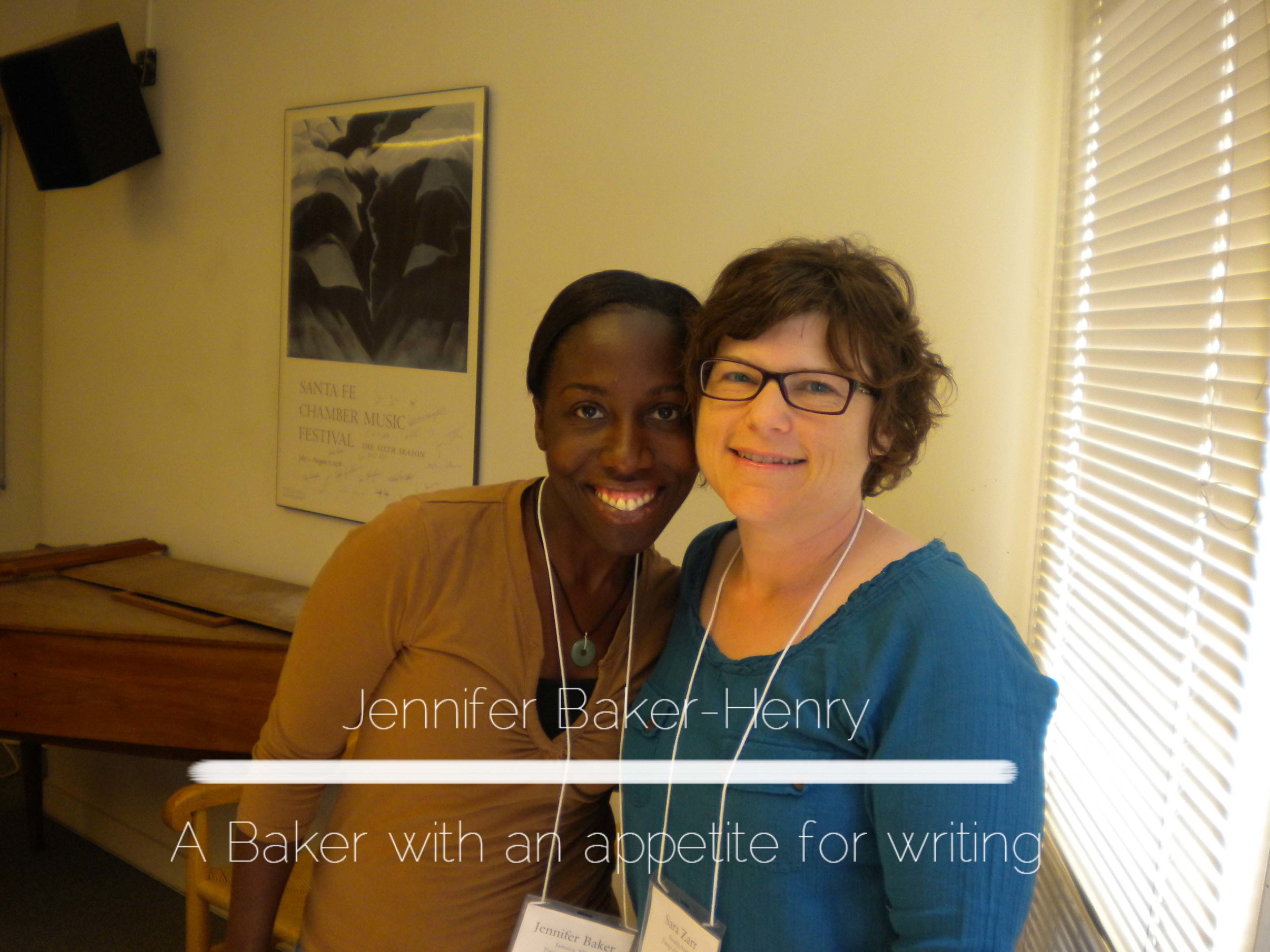
For me, it's been helpful to know that each time I show a piece from my Collection, flaws and all, the characters still come through and the readers I meet--strangers and artists around North America--become part of my cheering squad. So, yeah, the stories have flaws but the heart is there and that's what I needed to know to keep going. Two weeks away and I come back filled with even more gusto.
MIA for Writing Conferences
I'll be offline for a couple weeks attending writing conferences but will be back with conference updates and a cookbook giveaway!
Just an FYI that I'm traveling for the next couple of weeks, so there'll be no updates until early/mid-August. First stop is Napa Valley for the Napa Valley Writers' Conference. I'm psyched to be in Tayari Jones' fiction workshop and will be discussing one of the pieces from my linked story collection. It's been one of the hardest stories for me to tackle and I finally (read: finally) found the right way in which to tell this character's story, so we'll see if I'm on the right track. Some of us attendees have been connecting via Google Groups and I'm already indebted to their generosity and kindness regarding rides and such. And I'm super stoked about staying in a cottage during my stay in Napa. Pics will be taken!
After that I'm headed to New Mexico. First few days will be with a friend I met at the Postgraduate Writers' Conference three years ago (and you know how much I loved that conference) to see the sights of Albuquerque before she drops me off in Sante Fe for the Glen West Workshop. I'm also excited to be in a workshop with another author I admire, Sara Zarr. The workshop is YA focused and I'll be workshopping another story from the collection from a teenage boy's POV. So I'm intrigued to hear what others think, and to see Santa Fe.
Needless to say there'll be lots reading and artist immersion (and possibly drinking) over the next two weeks, well at least in Napa Valley. And then it's residency application season!
So far I've been blown away by the manuscripts I've been reading for both conferences and I cannot wait to meet my workshop groups.
When I get back I promise a nice summary of events and then a cookbook giveaway of Rasa Malaysia's Easy Chinese Recipes. (Thanks to the generosity of Tuttle Publishing.)
Have a great summer. Stay busy and creative!