
BLOG
#MyWritingProcess Blog Tour
Always happy to join in a Blog Tour and it seems this one has been wrangling in many writers across the country! The My Writing Process Blog Tour is a time for some of us creative types to share our process and get to know a bit more about our projects.
Maybe you've heard about the My Writing Process (Blog) Tour, maybe you haven't. If not consider this your intro. The tour's been going on for a few months and I'm delighted to have been asked to join in by my writer buddy overseas Laura Rueckert, whose answers on her process you'll find at www.laurarueckert.com. And here's my contribution to this fine tour we have going on:
What am I working on?
Lots. My baby, so to speak, is a linked anthology about an interracial family that spans several decades and three generations. This collection has been my "White Whale" in a way in that I've been working on it for several years and it's gone through a complete metamorphosis making me a much better writer over the course of the process.
Last fall I started drafting a contemporary YA suspense. And I have a few flash fiction pieces and essays that I am either refining or drafting as well. I tell you, there is simply not enough time in the day.
How does my work differ from others of its genre?
Short answer would be the diversity aspect as it is, unfortunately, not numerous in the literary realm (in all genres). I don't necessarily focus on race and racial tension as a person of color, but I think there is a need for literature to reflect reality and reality is quite diverse. My whole world has been an amalgam of various races, people, sexualities and such that my prose will always reflect that. I am also a very character-driven writer and I like to mix it up in terms of elements. I like to focus on people, psychology, and sometimes a slight twist on our reality and history. It's fun to rethink history and create it anew, for better or worse.
Why do I write what I do?
I wrote very bad poetry in high school and undergrad. It didn't fit me. I'm a bit long-winded at times, but the short form (and long form) is something I very much enjoy. Point blank: I like making things up. I also like detailing what I see, hear, and feel. So fiction and nonfiction/journalistic fits more for me because I feel like I have more space to truly expose, or explore, what and who is around me.
How does my writing process work?
My process is to sit down and do it. It's usually a burst when it comes to the drafting/writing phase. Just get words down on paper/screen, is my focus initially. And I can sit down for hours in a comfy chair with my laptop writing. This past Christmas while visiting my grandmother, she consistently passed the room. I had sat in a La-Z-Boy for up to seven hours with my laptop on my lap writing. "You okay?" she asked a few times. "Yup!" I shouted. When I'm in the zone I get stuff done.
Molding and refining my work is what I do after the fact. I keep every draft I write (I date each one), sometimes it helps to go back and see what I did earlier in the process or see what may or may not be salvaged. But yeah, (1) write like a fiend, (2) refine like the fiend you were previously, (3) get feedback, because invariably there's always something that needs more work than you thought.
That is my process, in a nutshell.
I've invited (or tagged) the following writers whose work I admire and enjoy to also participate and I'm glad they're up for it! You can see their posts on their process next week.
I present . . .
Megan Cooley Peterson is a writing-reading-pizza-coffee addict from the frozen tundra, aka Minnesota. She has written a YA contemporary, a YA romantic thriller, and an upmarket women’s fiction manuscript. She is currently drafting a manuscript about witchcraft that she can’t stop obsessing over. When not working on fiction, Megan writes and edits children’s nonfiction books about topics ranging from gross animal facts to urban legends. She lives with her husband and darling daughter.

Megan and I met via Twitter and she is one of the sweetest and supportive, and most dedicated writers I have ever engaged with. And after reading one of her manuscripts I can attest she's going to be a force to be reckoned with in the publishing world.
Karen McCoy first got the writing bug when she read The Babysitters Club series at age eight, but almost gave up after a bad grade during a creative writing class in college. Fast forward years later, to an HR training for her librarian job in 2008. She got out a pen and started her first novel, in her head, ever since that first writing class. She's currently studying for her MFA in creative writing at Northern Arizona University. She not only blogs at her site Writer Librarian, but also contributes to Operation Awesome on Mondays.

Karen and I met at the GlenWest Conference in New Mexico a couple years ago and her tenacity and excitement for writing inspire me all the time.
Thanks again Karen & Megan for joining in and I look forward to hearing more about your process(es)!
If you've done a post for the My Writing Process blog tour lemme know so I can read it. :-)
#ArtistTherapy: Falling Out of Love, with Your Project
I think we've all had that project we initially were in love with and then steadily or quickly or ultimately fell out of love with it. Doesn't mean there aren't more ideas or that this can't progress to something you will enjoy spending time on. Art, like most things, is trial and error.
"What? Oh that? I'm not working on it anymore. I don't love it, and I'm on to something new." Soon after I left grad school I worked steadily, made a weekly writing schedule and everything, on a novel/novella about a working-class British guy coming to the States for school and falling in love with a well-off African American girl. As you can imagine over the course of their relationship things got complicated.
Colin and Leslie were the main characters and it was a dual POV story. I got through the first draft, then workshopped portions of this work with groups I found online. I went overseas for the inaugural Pan African Literary Forum to get feedback for the first couple chapters. Then, I'd say more than a year, perhaps two years after I finished the first draft and even after acquiring advice from an agent on it, I found myself irritated and downright disgusted with my characters. Why the hell was Colin with Leslie? What the f*** was Leslie's problem? Colin was such a great guy! The ambivalent ending left some in agreement and others wanting a definitive answer to their relationship. When I went back to revise their love story I didn't have the energy to figure these two twenty-somethings out. I was in my twenties. I was engaged and later married. I was working full-time and had my own crap to deal with on a personal and professional level. Who was I to be writing about these two? Who would want to read about these two obnoxious people? Were they even suffering?!
And that, is how I fell out of love with that project. A project I have never looked back on, though I do have the compendium of files and drafts of the time I worked on it in a folder on My Documents drive.
It happens. You have this awesome idea. A thought that may actually make you jump out of your chair or bed and you start to scribe it down. You may start with scenes, an outline. You may start sketching what you think it should look like or how it sounds. The initial fury of needing to get this thought on paper can be a fantastic burst of energy and pride that can have you working for hours, days, weeks, months, and years on end...if you love it.
As a creative person, and especially as an emerging artist who is not making money off this but treating it as a kind of unpaid job you hope will pay off later on (maybe not monetarily specifically but psychologically/creatively), you hope that this will be the thing that gets you noticed. This new love will be the project that gets you into residencies, awards you grants, lands that agent or that publisher, will get the notice for a show to happen, will spread the word so that you are "The Next Big/Best Thing." However, some things may factor into your progression:
1) Critiques: As mentioned before the right (or wrong) critique can get you amped up to continue (or deflate you enough that you stop and second guess yourself). For the Leslie/Colin book I was getting critiques that were supportive and helpful. But did I want to pursue the revisions necessary to really tackle these people? No.
Which brings me to:
2) Passion: Most initial projects will require a lot of work. No one becomes a master through osmosis. (Man, how I wish that weren't true.) Do you see yourself growing with the work? Do you see yourself delving in and taking the time you need to make it a better/stronger piece from what you first envisioned? And once you do finish, will you be able to set it down for a bit and revisit it later on to further correct or improve upon it? Should you begin to submit your work will you have the fortitude and skin to take rejection? Unfortunately there'll be more barriers than open doors to get a work published/publicized. And if you love it, if you truly believe in what you produced you'll see it through to making this project the best it can be in your own hands. Did I have the passion/will to continue on with Leslie and Colin's romance? Again, no.
I have friends who have spent a decade, more than a decade, a couple decades on work because of their belief in it and love for it. Even bumping against rejections or assurances that what they are doing is seen as important and a good addition to the creative realm they have fought to make their work known in some form or fashion.
I'm not saying something you love should take a long time, but if it does and you're still committed to it that says something about your tenacity and willingness to grow as an artist and the space this project takes in your heart that you'd want to (through the good, enlightening, bad, and horrendous moments) continue on with no assured positive outcome. All you need is the knowledge that this work is important to you.
Do I start projects that I fall out of love or lose interest in? Of course. Do I have the projects I love and have remained committed to 'til the end? Absolutely! There will always be that idea that, like other things in life, "seemed good at the time" before it fizzles out into no man's land. But if you have the right support to move forward and you have the drive to make this happen you won't fall out of love with your project--probably out of like when it gets hard--yet the love will remain. Promise.
Powerful Short Fiction that Inspires
Since my main writing genre is short stories, and it's a form I try to perfect regularly, I wanted to share some of my favorites that have simply blown me away. Form, function, content, all of it works to make your jaw drop and wonder: How did they DO that? Hope you'll take a look at some (or really all) of the ones listed.
If you listen to recent reports short stories are apparently making a 'come back.' Collections are being nominated for more literary awards and winning them in instances as well. Most recently George Saunders collection Tenth of December was on multiple BEST lists last year. I don't think short fiction is making a resurgence per se, rather it's being acknowledged again as a powerful form of writing that is accessible, and, short. Short stories are what are often heavily studied in graduate programs and most often what is encouraged for critique in workshops because you can presumably review the whole thing in a session whereas a longer work would need a longer parsing for feedback and analysis. I'm entering year 7 of working on my linked short story collection and have been reading more short stories to get inspired by form but also by technique and the way the writer attacks characters and a subject. I see what works for me and what doesn't and the conciseness that can feel complete in a short story is something that does need to be studied and is helpful in all forms of writing.
So, here's a list of short fiction that bowled me over and that has definitely helped me to see the possibilities in the truncated form.
- "Brokeback Mountain" by Annie Proulx - If you compare the story to the movie (or vice versa) you'll feel like you've gotten a full glimpse of the life of Ennis Del Mar and Jack Twist. Proulx's story is a bit long at 30 or more pages (typeset) but it spans a whole romance/lifetime. In as much as a paragraph Proulx manages to capture the physical details, emotions, the entirety of a meeting with Ennis and Jack so that you as reader feel as though you've watched a drawn out scene. To me, this story is one of the pinnacle showcases of a beginning, middle, and end. It encapsulates both men's struggles. Proulx succinctly describes people and actions with details like "indian burn" to a moment of strife and that's all you need. Silence is a powerful component as is brutality and "Brokeback Mountain" explains so much without being overdrawn. In the acknowledgments of her collection Wyoming Stories, Proulx notes that short fiction is hard for her, yet looking at this story in particular it seems as though she's a master of the form barely breaking a sweat.
- "Cry, Cry, Cry" by Sherman Alexie - This story is hilarious with heart. The narrator reflects on his drug addicted cousin, watching the steady decline of a family member, and how he may have betrayed him. Alexie is great with brevity as well, providing snapshots as unique as "Shit, we got fake Bloods fake-fighting fake Crips. But they aren't brave or crazy enough to shoot at one another with real guns. No, they mostly yell out car windows. Fuckers are drive-by cursing." Mixed with the wit and wavering of a man not knowing what to do because he's expected to stand by his family out of obligation even when he knows it's bad for him and his soul. There's a connection to the voice and to the cousin from the first line and the pacing is perfect speedy yet languorous in the way you move through this world.
- "Hurt People" by Cote Smith (One Story Magazine) - This was one of the stories that stuck out to me when I subscribed to One Story and I still have it to this day. Surprisingly this was Cote's first publication. To me this was a perfect story, a dark story, and a well-told story of two young boys left to their own devices. The title itself elicits not-so-good thoughts and from the first lines of seeing the dank living circumstances of these boys and what type of person their mother is has you clinging to the hope that they'll be okay. Smith makes you care for these characters from the start which is immediately effective and masterful for an emerging writer. I'd urge you to look up this story and read it because it's a testament of how you can find your voice.
- "The Things They Carried" by Tim O'Brien - Whether you're an English major or not you've more than likely read this story or the entire collection by award-winning writer Tim O'Brien. The reason for this is because of the tie-in. The description of each character by what they take with them in a time of battle, what represents them and what doesn't. What keeps each character going and how it can weigh each man down in various ways of what they may lose, have lost, or are scared of losing. The clipped illustrations are the most powerful part of the anthology by O'Brien, being in the muck and crap of these men and knowing that some won't make it. It's a story that has so many brilliant pieces you can't just choose one. To me, "The Things They Carried" is like a crash course in short story writing. Each line necessary, each one providing so much weight and promise. It's freaking brilliant.
- "Good Country People" by Flannery O'Connor - O'Connor is considered one of the best writers of short stories. And it's understandable why. Her stories tend to be bleak, but real. Her characters are always alive and what I love most is her first lines, especially in this story of noting how a character had two methods of operation "forward and reverse." The briefest of descriptions that gives a reader everything they need to know about a person straight off the bat. I'd encourage you to read all of O'Connor's fiction because her stories rarely go where you expect them to, and while characters may surprise you it's never out of context of the world she's built.
- "The Pura Principle" by Junot Diaz - It's things like "The Four Horsefaces of the Apocalypse" that stick with you in a story like this one. Looking at the last months of his older brother's life the narrator notes a relationship of his brother and a woman who is downright toxic while also doing a balancing act of the brothers relationship and the mother/son relationship as people disappoint, just downright hurt one another, and deal with forgiveness knowing that time is short. Diaz's voice is distinct and confident and clear in all his prose and to me he just gets better and better.
- "You Never Knew How the Waters Ran So Cruel So Deep" by Roxane Gay - I noted that Gay's debut was one of my fave reads of last year. And one of the stories I pinpoint is this one, that is a list. With 3 columns titled Date, Item(s), and Price, Gay reflects on the lengths a man will go to find freedom and take his wife there and how much he loses. It starts off hopeful and as the reader sees the price and items the list keeper tracks it becomes more and more realistic of how hard this voyage for freedom will be and whether the relationships that seemed tight initial will hold by the time you reach the last row.
- "Great Rock and Roll Pauses" by Jennifer Egan - Another visual story that breaks the mold of story telling is short and really relies on a brevity of text and the graphics of a PowerPoint presentation to fully convey the relationships in a family that is troubled but not in trouble. The PPT is created by the teenage daughter who is witnessing it all and providing a journalistic play-by-play of her autistic brother, overworked father, and doting mother as they navigate how to get through a cruel world and the narrator sees how much weighs on her parents, her father specifically as a medical professional.
- "Speaking in Tongues" by ZZ Packer - "Brownies" is the Packer story often found on BEST lists but I think this one is a standout from her debut Drinking Coffee Elsewhere. It's one of the longer stories in the collection and to me the most roundabout. In it a teen girl named Tia in search of her mother believing the grass is greener on the other side. Of course some stuff ensues and she gets entrusted with prostitutes and older men and her own sexuality (and ignorance of it) before realizing that she was better off in a world dictated for her than the one she thought she could navigate. This is a story with a journey that the character goes on that is rough at times and realistic and would also have some tsk at Tia's actions yet understand them all the same. This piece feels utterly complete.
Those are just some of my suggestions. I have a few more story collections to read on my shelf (many in my to read queue) and many lit mags to delve into so that I can find and learn from more to come.
Design Post: Let's Talk Book Covers
The visuals of a book mean as much as the content. The saying "Don't judge a book by it's cover" is apt in many instances but when it does come to books, let's be frank, that what we see does draw the eye. So, I wanted to look at a few book covers that appeal to me as someone who works in the industry as well.
As you may or may not know I am a typesetter. Part of my job as production editor is to layout the interior of a book in InDesign from MS Word, contributing to the design aspects of what goes where and how it lends itself to the text. I work with designers, often, have friends who are designers and artists, and know that for my personal taste when I pick up a book I never heard of what draws me first...is the cover. From there I read the copy and if it interests me I'll add it to my list to read or just buy it on the spot if I've read some lines and am intrigued. But again, what first drew me to pick up this book? The cover. The initial aspect of marketing that you as customer see. What we in publishing aim for is to make the cover/book jacket appear inviting or intriguing, enticing or exotic, unique or fitting in with the trends so it's recognizable. Sometimes we want to shock other times we want something subdued. Of course the author's input counts but doesn't always translate to what makes it to shelves and what you see online.
For me, a cover should capture the intent. As should the interior and the fonts used. I may be getting a bit insidery here, but we think about these things, often. Publishers want to sell books and cater to what makes it different. We want to make the author happy and appeal to an audience while maintaining company style and getting hip with the times. There are a lot of variables when it comes to covers. So I wanted to take a look at some covers I think hit the spot in terms of catching my eye and also in matching the content/tone of a book. I'm going for books I have read so that I can attest to the interior and cover being complementary. (You'll notice that they're pretty current covers.) Here are some faves:
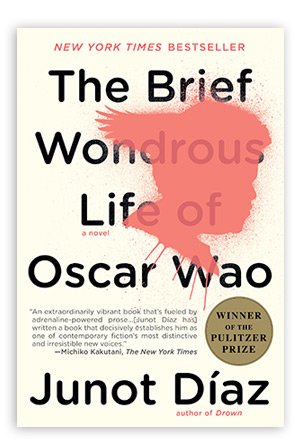
Junot Diaz's covers from Penguin. This is a new 'branding' for his books from his publisher and I like how they match (font, background) so that it becomes uniquely attributed to Diaz as author while also tacking onto a specific element and not being too busy in the front. And particularly I dig Oscar Wao's cover because it maintains the original outline of Oscar's face yet fits in more with the style of the rest of his books.

The Hunger Games series (U.S. covers). I like that even though the hero is a female she's not smacked onto the cover looking perfect and sorrowful. The symbolic nature of the designs illustrates how much the mockingjay pin/symbol plays throughout the series is important and the colors, as you may note, get lighter as the series goes on. From the bleakest of bleak in black, to red which can also mark the blood shed in Catching Fire, to the blue of Mockingjay that is soothing and calm not too bold like a navy blue but more a powder one gives some hope and shows the mockingjay not as pin but as a living bird in flight. Symbolism up the ying/yang! If you take a look at some of the international covers you will see some with a young girl in the woods of the first book or a young man and I think it takes away from the detriment when you can see the characters' faces for this particular book. The elements that signify the change and rebellion of Panem work well with the backgrounds, colors, and metaphors.
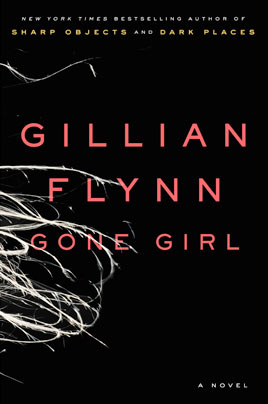
Gone Girl. In a word: creeptastic. The title itself is eerie and leads me to think nothing good, add a cover of a black background and strands of hair leads you to also think "not good." Gillian Flynn's previous books (Sharp Objects & Dark Places) also got a cover redesign to fit in with a kind of theme just like Diaz's publisher did for his. Hers are black backgrounds and again a single element tying into the content of the story and the representation of a dreary world and the people that reside in it.

Tampa (UK cover). Well, considering the content that UK cover is another note on the representation that is subtle yet all the more alluring. The innuendo is evident and works as a wink to the reader of what we can/can't say. Also, the pink! That color shirt and the open button hole hit the aspects of the protagonists unbridled and unashamed desire perfectly. Fantastic.

Lucy Variations. I like the cover because of the simplicity of it but also how the elements and colors work and how, unlike many YA covers, it focuses on what the character lost by showing her hands at the piano. With Lucy Variations the piano is at the heart of Lucy's story and it fits in while standing out from what else is out there for YA books.

Between Shades of Gray (original hardcover, U.S.). The wires, the ice, the one colorful sign of life growing through the snow/ice lends every bit of sorrow and hope to this tragic story. It enhances and symbolizes what Ruta's novel is, which is harrowing but able to find a brightness to it. Love it.
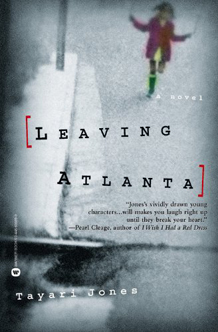
Leaving Atlanta (hardcover). Another cover that portrays the ominousness of Tayari Jones' debut well, especially with the font having a typewriter style which can be seen as dated (which the story is looking back at murders of children in Atlanta in the 1980s) to also reflecting the fact that this was a major news story. The grays and darker tones add to the bleakness of the story but then you have a cute child in a red jacket skipping down the street. This seems like the calm before the storm and definitely helps depict the innocence of children and the danger of the time.
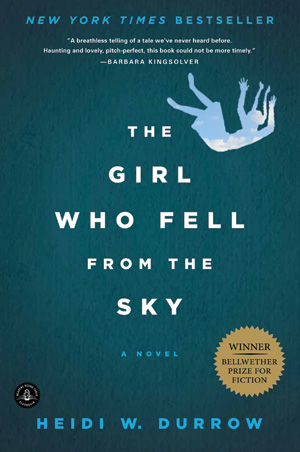
The Girl Who Fell From the Sky. This cover illustrates the content well and I'm a fan of teal in general. What the paperback copy does well is that it also includes the sky as the interior to the image of the girl falling, a nice touch. The book centers on the main characters coming-of-age as a teen being raised with her grandmother after her mother did a pretty brutal and tragic thing to her children. As sole survivor this girl is known as the girl who fell from the sky and survived and it's a hard title to carry as you're trying to come into your own. So the cover and title clearly illustrate the protagonists past and how that may define her future.
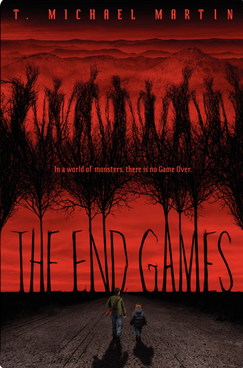
The End Games. When Mike first showed me this cover I was bowled over. The illustrations, the background, the horrible eerie things stretching out of the land noting how the terror can be outside and in your mind along with the red makes it a real standout. And you don't see as many illustrated covers these days. The two brothers, one older protecting the younger heading into the unknown is the epitome of what a good horror story should invoke.
#ArtistTherapy: The Comfort of Non-Forward Movement
This is a new regular (monthly) post I'm instituting on my site. In conferring with friends who are artists we hash out concerns, triumphs, and losses that only other artists may be able to understand. So this is me providing that outlet for other artists to say "I understand," Artists unite!
Artist Therapy (#ArtistTherapy) is a new regular post I'm doing on my site once a month. I realized after going to residencies, conferences, and hanging/venting with my critique partners that there are aspects of the creative life only other artists understand. And it can be a real source of comfort to relate this along with others who get it. No matter what stage in your career you're in we can all relate to wanting to pursue our art and the travails that can prevent you from doing so both real and imagined, both psychological and tangible. So, this serves as a springboard for artists to know that they're not alone and is hopefully also a source of solace. Feel free to share thoughts, ideas, questions, stories, etc. It's all Sharing is Caring in this neck of the woods.
"I haven't written, drawn, composed, photographed, danced, etc. in (insert timeframe here)."
I equate this with being in the shower. You hesitate to leave it. You step in with prickled skin from the chill of your home and then you're swathed in (hopefully) hot water that increases your temperature and becomes a place of comfort. It's warm and safe. No one is asking anything of you in the shower (I hope). You're alone, and maybe you don't get those moments enough. You're only thought is of getting clean and staying warm and the mere concept of stepping out means you have to deal with life. You are not ready, yet! People out there will want you to do stuff! You remember the cold and how quickly that'll settle over your skin negating all the work of the nice, comfy, warm shower. No, no, no.
Creating can be like this also. It can be a source of consolation and/or detriment. Sitting at your desk or in your studio means you have to face the work and what it represents. It means you have to make something and then ultimately show this to people. Offer your work up to others for critique, comment, analysis, or even validation. And if you're not used to it, hell even when you are used to it, it can be daunting and simply easier to not move forward and put it off.
There's also the aspect of being blocked and having to face what may be giving you difficulty. And having to face that, some bad prose or that rogue slash or that misstep or bad key, can be devastating and debilitating to the point you will quote Kimberly Wilkins and say "Ain't nobody got time for that" then scuttle away to where it's nice and safe, perhaps your couch for TV watching or your computer desk for Netflix/Hulu Plus or even outside where you can say doing fitness is helpful--right, right?--rather than be creative.
I'm not going to scold you and say "Sit your ass down and create already." I could. For some tough love may prove quite effective while others may be as shifty as a squirrel and run away to less pressure-filled pastures. I'm not going to say "Take your time" either because that, for some, can be an excuse to take ALL the time in the world and the next thing you know it's New Year's Eve and you're wondering what the hell goals you accomplished beyond opening a gym membership and perhaps giving up drinking 5 times a week. (I dunno, insert whatever resolutions/goals you may have had/have.)
What I will say is that some of the best advice I've received is from Tayari Jones, who said, "Nothing will happen if you don't write the book." This is the truest advice one can give anyone. You won't get any pleasure from being creative if you don't try. You won't get any benefits if you don't do it. You damn sure won't get published or see your piece in a gallery if haven't made anything. But some may look at it simply as: You can't get rejected and you can't perceptibly fail if you don't enter the race in the first place. However, I conceive of failure not in not winning a contest you submitted for or getting that grant/fellowship/residency. I consider it a kind of stasis where you never gave yourself the chance to win. So perhaps looking at the benefits of forward movement and not the detractors can help you to take action. For some failure is not an option and if you're continuing to grow as an artist, to learn what does and doesn't work, what avenues are right for your work, who understands you, what you represent than how is that failing? How is it not being successful to strengthen aspects of your craft in which you become more solidified in your style and voice? If the fear of failure is preventing you from moving forward, scratch that crap from your mind. Failure is not an option and if you're doing what you want and trying you're not failing. Trust me.
The other avenue is that of being inhibited by many things such as being a parent (perhaps a single-parent), being unemployed so that the act of finding employment consumes your time, being in an overall bad place that is more tangible and seeps into your mindset preventing you from continuing. In cases such as these there's not always an easy answer. But I would suggest that you dig deep and do what you can. Even some scribbling of a paragraph is making headway. Finding the community you need can help by leaps and bounds if you're overworked, underpaid, and not stimulated at all outside of your professional life. As someone who works 7-days a week both in a full-time job with freelance work to pay off debts that have been placed on me by a soon-to-be ex I can understand the parallels of trying to balance the creative and the professional and remain afloat and sane. It's not easy, at all. It's hard, and it's draining, and there are times when you're ready to breakdown. Something as small as spilling soup in my company microwave almost set me off under the strain of so much responsibility that seemed never-ending and just when you think you've come up for air your head gets dunked back in the water. But, like I said, you dig deep. You find confidence. You get assurance. And you approach the chair, studio, instrument and you take it step by step, word by word, stroke by stroke, line by line. Do not push yourself to be great. Just allow yourself to go with what is happening and see what develops.