
BLOG
Inaugural Summer Writers Lab @ Long Island University
I was honored to be part of the inaugural Summer Writers Lab at Long Island University this past week. Writers Jennifer Egan, Gabriel Cohen, and Marlon James served as instructors with Jessica Hagedorn being the organizer and maternal supportive figure to attendees and aspiring writers.
It's always nice to be a part of the first of something, especially when it comes to creative endeavors or anything that results in something good and positive. This year I was honored to be included in the first group of attendees for the Summer Writers Lab (SWL) hosted at Long Island University's Brooklyn campus and directed by author and LIU MFA professor Jessica Hagedorn, with instructors/authors Gabriel Cohen, Jennifer Egan, and Marlon James. I was lucky enough to get into, what appeared to be by the amount in attendance, the popular Jennifer Egan workshop. Now, my definition of workshop is one in which you write, you submit, others read & critique it. This was not the same framework for LIU's three-day seminar. It was that, a seminar. While we wrote short in-class or at-home exercises and read these in class time, especially with the twenty or so people in attendence for her class alone, mainly permitted us to comment on what caught our ears and provided great visuals. What struck us immediately to help the author know what to continue to do or leap off from moving forward. Turns out that this is how Jennifer Egan's reviewers handle critiquing each others work primarily. Intriguing, and something to learn from seeing how much Jennifer had a keen ear.
Jennifer is lithe, easy-going, kind, supportive, likes baked goodies, and is a great listener. Learning from someone like this who has achieved so much in her career is something that always sets the emerging writer's mind at ease.
Three days and twenty-one students means there may be a high expectation to achieve a lot in nine hours time total. And while I think a smaller group may have helped delve into Jennifer's agenda more fully, the wealth of sincerity and intrigue and kindness and creativity and support in this room was some of the most satifying I have experienced in 3 days than in 4 years of undergraduate studies in Creative Writing and two years as an MFA student. In three days Jennifer went over Characterization, Dialogue, and Voice and gave as much help and advice as she could as the minutes ticked by.
In the first day we spent about two hours introducing ourselves and asking each other questions to get to know each other better. Jennifer was adamant about this and in the end proved herself quite capable in remember details about us and all our names in the matter of a couple of hours! The exercise itself lent itself to the overall theme of the day "characterization" but was also a way for us to get to know each other better as writers and as people.
One of the other workshop participants, Julie, said it best "I could listen to her for hours." And it's true. Jennifer speaks in such a way that you feel like you're equals. She never references her prizes or how much her books have been lauded. She even has a self-depricating humor at times when it comes to her process and how many of her books have started out. When placing an author on such a high pedestal to know that there's no clear-cut process, no "a-ha!" that hits them in one week flat to create, that they're not completely sure of their work at all initially can help you to breathe so deeply in relief at the realization of no one having all the answers and allowing the process itself to take over, trust those around you, and believe in yourself to persevere. It's something that can't be learned, but hearing it from someone who's just won the Pulitzer helps tremendously.
In the midst of my workshop with Jennifer I heard nothing but praise for Marlon James' workshop, which has a smaller number of participants who enjoyed more one-on-one specific critiques of work.
At the first night's evening event with a reading by all three instructors and Jessica attendees were enlightened and introduced to some powerful prose. The standout of the evening was Marlon James' reading from the new novel he's been writing about seven young men who attempted to kill Bob Marley. It was written in Patois and Mr. James' being of Jamaican descent was able to give the prose full force in his reading. Everyone was blown away and I'm sure he added several dozen new fans to his work and social media pages. The next evening brought a lively discussion from authors Wesley Stace and Rick Moody where many learned about their process as writers.
Saturday afternoon's Q&A panel with representatives from the publishing world that authors often need in their corner was incredibly insightful for those who are used to these types of discussions or who are new to them and need to get thinking on what the publishing world is like and where it's heading as the millenium moves along. Faith Childs, Rakesh Satyal, Johnny Temple, and Harold Augenbraum were extremely kind and generous in their time, (2 hours!) as well as answering additional questions we had. Learning that Faith, as an agent, invests in careers not one-off works; that Rakesh, as an editor, admits that writers should be the most enthusiastic about their work amidst so much competition; and Johnny, publisher of Akashic Books, bringing awareness that us as artists shouldn't pity ourselves because we can't just be artists, but be glad that we can afford the luxury at all even if it is in spare time or time we make at any hour of the day available. And Harold thinks we should not look down on the dinner party in terms of writing or readers. (You had to be there.)
Throughout these three days we were immersed in a community, one you're aware of, but may not be privy to always be around. Like Jentel being surrounded by artists who understand what you're going through in your angst, insecurity, and unfailing ability to procrastinate are there to support and listen. That's what a community is. From the day I walked through the English department and introduced myself to one of my workshop mates I felt the connection. From the moment I looked around at attendees and was approached by Jessica who eagerly wanted to know who I was I felt it. From the smiles I received from those each morning and evening at every event, on our way to and from the bathroom during break, on Twitter, on the street, getting a round of applause from workshop mates because I made blondies, I felt it again and again.
I felt a slight sense of remorse when I left the Greenlight Bookstore yesterday as the SWL reading confirmed the end of the first year of this new fiction immersion program. I would miss the encouraging smiles and words and hearing Jennifer admit that no one knows it all but that you keep going. I'll miss hearing Jennifer compliment my workshop mates and myself on things it took us minutes to write and I'm sure many of us weren't overly confident in. Something I wrote on the subway was structurally sound? No freaking way! I'll miss seeing a familiar face from graduate school and catching up on what we've both been through as we've plodding along on our work over the years. But in the midst of missing this I know that there's another community I got to know, from another convention/conference what-have-you and that there'll continue to be people you'll meet who'll help you and believe in you. And that this is what these types of conventions are created for. They want to bring people together and in this case SWL was successful.
Interview with Caits Meissner (spoken word artist, graphic artist, lyricist, and all-around mellow lady)
Interview with artist Caits Meissner who is a New York City educator, spoken word poet, graphic artist, and musician.
I met Caits Meissner when we went to Ghana for the first year of the Pan African Literary Forum in 2008. Caits won a scholarship to attend for her phenomenal poetry and I was hankering to go to Africa and use up some bonus money. We were both there for the ambiance and the guidance of a great roster of instructors and authors, and we enjoyed our time immensely.
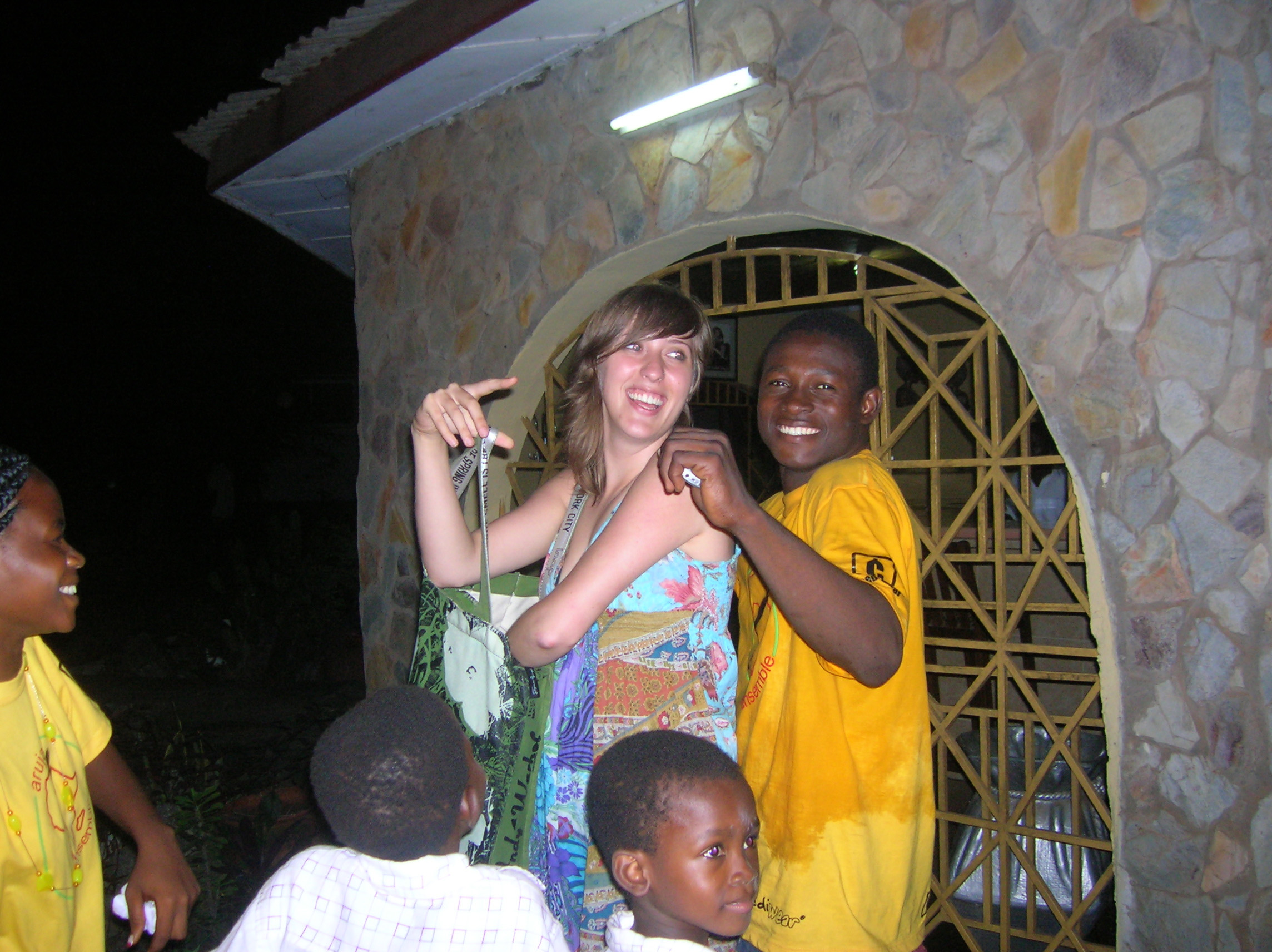
I have kept in touch with a handful of people from PALF and am certainly glad that Caits is one of them. She's a teacher, artist (in various genres), and gentile soul who's work will simultaneously inspire and astound you. I've heard her live and heard her audio and seen her graphic work and am consistently blown away. (Definitely check out her website(s) and follow her for upcoming gigs.) I was glad she offered to do an interview for her friends with blogs and she has inspired me to do a rotation of interviews with friends who are artists in their own right and want to spread the word about themselves.
~~~~~~~~~~~~~~~~~~~~~~~~~~~~~~~~~~~~~~~~
JBH: As an artist, how do you deal with the constant changes in media and social networking? Do you feel face-to-face is dead or as a spoken word poet do you feel you get to engage in meeting people more through performances than perhaps fiction writers and non-fiction writers and so on and so forth?
Caits: What a relevant question! My students, sometimes, when you ask them what their interests are say, "the internet," or "facebook." This fact frightens me, but I am not immune to it. I find myself "plugged in" too often and it accounts for a lot of disconnection in my own heart, despite the facade of intimacy. Its also a great way to be heard, so, like all things in this great life, its a balance. Unfortunately, I have never been much good at balance. I have a plugged in community, so I keep fairly up-to-date with the latest tech invention but its overwhelming. And exhausting. And I find myself less able to focus and lose myself in my art the way I was able to as a kid, with parent-limited 'net access, and a slower than syrup dial up connection. These days, I write a little, check my phone, write a little, check a blog, constantly checking in. Who wants to troll the internet for accolades and mentions constantly? Who wants to pump themselves to their friends and supporters over and over? The trick is detachment from an already detached networking system, and its a sincere practice in this day and age.
The good thing is, as a performer, I do feel connected to the larger world in a very tangible way, being on a stage. There is a direct contact: a handshake, a wink, a hug. But there is something very special, I still think, about being behind a pen and paper. You maintain a certain old-world mystery. I say embrace that. I waffle between wanting two very sharp distinctive worlds: being known and celebrated, and hiding, running away.
Caits: I struggle with this question, deeply. There are moments in the past when I would have loved to answer this question, ranting and raving and grinning. It defined me. These days, I am more acutely aware of what hard work being in front of a classroom is. How much energy you must give to the young faces in front of you. How unkind they can be and you take home the day like an old coat and dust it off, patch up the holes, put it back on and walk back into the wind. I shared this sentiment with a close friend, also a teaching artist, who said, "the amazing thing is, even when you aren't trying, young people are the center of your world when you teach, even if you teach part time, and there is a beauty in that." I agree.
Teaching becomes the center of my life, whether or not I wish my focus was more on myself, my love, my art. Teenagers demand a certain level of patience and attention and it becomes a very real meditation. Sometimes you wait weeks for a breakthrough, but when it happens, nothing is sweeter. The students I teach, for the most part, are not artists by their own definition. They find it difficult to be free in their expression and are afraid to create "wrong." Teaching reminds me there is no wrong. What a victory it can be to pull the creativity out.
Caits: I love this question! I am pretty good at sharing how much I love someone's art with them and I am blessed to have crossed paths with many of my old and new favorites. Of course, there are some that I just haven't... met, or written to, or expressed to. My friend Dionne Lee (look up her photos! Wowee.) has been writing to her favorite artists and getting amazing responses! She has been urging us to write to our influences and give them our love. I'm going to choose two women I'd love to gush to. Let me get to tell them now:
Dear Ani Difranco,
You saved me at thirteen. Seriously. In every way. Let me open for you.
Love, Caits
Dear Miranda July,
You remind me I can make all the art I wanna, in all kinds of ways. Thank you for expanding the boundaries of what my heart believed was possible for an artist. Thanks for destroying the box.
Love, Caits
~~~~~~~~~~~~~~~~~~~~~~~~~~~~~~~~~~~~~~~~
Caits: Of course! I have a big, baaaaddd website at http://www.caitsmeissner.com and I keep a daily blog at http://caitsmeissner.tumblr.com I tweet sometimes, too: http://www.twitter.com/caitsmeissner
Thanks, Caits for tackling these questions and for sharing your work, your kindness, and influences!
Postgraduate Writers Conference (2010 Edition)
After such a splendid time last year I decided to return to the Vermont College of Fine Arts for the 15th Postgraduate Writers Conference (PWC) in Montpelier, Vermont. The Postgraduate Writers Conference targets graduate students as participants, thought it is not a requirement for entry. Something that I do enjoy about this conference is that entrance is not based on writing samples, but on interest. Montpelier is a great location, quiet, serene, and away from major urban areas, so you can utilize the atmosphere for being creative and focusing. Just as I did last year I ended up holing myself in my dorm room with my laptop and flash drive and just worked away.
Of course, I wasn't the only one. The population for this conference is an older crowd, retirees, parents, full-time workers, and so on who utilize this time away from home and responsibilities to really focus on writing and revision. Revision of course being one of the most daunting parts of writing.
After speaking with several people on their graduate school and writing conference experience it stood out even more that PWC is one of the tops from the participant perspective.
Many conferences pack your day with events so that you may have to pick and choose what you want to attend and what you want to forgo. And when you're a first time participant you may not want to forgo anything unless you feel yourself nodding off or the strong, strong need to write compels you to type away on the keyboard or scribble on a notepad. This year the conference director, Ellen Lesser, did some finagling of the schedule to make sure no events overlapped. So you could go to a lecture at 1:30 on writing in the real word and then one of film editing as it may relate to editing a poetry compilation at 2:45. You want to do some freewriting before workshop on Wednesday? Sure! We'll have a "yard sale"! Want to do a quick hike before going to workshop to work off all those pancakes with Vermont's own maple syrup? Done! Oh, did you want to visit the Montpelier Farmer's Market this morning, then workshop, then go swimming this afternoon? Bam, at your leisure!
I found it very pleasant to have the option of not having to pick and choose, though like I said, I was writing most of the time and missed many events but those on the final days.
While there are always hiccups when organizing something where people come in from places all over the country and need to organize room & board, daily activities, food, and so on and so forth. But the fact that it's easy to get in touch with either Ellen or conference coordinator, Anne, who are the most pleasant women you'll ever meet and no matter how frazzled they are never shut your needs down is something I highly appreciate.
Sometimes good experiences can make you ignorant to the bad ones out there as well. One of my workshop mates and another woman working on her novel had both just come from horrific experiences at the Wesleyan Writer's Conference weeks prior. They both had the same instructor who barely acknowledged or viewed their work, felt that faculty and students were segregated at all turns (in particularly during meals), and that the conference coordinator who seemed so kind and informative via e-mail was cold and dismissive in person. Since the Wesleyan conference has no workshops, mainly lectures and a one-on-one conference with a published instructor/writer on your submission it was devastating to learn that not only did they feel unwanted, but their work itself was not even read--more than likely skimmed--is a great blow to someone who may not have shown their work to anyone before then and is trying to grasp at any positive reinforcement you can get because you have no one else to help you can cause one increasing self-doubt if not all together dash their dreams.
I was glad that the two women I spoke with came to PWC after such a bad experience and got to experience how a conference should be. That your workshop leader is more than happy to sit with you during breakfast, lunch, or dinner and discuss their obsession with Facebook. That they are willing and wanting to extend class discussions during lunch while interrupting discussion to get a piece of peach cobbler real quick. That they hold extraneous lectures or writing sessions to get the mind, blood, and hands flowing before a 2+ hour workshop. That these published writers we may look on in awe (or perhaps skepticism) are truly invested in your work, sitting proudly and listening to your piece at the participant readings and giving you a standing ovation when you're done.
So, that's my second plug for the Postgraduate Writers Conference. While I don't know if I'll attend again next year due to finances or pursuing other opportunities to write and critique during the summer, I do know it will be at the top of my list to return to for it's affordability and comfort. And I always get so much writing done when I'm there, major bonus!
Inspiration: Who was yours?
Last month, my first year as a mentor with Girls Write Now ended. At the last reading for Girls Write Now I got to meet author Tayari Jones in person. And she's as wonderful in person as she is talented on the page. In reading her blog I noticed one of her latest entries about MCing the Girls Write Now reading and how she wished she had a program like GWN available to her when she was growing up. This is one of the things that I, and many others, have noted when referencing GWNs mission statement. While the organization was in its premature stages when I was in high school, I know I and many other teenage writers could only have benefited from having a mentor help to push, praise, critique, and educate when it came to writing.
Fortunately, I did have someone who was a constant source of inspiration and was sort of a mentor to me in high school as I wrote and considered writing to be part of my immediate future.
I went to John Bowne High School in Flushing, NY, and was part of their Center for Writing program. Being a freshman in a school where you know no one is intimidating enough. You want to make an impression, friends, and settle yourself into a niche. Weeks into my start at Bowne one teacher proved to be more interesting (and interested in what us students had to say) than the rest. This woman would become my mentor and motivator. Her name is Janet Feldberg. Ms. Feldberg was one of the more senior teachers there and the advisor for the freshman/sophomore writing magazine Pendemonium. She had a Mother Earth quality about her that made everyone like her. She treated her students like equals, not like kids. She was our educator, but she respected us and so everyone respected her.
Ms. Feldberg encouraged us when it came to reading the classics. As she watched our eyes glaze over in trying to recall the metaphors of Moby Dick or the characterizations in The Great Gatsby, she never showed frustration just encouragement. And in doing so with analysis of text she also encouraged us when it came to the creation of prose.
As a teen I was really into R.L. Stine's Fear Street series and also tagged onto my mother's fascination with Stephen King. Yes, I read The Babysitter's Club and Sweet Valley High, but I saw myself writing things that went way deeper than that and by deeper I mean my stories were meant to make readers laugh and scare the crap out of them.
I submitted my first story, "Terror at Bowne," to Ms. Feldberg with few expectations. Yet, within a day she pulled me aside and thought it was a vibrant story. It starred my best friend, a couple other friends, and myself as we realized our freshman year at Bowne was not what it seemed. There were monsters afoot! Perhaps one could consider it an allegory for the way teenagers feel when they start at a new school alone that they picture the worst happening and find camraderie with others when bad things come to play. But at the time, it was just fun to write. The villain of the story was a disliked history teacher who refused to allow her name on the page. So Ms. Feldberg offered to become the "terror" and published it in Pendemonium that year. I remember when she read it aloud in one of our computer writing classes and the response it got from my classmates. They were engaged even rooting for the ending. It was then I realized I probably had a calling when it came to this whole writing thing.
Over the years Ms. Feldberg continued to praise and help me with my work. When I attempted poetry, inspired by Dickinson and auspiciously mimicking her voice Ms. Feldberg understood what I was really talking about after weeding through the imagery and metaphors and earthly comparisons. She praised another poem I wrote based off a prompt and encouraged me to be an advocate for the CFW program at Open Houses. She was happy to read a sequel to "Terror at Bowne" and again offered her name as the villain who rose from the grave. She was my biggest supporter in those years and as I moved on to run the student government and worry about budgets and advertising and keeping a student body inline, my writing began to lose its importance in my life.
As I worried about SATs and scholarships and placement exams I couldn't focus on writing a sequel to the sequel of "Terror at Bowne." But I had come to Bowne to be a writer hadn't I? What was keeping me from that? Not having Ms. Feldberg as my instructor in the last two years of school (she mainly taught the freshmen and sophomores) definitely had an impact on my creative side. I was focused on the tasks at hand: dances, decorations, meetings, representation, speeches, scholarships, senior prom, a part-time job. And as the last two years of school hit me with the responsibilities of post-adolescence I realized I missed my mentor. I missed the encouragement she gave me my first few years there to become confident enough to run for student council president, to write essays on Stephen King and consider his work as interesting as the tomes being thrust down our throats, to read deeper into books and consider what made them part of a literary canon and why there were so important for us to read in the first place. Nope, as juniors and seniors we lost our guiding hand in the resourceful, kind, and patient Ms. Feldberg and were greeted with people a bit gruffer, sterner who expected us to be prepared. We weren't kiddies anymore, the kiddies had Ms. Feldberg and in a way I envied them for that.
As I prepared to leave Bowne and pursue a degree in writing I remembered everything she did for me. I remembered all the inspiration she gave me and mostly I appreciated it. I remember her writing enthusiastic letters of recommendation for my college applications and running to her to let her know I'd succeeded in getting into my first two choices.
A couple of years after I graduated Ms. Feldberg retired and became a grandma full-time. I saw her a couple times and wrote to her, but this was before e-mail became an institution in most homes and we lost touch.
As the year for mentoring ended I couldn't help but be reminded of Ms. Feldberg and realize how much she not only influenced and inspired the writer I've become, but also the person. I notice the way I've gone about teaching and being a mentor for young girls is almost synonymous with how she approached us freshmen when we sat still and anxious in her class. I realize we both approach students/teens with encouragement and respect. That when we meet young people they need to know that they're capable of anything and it all comes down to desire.
Yes, I'm getting nostalgic in my old age, but did want to take a moment to thank Ms. Feldberg (albeit virtually) for all her guidance and inspiration then because I wouldn't be the person I am now. I can't help but wonder what life has in store for the mentees that leave Girls Write Now. But I hope, whether they realize it now or in retrospect, they appreciate the guidance their mentors have to offer because not everyone gets a Ms. Feldberg in their lives.