BLOG
Wine & Cheese Pairing w/ @KerrygoldUSA
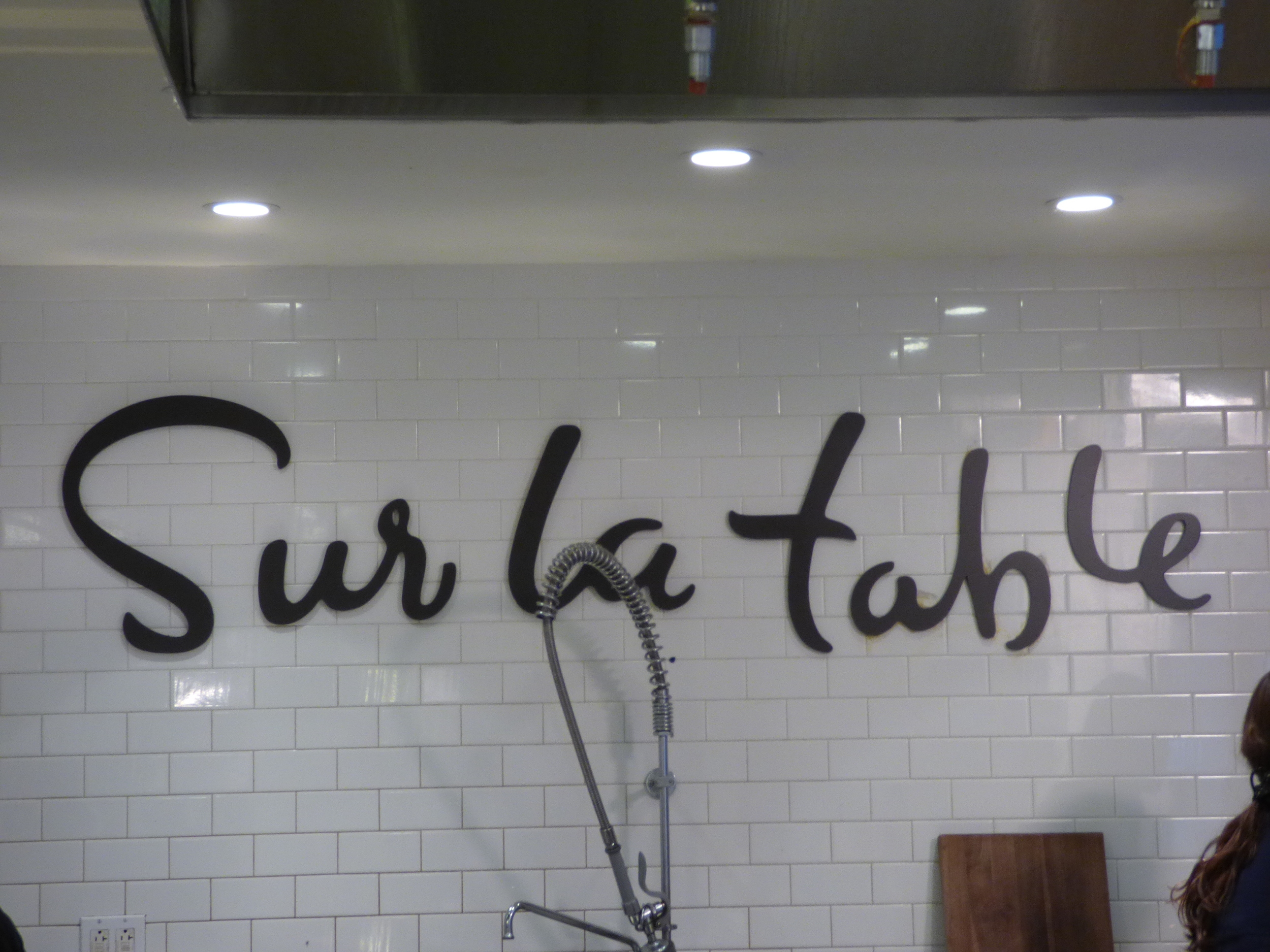
Thank you Megan and everyone at Kerrygold USA for hosting a wine & cheese pairing event at Sur La Table for those of us in the Food Blogger Network. We were educated in the pairing of the right cheese and fine Napa Valley wines and got to taste items made by Chef Gamoran and Co. made exclusively with Kerrygold cheese/butter to enhance flavor.
On Wednesday night over a dozen bloggers in the New York City area convened at a food blogger's paradise in midtown: Sur La Table.
Kerrygold USA hosted a wine and cheese pairing as a treat to those in the Kerrygold Food Blogger Network. I have to say that Kerrygold has been quite generous to us food bloggers being a consistent sponsor for Pie Party Live and also hosting regular events and contests to win their coveted cheeses and butters. Anyone who bakes/cooks with Kerrygold knows that their product is top notch. Their butter especially when it comes to making crusts and oh-so-crisp cookies. There's a quality to Kerrygold's butter especially that transcends whatever you get on sale and really does bring up your dessert and savory game when added to any recipe. So invest in the product.
Terlato Wines and Rutherford Hill in Napa Valley supplied the perfect complements to the various cheeses Kerrygold supplied with tastes that helped enhance rather than overpower.
On display were several Kerrygold favorites such as Skellig, Dubliner, Cashel Blue, and Dubliner with Irish Stout that was sweeter than the singular Dubliner and was so delectable it didn't need wine. We continued to eat the crumbles with our fingers before and during the pairing.

Apricot Shallot Chutney and water crackers were displayed as a precursor to our formal pairing. We got to chat and in the case of some of us we caught up! It was so nice to see many of the other local food bloggers whom I haven't seen since Pie Party or even before.
And then things got started with us bloggers being educated by a representative of Terlato Wines about tasting the Dubliner with Irish Stout and a nice Chardonnay and even the Skellig and Merlot and the proper balance of tastes coming together to enhance sweetness or saltiness rather than the liquid overwhelming a lighter cheese. This guidance was helpful and made the event that much lighter fare for us to know what to do in the case of taking a good wine and fine cheese and hosting our own event to have our guests enjoy the spread.
Kerrygold and Sur La Table were also generous enough to serve appetizers from Chef Gamoran and staff such as Bacon-wrapped Dates stuffed with Cashel blue cheese. One of the Sur La Table staff suggested having this with the Merlot and the subdued Merlot and the natural sweetness of the dates mixed in a really fine way.

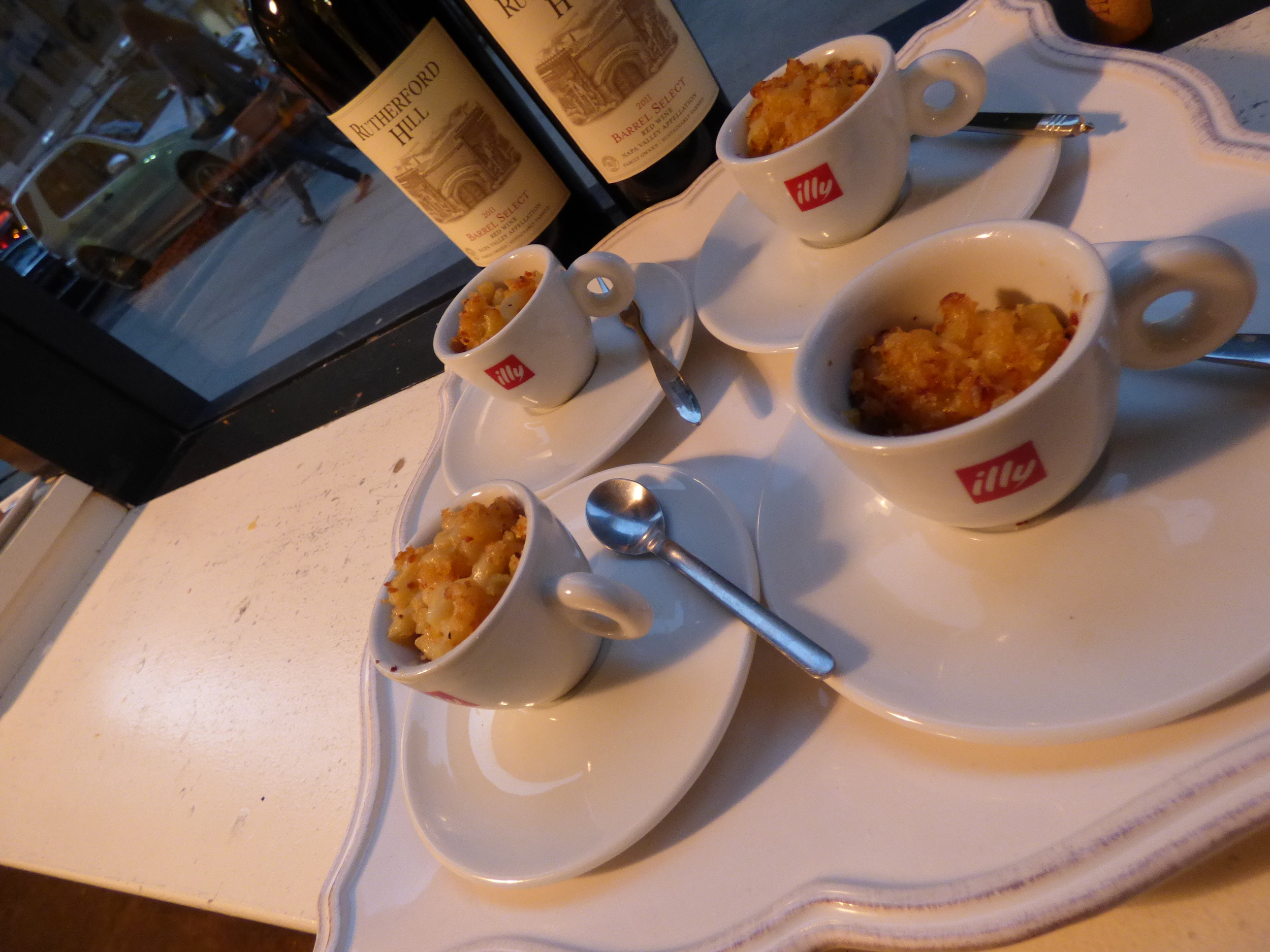
There were Kerrygold Irish Mac and Cheese Bites that were buttery, crunchy, cheesy (in a good way) with parmigiano-reggiano and Kerrygold Aged Reserve, Swiss, and Dubliner. In addition to Sriracha Glazed Chicken Skewers in a salsa verde that was hot but the heat didn't linger too long on your tongue. And another addiction were the cranberry tarts with a crust made from the go-to Kerrygold unsalted butter to get that fine crispness and sweetness that you can eat a couple dozen. I tried.

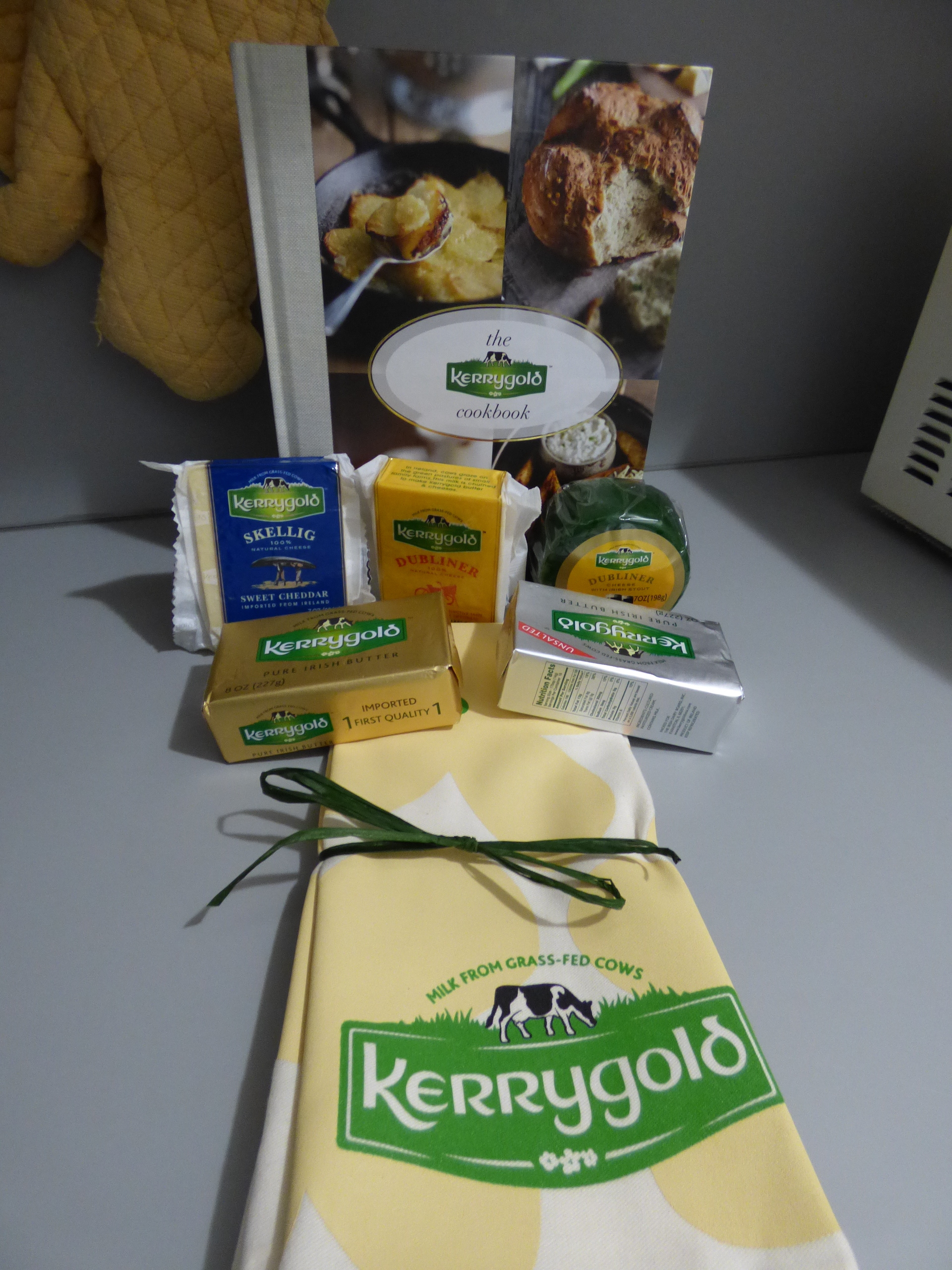
In the end there was more wine, additional bites for snacking--and we did snack--as well as goody bags for those in attendance with more generosity from Kerrygold in providing various cheeses, butters, and their cookbook so we can attempt to make these fantastic & filling dishes in our own homes.
Thanks again Megan and everyone at Kerrygold, Chef Gamoran and staff and everyone at Sur La Table for making us feel welcoming and stuffing us with such deliciousness I didn't want to leave. With cookbook in hand I know what my plans will be this weekend.
I'd Like to Introduce: @MinoritiesinPub (MiP)!
My friend Bev and I take on a new venture: podcasting. I'd like to introduce you to Minorities in Publishing (MiP)!
 Well, this is a venture that grew out of friendly talk and then became a running joke of us doing a podcast about being minorities in publishing in the Whole Foods cheese section (we note our love of Whole Foods in our first episode) and then this niggling idea became "Hey why the hell not do this?" And when I mentioned it offhand to others or friends saw our "mock" tweets some said, "I'd listen to that if you did a podcast!" True story.
My friend and former co-worker Bev and I often discuss the lack of minorities in publishing as two people of color (POC) in publishing and said "We should do a podcast." Thinking on it more I reached out to Bev and said, "We really should do one" and she agreed.
And with that we started meeting. Talking logistics. Doing research on podcasts. Getting links with more links embedded in additional links noting what newbie podcasters should know. I made the logo with Bev's input (see above). And we kept thinking and meeting regularly and meeting tasks while assigning more tasks and it is now a real thing! How exciting is that?!
Bev is ON IT. She gets stuff done, which is how I knew I wanted to work with her and this podcast would be a reality, and not just an idea we spoke of for several months to a year and maybe got around to doing some research on but it wouldn't come to fruition.
And thus we have Minorities in Publishing (MiP)!
Bev and I recorded our first episode on Tuesday and it's available here on our Tumblr here.
I was a bit late to the game in terms of submitting it to iTunes but once we get the formal approval you'll be able to find it there as well.
In our first episode we discussed our backgrounds in the industry (over 20 years experience!) and reasoning for our podcast as well as what you can expect to hear in future podcasts, specifically interviews with publishing professionals on how publishing can be more inclusive in terms of diversity in publishing. And we do a mini bookclub for Roxane Gay's debut novel An Untamed State from Grove Atlantic.
We hope you'll listen, enjoy, share, chime in, contact us, visit our Tumblr, follow us on Twitter (@minoritiesinpub), and if anything support diversity in the arts and pursue it as a minority and/or advocate!
#ArtistTherapy: Residencies, are they for you?
Needing space and time away is natural for the creative process. One way to get this is residencies, applying for them or making your own.
"I need time and space to get away." I hear you. Believe me. I hear you. I live in one of the most diverse and heavily populated cities in the United States, possibly, the world. I live in a city that is expensive and always, always has something going on. It can be great to know at any point and time you can get aspirin or a soda or have a place to dance, but it can be overwhelming to have so much at your disposal and few dollars to make use of this lifestyle.
At the moment I am in the midst of applying to 12 residencies before the year is done. Three applications are due in September alone and there'll be at least another dozen I'll be applying for next year. For me residencies have been the solace I have craved to be exposed to an environment completely "other" to my life. At a residency I feel like an artist, am surrounded by other artists, sometimes I am fed, sometimes not. But what is most important is I am respected for my need to have distance, quiet, and solitude to get my work done in the amount of time I requested and had been granted.
A friend of mine did her first residency earlier this year and is now hooked. She's pounding out applications like nobody's business and it makes me smile to know that this understanding of how useful and cathartic a residency can be has spread. Yes, since 2008 residency applications have grown a lot with people losing jobs and more word of mouth spreading about these great opportunities. More residencies and fellowships are created and unfortunately others have also closed down due to funding. But there are many artists and many opportunities to get one so don't lose heart. The website ResArtis and Poets & Writers are great resources.
Thus far I've done three residencies over the course of 2 years. I am applying to a dozen because I know the odds are rough and steadily become rougher every year. I am applying to many to improve my odds but also know that should I not get any I won't be someone who sulks and sighs as though that residency was my only chance to get my writing done. It's not. It's a great morale boost and if they offer stipends and free food can be a wonderful way to save money and get your work done, but it is not the end all be all to you being productive.
So, is a residency for you?
If you're not into applications, statements, resumes, portfolio samples, application fees, and so on then perhaps not. What I tell people about the residency application process is that it's like applying to graduate school...every year. Every year around fall and spring I am hunkered down revising, revising, revising and figuring out how to make myself and my passion for writing come through in a page or less. Every year I am rewriting statements to the same residencies and hoping this time they will allow me into the fold. Understand that a rejection from a residency isn't the door closing. I've been waitlisted and gotten in. I've been waitlisted several times over. I've been accepted outright. And I have been flat out rejected as well. But when there's an option on the form for the committee/judges to see that you are still applying that reveals something about your persistence and passion and doesn't look bad at all. Persistence with anything in art is the only way you'll achieve any kind of success.
Are you able to be around other artists? People you may be living with for a long or short duration of time? That's key. You never know what group you'll get but you know that at some point you may have to actually talk to people.
Are you fine with being in the middle of nowhere with sporadic cell phone signal and if anything lackluster wifi? Can you handle no television and, if you don't have a car, being stranded and chauffeured? Can you truly enjoy the quiet and peace and get what you need from this time away?
If all these things are doable and desirable than you should be starting your applications right now. But also keep in mind that not all residency situations may be for you. Perhaps you need a separate studio/living space. Maybe you need to be able to stay a shorter period of time due to work and/or family. There could be the fact that you really are not good at cooking and need food to be provided or that you can't afford to pay a weekly fee. Look carefully at what these residencies/fellowships offer and what you may need. Sometimes it's more trial and error and it's being in an environment that you can understand what is conducive to you getting stuff done.
But again, if you don't get accepted to the first batch you apply to, don't stop applying! Learn from this application and keep applying. Keep revising those statements and portfolios and garnering references (which many places keep on file even if you are rejected initially) and publications/showings. Continue to get your name out there because you never know who may be judging and viewing your work and keeping an eye out for your name later. You don't know if you've made it by a hair or a longshot, you only know if you got in, are waitlisted, or are denied.
And if you need time and space that a residency can't readily provide than make it for yourself. Schedule time away from your life. Go to hotels or motels where you can get the distance you need. Organize retreats with writer friends to be surrounded by a community of people you know and don't have to worry about warming up to new people. Don't use the excuse of not getting a residency to not get work done. A residency is a gift, it's a perk, it's an honor. But to continue your work is your responsibility and you need to figure out how to best continue and complete it.
Wesleyan Writers Conference 2014 (Pros & Cons)
Last week I attended the Wesleyan Writers Conference in Middletown, CT. I met cool writers, heard lots of variations on writing techniques, and read many shorts, and ate lots. Here's my summary of pros & cons for the conference in case you may be considering what type of conference may work for you.
For almost 60 years the Wesleyan Writers Conference has been held for several days on the Wesleyan University campus in Middletown, CT and this year was my first time attending. When applying I was aware of the distinct format of this conference in that workshops were not conducted. Instead there were classes on craft lead by faculty for an hour and fifteen minutes over the course of 4 days. In addition, attendees registered for the entirety of the conference would get a one-on-one manuscript consultation with someone on faculty in your genre of choice (poetry, non-fiction, or fiction).
So let's break down the Pros of the conference:
- Community. As I told many other attendees one of the best things about a conference is that I have met many dear friends, fellow artists, and critique partners through them. For several days I get to engage with other artists who are serious about their craft, interested in discussing it and learning more about you, and also enamored with all things literary. I had great conversations with people and learned much from doctors, medical assistants, and students about life that I may not have otherwise.
- Atmosphere. The Wesleyan campus is beautiful, clean, and green. The spaces on campus were open and had many windows. The last two days of the conference it was bright and sunny so as to truly reflect the expansiveness of the campus while also taking in the quaint community that is quiet overall and very residential.
- Faculty. In the classes the faculty structured for these few days there was a lot they wanted to pack in a short amount of time, which I admired. Each member really wanted you to get the bang for your buck in trying to not only examine texts to better your own but also giving exercises to hopefully get those neurons firing. The one-on-one consultation I had with Roxana Robinson was quite helpful. While Roxana may have 'rules' for good prose she also stands by seeing what the writer's intent was. It was one of the first things she asked me when we met. "What did you intend at the end of this piece because this is what I got." And that is key for me.
- Staff. Anne Green was quite friendly when she and I spoke. There had been delays and mishaps in terms of actually getting things settled but Anne is very kind and you really feel like she knows and cares about what you are doing, which is evident since she's been running the conference and the writing department at Wesleyan for years. When she and I met late Wednesday evening she gave me a big ole hug.
- Food. Depending on your dietary restrictions this may or may not be a positive. I would like to note that there were vegetarian options at every meal. Vegan was a bit harder only because of the cheese element in many dishes, but otherwise it was decent. However, if you are gluten free it may be a bit harder as breads were available at every meal and for the first two breakfasts this was a large portion of what was available. But there was always fruit and yogurt and grains as well, as well as vegetables, and sweets! The cost per day for food is over $60 and this, as I was told, was because they pay the food staff very well at Wesleyan.
- Downtime. Because there are no workshops there's no pressure to read and critique a handful of manuscripts prior to the conference. So there's more time for you to go to classes or to lounge around and do your own thing. By days 2 & 3 I did more of the latter to return to an empty suite and write. In classes you did get readings (short ones no longer than 6 pages) and perhaps even a writing assignment but overall there was no need to carry a stack of pages and go through each one repeatedly to discuss them each day.
Other specific highlights for me were Tracie McMillan's talk--which I had hoped would be better attended or better advertised--about Food & Writing and turned into more of a discussion on how to use food to write about other things like ethics as Tracie does. Amy Bloom's reading and talk where she kept it very real insisting on persistence when it comes to being successful as a writer (meaning getting published). Another was Wesleyan alum Alexander Chee and former Wesleyan instructor Paul La Farge's reading on the last full day as their pieces had lots of humor in them. Also Salvatore Scibona's class, which delved deep into the lines and how to edit them better while focusing on specific attendees work kept people enthralled and returning to his class each day.
Moving on to the Cons:
- Connection. Since this isn't my first conference I did have something to compare it to. And again, I applied with the knowledge that there'd be no workshops. I was glad for this particularly because I'm in a workshop at home and steadily reading my CPs work. So a break was nice. However, I did notice that in not having a workshop there was a lack of connection. Yes, I met many cool participants who are fun people and we had great convos but I also realized how much you connect with other participants as well as the instructor in an actual workshop. Often, I was simply a story to a person until we met at the conference and felt like we knew each other more. I have connected with authors I admire because they read my work and heard how I discussed others in class. There's an impression made when you sit with a group of people for several hours a day reading something that they're passionate about. And in Wesleyan catering more to one-on-one sessions than the workshop environment there's a disconnect that I realized I missed. Roxana Robinson was helpful in reviewing my work and was happy to discuss it for as long as I needed (within the 30 minute time frame) but it felt as though I had handed her a check to do a job.
- Boarding. I will also admit that I am biased. For my undergrad and graduate degrees I lived with my mom and later my (now) ex-husband and commuted to and from classes. So whenever I go to a conference and they have boarding it is often on campus and this is when I'm introduced to dorm life. The boarding was a nice set up at Wesleyan. It's a suite with a living room, kitchen, and five separate bedrooms (that lock). Oddly the toilet is separate from a sink that is separate from a shower. Don't ask me why. And in no way will I ever think that sharing one toilet or shower with five people is a good thing. No matter if you are in an industrialized or indigenous society, there should be limits. The beds: hard as rocks. The pillows: so thin they're non-existent. The walls: thinner than those in any NYC apartment I've lived in! The locks: in stereo. You could hear everything your suitemates did from pulling out a chair to turning in bed. Now, we were warned about the thin pillows but the beds were insanely high for all except for one writer who had the build of an Amazon. Before this becomes a Yelp-type rant lemme say that there's not much that could be done because this is a place for teens. I'd say if you can't adapt to your surroundings, then don't do the dorms.
- Scheduling. Things ran late. And it seemed that the focus was on faculty and their thoughts and not on the participants' work. The participant reading was held after 10pm on the last full day of the conference and fellows yet no faculty and only the collegiate staff members were in attendance. Even those who were there for support steadily drifted away after the third or fourth person read tired and ready for the hard mattress. Faculty readings were at 8pm, fellows at 9:30pm and mind you we still had some work to do in classes. There was always something from classes to panels to a craft talk to dinner to a reading with little time in between to do it all. At other conferences I've been to participant readings were in the afternoon so faculty could attend and spread out over a couple days so more people could read. Since this was one of the few times I could hear other participants work I was interested in learning more, not less and not drifting off to sleep while someone was in the middle of a sentence or stanza.
- Organization. Once here, for the most part, it seemed that things were in order. Beforehand not so much. I went weeks before knowing if I got aid and then there was confusion on what aid I was getting and how much. And then I had to get everything together within 3 weeks when I should've had 2 months. There was also confusion in the dissemination of information once here in terms of when things would be available, if I'd get more toilet paper in my suite (thankfully one of my suitemates found some [Thanks, Jane!]), where was this class, how many handouts were needed, did everyone know that the location for dinner had changed, what room was this in, can I use a phone?!? So some hiccups along the way. But Anne always availed herself if and when she could and the staff of Wesleyan students and grads tried hard to accommodate even if they weren't sure of what to do.
- Diversity. In terms of faculty it was lacking, and this includes the fellows who aided in reviewing manuscripts and had craft talks. Johnny Temple (publisher of Akashic Books) was one of the only people to bring up the diversity issue mainly in terms of the lack in publishing as an industry as well as writers. Even the panels, lacking. Beyond Alexander Chee there was not much in the diversity department and it showed. I'm not saying all conferences I've been to have been better at this but there's been at least some indication of such and in showing more diversity in faculty and panelists I can guarantee there'll be more diversity in registrants.
I also want to add that Wesleyan offers scholarships and it's through a very generous one that covered half of my tuition that I was able to attend. In terms of whether or not you'd want to attend I think that comes down to you and your wants/needs. As an introductory conference it may be a good one with classes from faculty that serve as mini MFA or English Lit/Craft sessions for anyone who may be unfamiliar with some details and authors and how people do specific things in their work. I think for anyone who really wants to focus on their work it may not be as helpful depending on who reviews your manuscript and how much time you'd like to delve into it if you feel it needs work. Sometimes hearing a few opinions rather than just one can be more beneficial. I am glad I experienced this conference and met funny, cool, and talented writers. And, despite the pros and cons, getting time in this community and away from the hecticness of home is never a waste.
Week-long social media hiatus: Hits & misses
From 12:01am on November 24th until 12:01am on December 1st I gave up social media and (much) of the internet in the hopes I'd see myself way more productive with end-of-year deadlines and being pounded not just with creative items but also professional ones. I tell you what, there was a lot of baking involved.
As mentioned in my "I'm not doing NaNoWriMo" post in November I decided to try a one-week hiatus from social media and parts of the web. This meant NO (absolutely none) Twitter, Facebook, Instagram, Google +, YouTube, or Goodreads and any other social media I may have inadvertently downloaded on my iPod or use as a time-wasting source. This is what happens when you get off social media and things start getting real...
Day 1 (Sunday): Did freelance work for the majority of the day and drafted a new YA novel idea. During blank moments the urge to check Facebook/Twitter was immediate, but held out. Checked email periodically to see updates on dinner with friends that evening, visited the MTA Weekender (a necessary resource in NYC now), posted edited files to project manager on shared server, and checked restaurant webpage for a sudden change in dinner plans.
Day 2 (Monday): First day at work during the hiatus, a place where I cannot turn off the wifi. Cheated for one second by checking Milk Truck's status on Twitter to see if they were in my neighborhood. Alas, their truck was in the shop. Checked email and got a good amount of work done for a short work week. Composed many tweets in my head. Saw pumpkin choco chip cookies I offered to donate for Pinay in Texas's online bake sale auction got sold for $30!
At a reading my friend Erin participated in that evening took pictures and wanted to share/post them, but could not. Also wanted to note quotes of passages at reading and tag the mini Ragdale reunion we had in NYC. Two friends have asked "How are you doing?" (in terms of my abstaining from social media) as though I had the look of someone going through withdrawal.
Erin kept saying, "She has 20,000 tweets!" at an after party for the reading and I kept rebutting "It's only 18,000."
Day 3 (Tuesday): Watched CBS This Morning and saw a story about a company using Beastie Boys songs without permission and then suing the Beastie Boys for misogynistic lyrics which had NOTHING to do with anything! (Note this has since been resolved.) Had all these thoughts about copyright infringement that I'd like to tweet about and post in support of artists who've had a lot of stuff jacked from them over the years. Laughed at my own tweets to myself.
While sorting through edits in a manuscript at work thought of more barbs about the frustration I had with an author who plucked images from the web and inserted them into her manuscript without noting permission. Hashtag #workwoes kept popping into my head.
Checked personal email a bit more than usual out of habit of checking something. BUT, maintained momentum with work and did not check Instagram, Goodreads, Facebook, Google+, YouTube, or Twitter (despite an email that noted a new follower). Wondered how many Buzzfeed and Thought Catalog links I was missing that friends may be posting.
In Ned Stark voice "Winter (storm) is coming..."
Day 4 (Wednesday): Last day at work for the week. Got more work done but was itching a lot to quickly check Twitter or FB even with a tight deadline looming for early December. What were people doing for Thanksgiving prep?! I had to know. Instead, I had ramen and scrolled through NY Times frontpage online.
Did Thanksgiving prep and, again, wanted to post the recipes I was making but did not. Cleaned apartment and started food items for guests on Thanksgiving.
Day 5 (Thursday): Thanksgiving. Spent three hours combing through Door Buster sales and ended up buying a new laptop. This is what happens when I do not go on social media. I purchase things. Things I need but still... Jotted some ideas down for the new YA novel idea. Still itched to update the new book I'm reading on Goodreads. And it seems every site I went to for shopping (Sony, Samsung, Dell, Microsoft) asked me to visit their Facebook page for more details. Bastards.
Made kick ass Thanksgiving meal and the best chicken I will ever make in my life thanks to recipes from Fine Cooking magazine and could not post them! You know what they say. If there are no pictures/tweets it didn't happen. But trust me it did!
Watched more episodes of Orange is the New Black once guests left.
Day 6 (Friday): Sugar overload. I have a cake and a pie so come over if you would like any please!
Anywho, wrote for several hours in the morning until afternoon. Really did want to check FB and Twitter to see what people were doing the day after Thanksgiving but abstained, of course. Kept clicking back on Google Chrome and staring at the screen not knowing what to do besides check email, even though no one is sending emails!, and then would log off again to go back to writing. Made cookie dough for Cookie Takedown, couldn't tweet about it. Wrote some more. Did freelance work. Watched more Orange is the New Black.
Day 7 (Saturday): Exercised, went shopping for more cookie supplies for online bake sale and Cookie Takedown. Made shrimp fried rice. Ate more pie (seriously people I have lots & cake so come over). Updated my blog post. Wrote for a few hours. And did more freelance work.
And, yes, the urge was still strong to check Facebook and Twitter. Even got an alert from Twitter that Kelly Lynch (the Kelly Lynch from L Word and Curly Sue!) favorited a tweet of mine that she was mentioned in saying she's hot! Good God what is going ON on the internet right now?!?
Misses: I wonder if I really did miss social media or if I just instinctively go to it when I want a break, or an excuse for a break. As in, I can no longer hold my attention on certain tasks for long periods of time and thus search for a reason to divert my attention. It's an interesting thing to consider.
I did miss hearing about my friends lives though. Admittedly, I have become reliant on Facebook, Twitter, and Goodreads to update me on my friends' lives/interests/birthdays. And I do love the Twitter community I have connected with over the past few years. Whether it be work irritations, family obligations, new events like babies and weddings, or just a link that we can relate to or media news I did miss interacting people about funny comments or shared concerns. So yeah, I missed y'alls. :-)
Realizations: I realized I advertise a lot of my thoughts and my day online. I mean, a crap load. I didn't think 18,000 tweets was a lot until I thought about it after Erin said it. I mean DAMN that's a lot of tweets for 3 years. It's not Maureen Johnson high but still.
I post a lot of pictures of food I make and whenever I have, what I think, is a witty thing to say I quickly sum it up and post before it leaves my head. But now I had to let that thought fade from my mind or perhaps use it in my writing in another capacity.
Being offline forced me to get stuff done with none of my regular distractions and I was interested to see I didn't go to other sites like NY Times or BBC News and read voraciously to spend time but just kept checking email and then went back to work or watched TV or read one of my magazines. It seemed I was searching for quickie ways to distract me and things that weren't too "heavy."
Benefits: I got stuff done. I forced myself to focus more without the rest of these social media aspects as a deterrent. It was like it was 2003 again and I didn't have a lot to take me away from projects outside of human interaction (phone calls, talking to co-workers). I was forced to be productive again and with the holiday it was helpful as I had a couple extra days off to cook, bake, write, and do freelance so I didn't feel like my time was so sparse. I got writing tasks done that I may not have completed had I been on Facebook detailing my steps for making Thanksgiving dinner on Thursday or if I had discussed the sugar coma I was in and shows I was watching on Friday. Nope, I worked and did stuff around the apartment and got to bed at a reasonable hour to get up and do it again.
Overall Thoughts: Would I make this a regular thing? Yes. Because I was productive. Because it forced me to focus. Because not being on FB, Twitter, Goodreads, YouTube, Google +, etc. was not the end of the world. It did keep me from knowing more about what people are up to or more about events or deadlines and such but those are things you can catch up on, especially if you subscribe to digests and other webpages and simply call/email/write people. Would I completely remove myself from all social media? No. It is useful in various ways especially for me as a writer and food blogger. To extricate myself from social media would not be helpful to me building a community and audience for my interests in writing and food blogging.
However, I would, and hope to, regularly take breaks from social media. Perhaps one week every month to get the full sense of being productive. It may wean me away from social media slowly or teach me to prioritize better. Realistically, you can find any distractions be it on the internet or in life. You can clean every nook and cranny in your house rather than writing that tense scene in your book. You can go out with friends instead of doing freelance work. You can binge on TV. You can shop on ebay and Amazon.com or other sites (like Powells.com or Bookish.com) or read news sites and food blogs for hours on end. But for me I realized that I continuously was on Facebook and Twitter when stuff needed to get done and it seemed a problem. Not a horrible problem but still something I needed to be in more control of. So was it hard? Yes. Habits die hard. Was it worth it? Yes, as any experiment will help you learn more about yourself.