
BLOG
Powerful Short Fiction that Inspires
Since my main writing genre is short stories, and it's a form I try to perfect regularly, I wanted to share some of my favorites that have simply blown me away. Form, function, content, all of it works to make your jaw drop and wonder: How did they DO that? Hope you'll take a look at some (or really all) of the ones listed.
If you listen to recent reports short stories are apparently making a 'come back.' Collections are being nominated for more literary awards and winning them in instances as well. Most recently George Saunders collection Tenth of December was on multiple BEST lists last year. I don't think short fiction is making a resurgence per se, rather it's being acknowledged again as a powerful form of writing that is accessible, and, short. Short stories are what are often heavily studied in graduate programs and most often what is encouraged for critique in workshops because you can presumably review the whole thing in a session whereas a longer work would need a longer parsing for feedback and analysis. I'm entering year 7 of working on my linked short story collection and have been reading more short stories to get inspired by form but also by technique and the way the writer attacks characters and a subject. I see what works for me and what doesn't and the conciseness that can feel complete in a short story is something that does need to be studied and is helpful in all forms of writing.
So, here's a list of short fiction that bowled me over and that has definitely helped me to see the possibilities in the truncated form.
- "Brokeback Mountain" by Annie Proulx - If you compare the story to the movie (or vice versa) you'll feel like you've gotten a full glimpse of the life of Ennis Del Mar and Jack Twist. Proulx's story is a bit long at 30 or more pages (typeset) but it spans a whole romance/lifetime. In as much as a paragraph Proulx manages to capture the physical details, emotions, the entirety of a meeting with Ennis and Jack so that you as reader feel as though you've watched a drawn out scene. To me, this story is one of the pinnacle showcases of a beginning, middle, and end. It encapsulates both men's struggles. Proulx succinctly describes people and actions with details like "indian burn" to a moment of strife and that's all you need. Silence is a powerful component as is brutality and "Brokeback Mountain" explains so much without being overdrawn. In the acknowledgments of her collection Wyoming Stories, Proulx notes that short fiction is hard for her, yet looking at this story in particular it seems as though she's a master of the form barely breaking a sweat.
- "Cry, Cry, Cry" by Sherman Alexie - This story is hilarious with heart. The narrator reflects on his drug addicted cousin, watching the steady decline of a family member, and how he may have betrayed him. Alexie is great with brevity as well, providing snapshots as unique as "Shit, we got fake Bloods fake-fighting fake Crips. But they aren't brave or crazy enough to shoot at one another with real guns. No, they mostly yell out car windows. Fuckers are drive-by cursing." Mixed with the wit and wavering of a man not knowing what to do because he's expected to stand by his family out of obligation even when he knows it's bad for him and his soul. There's a connection to the voice and to the cousin from the first line and the pacing is perfect speedy yet languorous in the way you move through this world.
- "Hurt People" by Cote Smith (One Story Magazine) - This was one of the stories that stuck out to me when I subscribed to One Story and I still have it to this day. Surprisingly this was Cote's first publication. To me this was a perfect story, a dark story, and a well-told story of two young boys left to their own devices. The title itself elicits not-so-good thoughts and from the first lines of seeing the dank living circumstances of these boys and what type of person their mother is has you clinging to the hope that they'll be okay. Smith makes you care for these characters from the start which is immediately effective and masterful for an emerging writer. I'd urge you to look up this story and read it because it's a testament of how you can find your voice.
- "The Things They Carried" by Tim O'Brien - Whether you're an English major or not you've more than likely read this story or the entire collection by award-winning writer Tim O'Brien. The reason for this is because of the tie-in. The description of each character by what they take with them in a time of battle, what represents them and what doesn't. What keeps each character going and how it can weigh each man down in various ways of what they may lose, have lost, or are scared of losing. The clipped illustrations are the most powerful part of the anthology by O'Brien, being in the muck and crap of these men and knowing that some won't make it. It's a story that has so many brilliant pieces you can't just choose one. To me, "The Things They Carried" is like a crash course in short story writing. Each line necessary, each one providing so much weight and promise. It's freaking brilliant.
- "Good Country People" by Flannery O'Connor - O'Connor is considered one of the best writers of short stories. And it's understandable why. Her stories tend to be bleak, but real. Her characters are always alive and what I love most is her first lines, especially in this story of noting how a character had two methods of operation "forward and reverse." The briefest of descriptions that gives a reader everything they need to know about a person straight off the bat. I'd encourage you to read all of O'Connor's fiction because her stories rarely go where you expect them to, and while characters may surprise you it's never out of context of the world she's built.
- "The Pura Principle" by Junot Diaz - It's things like "The Four Horsefaces of the Apocalypse" that stick with you in a story like this one. Looking at the last months of his older brother's life the narrator notes a relationship of his brother and a woman who is downright toxic while also doing a balancing act of the brothers relationship and the mother/son relationship as people disappoint, just downright hurt one another, and deal with forgiveness knowing that time is short. Diaz's voice is distinct and confident and clear in all his prose and to me he just gets better and better.
- "You Never Knew How the Waters Ran So Cruel So Deep" by Roxane Gay - I noted that Gay's debut was one of my fave reads of last year. And one of the stories I pinpoint is this one, that is a list. With 3 columns titled Date, Item(s), and Price, Gay reflects on the lengths a man will go to find freedom and take his wife there and how much he loses. It starts off hopeful and as the reader sees the price and items the list keeper tracks it becomes more and more realistic of how hard this voyage for freedom will be and whether the relationships that seemed tight initial will hold by the time you reach the last row.
- "Great Rock and Roll Pauses" by Jennifer Egan - Another visual story that breaks the mold of story telling is short and really relies on a brevity of text and the graphics of a PowerPoint presentation to fully convey the relationships in a family that is troubled but not in trouble. The PPT is created by the teenage daughter who is witnessing it all and providing a journalistic play-by-play of her autistic brother, overworked father, and doting mother as they navigate how to get through a cruel world and the narrator sees how much weighs on her parents, her father specifically as a medical professional.
- "Speaking in Tongues" by ZZ Packer - "Brownies" is the Packer story often found on BEST lists but I think this one is a standout from her debut Drinking Coffee Elsewhere. It's one of the longer stories in the collection and to me the most roundabout. In it a teen girl named Tia in search of her mother believing the grass is greener on the other side. Of course some stuff ensues and she gets entrusted with prostitutes and older men and her own sexuality (and ignorance of it) before realizing that she was better off in a world dictated for her than the one she thought she could navigate. This is a story with a journey that the character goes on that is rough at times and realistic and would also have some tsk at Tia's actions yet understand them all the same. This piece feels utterly complete.
Those are just some of my suggestions. I have a few more story collections to read on my shelf (many in my to read queue) and many lit mags to delve into so that I can find and learn from more to come.
@IvyBakery Closing March 9th, Bake Out Event March 7th-9th
Ivy Bakery in SoHo, NYC will be closing it's doors on Sunday, March 9th, but until then there'll be several days of lots of available eats, music, and some festivities to send chef/owner Daniellan Louie out in style. Hope you'll come out for the events this coming weekend and get your dessert on.
Sadly, one of my favorite bakeries in NYC Ivy Bakery will be closing its doors on Sunday, March 9th. However, you can still get the delicious goodies (savory and sweet) that owner and baker Daniellan Louie makes via private catering or personal orders. I interviewed Daniellan last fall for Ivy Bakery's 13th anniversary and learned more about the what items Daniellan would like Ivy Bakery to be remembered for (buttermilk pie) and the vast menu she makes (includes paleo desserts and dinners with the baker!). I'm saddened that another great business in NYC is closing but I am glad that Daniellan's goods will still be available, feel free to contact her at ivybakery (at) gmail.
As Ivy Bakery sets to close there'll be all-day Bake Outs on March 7th, 8th, and 9th where visitors can get their hands on the goods Ivy Bakery is known for or should be known for. Daniellan's Bake Out will be just that, baking until she's all out of ingredients so definitely get there while you can if you have any preferences for goods. There'll be live music and on Saturday, March 8th the monthly Bakery Lockdown will happen starting at 8pm where you can get all-you-can-eat goods for a flat fee of $20. And I'm sure there'll be many goodies available on the last day as well.
I hope you'll come out in droves to send Daniellan off in style and get to enjoy the laid back atmosphere that Ivy Bakery has offered for the last several years.
#ArtistTherapy: On CPs and Sensitivity
In this month's #artisttherapy let's talk critique partners (CPs) and the inherent sensitivity we all have (whether you want to admit it or not) when it comes to getting feedback on your work.
"I can take criticism." Even I've convinced myself that I can totally take whatever is thrown at me after a dozen years of participating in workshops/critique groups. After a classmate in undergrad said "Shame on you for writing this! You're better than that!" made me break down and cry at age 21, I swore I'd hardened up.
After getting comments from critique partners (CPs) that was racist "I assumed everyone in your story was from the Bronx because they're Black" or "I don't believe the cleaning lady should be White, maybe Hispanic?" to unhelpful "I don't read literary but I like this" to the person giving feedback looping around to their own work "See, what I'd do in this type of story is..." to the silence in my MFA fiction workshop being so abundant I swore I heard crickets, I'd thought I was pretty much okay to take whatever was thrown my way. After dealing with CPs for months if not years who gave me what I didn't need I learned how to give others what they did need. BUT, that doesn't mean something won't jump out and hit me in a tender spot every once in awhile.
When you find the right group of people who enjoy your work and get what you're trying to do you have a sense of security in knowing you are good, beyond good even! I consider this on par with being a Big Deal in high school and once you get into college you are no longer the top of your class but may even be struggling to meet the demands of a new environment. This feeling does not leave you. You may be the prized writer in undergrad or grad school but once you start submitting your work to agents you may find the consistency of rejections shocking.
This is not to deter you but to provide the tough love component/educational moment we artists should accept. There are A LOT of artists in the world. I live in NYC. This is one of the epicenters of where people come to be artists. I think once you take this into account it can be a bit easier to take critique because what you're doing may not be the most original but that doesn't make it bad and it doesn't mean what you're creating isn't unique.
Back to sensitivity. You acknowledge that you are one of many. You understand that the art you make is good, you are passionate about it, and you will continue to create. Fantastic! You have your group of people to help you improve and maintain. Another check mark. However, maybe in your most recent group meeting the group you have felt so comfortable with was not enthused about what you submitted.
Deep breath. Okay. Remember, this is helpful. You want to improve. You want to know what's wrong so you can fix it. Another breath, slow nod. Brief smile. "Alright, hit me with what to fix." And then you see it, the boredom in the face. You hear it. The terseness in the voice of someone unimpressed and wanting to get it over with. What you are perceiving is someone who is mad. You have made someone mad! You feel yourself shrink and wither in your seat. You're taking in what's being said and others may be countering what one person thinks with their own observations giving you a push to work on this because there's something to be salvaged! Yet, once all is said and done what have you heard? The bad.
So, you have your thoughts and they're running the gamut. You have a lot to consider but you are overwhelmed and let's be honest a tad bit upset if not really upset. Understandable. Your art is personal, it is an extension of you. You created this and want others to appreciate it as much as you do. So, if you are upset, peeved, emotional, what do you do? Do you curse your CPs out? Do you go fetal and not create anymore? Do you suck it up, invest in lots of chocolate, and binge on Game of Thrones? Do you take a few days to wallow and then suck it up and move forward with edits?
I would suggest, if you were hit in that tender spot you didn't realize you had, you contemplate how you feel and what you need from your CPs. I left several workshop groups because I was not getting what I needed. I broke off relationships with CPs because I was giving and not getting, and I was not the right partner for others because they did not like my work. While at the same time realizing how I could be a better CP and also reeling it back to me more thoughtful if/when I said something hurtful to a fellow writer. Like any relationship it has to be filled with mutual respect and understanding. And there has to be communication. If, after this particular critique session, you're a bit shaken about your craft that is normal. Not everything you create will be a hit. Junot Diaz has said he still gets a bit of trepidation when releasing a new book because he doesn't know if those who loved his last book will even like his new one.
However, if you note that your CPs are not giving you what you need then this isn't you being overly sensitive. And if someone says you're "being sensitive" because you're a woman then you definitely shouldn't associate with them anymore. If you find that your CP's terseness was unacceptable then let him/her know. Let your group know that what you need is not to be handled like a stray, but to be get feedback with less 'tude. "What I need is...." There's no shame in admitting this. It'll help you and won't strain relations. But if someone is yelling at you like that lady in undergrad did to me (and I can understand passion but sometimes that gets confused with straight up anger) or simply NOT giving you feedback or constantly noting things they'd prefer to see than what they do see in your work, then, oh well, this ain't working. And again, it's not you being too sensitive. This is just what you need.
I'm not even delving into agents, publishers, lit mags, and so on. I'm focusing on your peers. Those people who you trust to see your work at its most raw stage and help you polish it off and shine. If the respect isn't there it needs to be established or you have to find new CPs. If every critique hits you hard than that's something to explore. I've met writers who after someone said something like, "I really like what you did here and would totally read this story because the world you created is so fun, but maybe the character can a bit younger because kids at this age don't believe in fairy tale characters" has lead to that person seeing ONLY the bad part of that statement. Zoning in on the bad is not good and this is what adds to sensitivity. If you only see the negative you may get stuck and it's easy to be stuck. Remember the last post on non-forward movement? It's very easy to not be creative.
I can't promise you'll be less sensitive the more you get feedback. I can't say that the wording will always be what you need it to be or that you'll meet fantastic, caring CPs from the start. What I can say is that if you find the right ones you'll improve by leaps and bounds. If you find people who give you what you need and you give it back you can enter into a relationship that can last longer than most marriages these days. And that, after a while, you may notice the feedback doesn't hit you as hard as it used to.
Side note: Back in 2010 (yup 2010), I wrote a post on writing groups & workshops. Here I listed workshop etiquette as well as links for places to find workshops (free & paid). While some links may be defunct now I'm sure a few are still around.
#NYCRestaurant Week! (Feb. 17-Mar. 7th)
Winter edition of Restaurant Week starts up on Monday in NYC! It's one of the things I look forward to biannually.
A brief note that NYC Restaurant Week starts up on Monday, a few weeks later than usual (this may have been because of the NY/NJ Super Bowl craziness of late January/early February but it will be here! You can get the break down of restaurants participating and see their Restaurant Week menus here: http://www.nycgo.com/restaurantweek. I'd highly recommend Mesa Grill and Red Rooster as places to dine.
So, go forth, make reservations, and enjoy some fine dining, people!
Design Post: Let's Talk Book Covers
The visuals of a book mean as much as the content. The saying "Don't judge a book by it's cover" is apt in many instances but when it does come to books, let's be frank, that what we see does draw the eye. So, I wanted to look at a few book covers that appeal to me as someone who works in the industry as well.
As you may or may not know I am a typesetter. Part of my job as production editor is to layout the interior of a book in InDesign from MS Word, contributing to the design aspects of what goes where and how it lends itself to the text. I work with designers, often, have friends who are designers and artists, and know that for my personal taste when I pick up a book I never heard of what draws me first...is the cover. From there I read the copy and if it interests me I'll add it to my list to read or just buy it on the spot if I've read some lines and am intrigued. But again, what first drew me to pick up this book? The cover. The initial aspect of marketing that you as customer see. What we in publishing aim for is to make the cover/book jacket appear inviting or intriguing, enticing or exotic, unique or fitting in with the trends so it's recognizable. Sometimes we want to shock other times we want something subdued. Of course the author's input counts but doesn't always translate to what makes it to shelves and what you see online.
For me, a cover should capture the intent. As should the interior and the fonts used. I may be getting a bit insidery here, but we think about these things, often. Publishers want to sell books and cater to what makes it different. We want to make the author happy and appeal to an audience while maintaining company style and getting hip with the times. There are a lot of variables when it comes to covers. So I wanted to take a look at some covers I think hit the spot in terms of catching my eye and also in matching the content/tone of a book. I'm going for books I have read so that I can attest to the interior and cover being complementary. (You'll notice that they're pretty current covers.) Here are some faves:
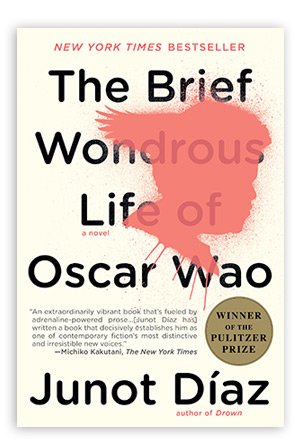
Junot Diaz's covers from Penguin. This is a new 'branding' for his books from his publisher and I like how they match (font, background) so that it becomes uniquely attributed to Diaz as author while also tacking onto a specific element and not being too busy in the front. And particularly I dig Oscar Wao's cover because it maintains the original outline of Oscar's face yet fits in more with the style of the rest of his books.

The Hunger Games series (U.S. covers). I like that even though the hero is a female she's not smacked onto the cover looking perfect and sorrowful. The symbolic nature of the designs illustrates how much the mockingjay pin/symbol plays throughout the series is important and the colors, as you may note, get lighter as the series goes on. From the bleakest of bleak in black, to red which can also mark the blood shed in Catching Fire, to the blue of Mockingjay that is soothing and calm not too bold like a navy blue but more a powder one gives some hope and shows the mockingjay not as pin but as a living bird in flight. Symbolism up the ying/yang! If you take a look at some of the international covers you will see some with a young girl in the woods of the first book or a young man and I think it takes away from the detriment when you can see the characters' faces for this particular book. The elements that signify the change and rebellion of Panem work well with the backgrounds, colors, and metaphors.
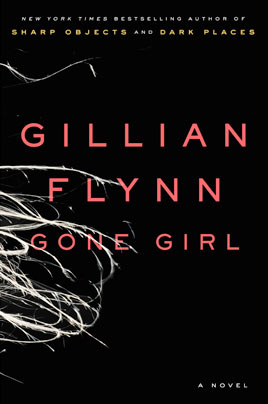
Gone Girl. In a word: creeptastic. The title itself is eerie and leads me to think nothing good, add a cover of a black background and strands of hair leads you to also think "not good." Gillian Flynn's previous books (Sharp Objects & Dark Places) also got a cover redesign to fit in with a kind of theme just like Diaz's publisher did for his. Hers are black backgrounds and again a single element tying into the content of the story and the representation of a dreary world and the people that reside in it.

Tampa (UK cover). Well, considering the content that UK cover is another note on the representation that is subtle yet all the more alluring. The innuendo is evident and works as a wink to the reader of what we can/can't say. Also, the pink! That color shirt and the open button hole hit the aspects of the protagonists unbridled and unashamed desire perfectly. Fantastic.

Lucy Variations. I like the cover because of the simplicity of it but also how the elements and colors work and how, unlike many YA covers, it focuses on what the character lost by showing her hands at the piano. With Lucy Variations the piano is at the heart of Lucy's story and it fits in while standing out from what else is out there for YA books.

Between Shades of Gray (original hardcover, U.S.). The wires, the ice, the one colorful sign of life growing through the snow/ice lends every bit of sorrow and hope to this tragic story. It enhances and symbolizes what Ruta's novel is, which is harrowing but able to find a brightness to it. Love it.
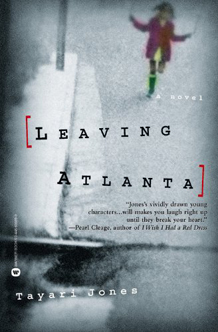
Leaving Atlanta (hardcover). Another cover that portrays the ominousness of Tayari Jones' debut well, especially with the font having a typewriter style which can be seen as dated (which the story is looking back at murders of children in Atlanta in the 1980s) to also reflecting the fact that this was a major news story. The grays and darker tones add to the bleakness of the story but then you have a cute child in a red jacket skipping down the street. This seems like the calm before the storm and definitely helps depict the innocence of children and the danger of the time.
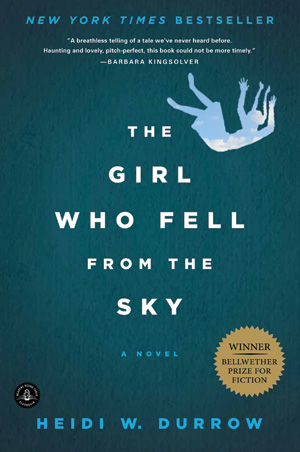
The Girl Who Fell From the Sky. This cover illustrates the content well and I'm a fan of teal in general. What the paperback copy does well is that it also includes the sky as the interior to the image of the girl falling, a nice touch. The book centers on the main characters coming-of-age as a teen being raised with her grandmother after her mother did a pretty brutal and tragic thing to her children. As sole survivor this girl is known as the girl who fell from the sky and survived and it's a hard title to carry as you're trying to come into your own. So the cover and title clearly illustrate the protagonists past and how that may define her future.
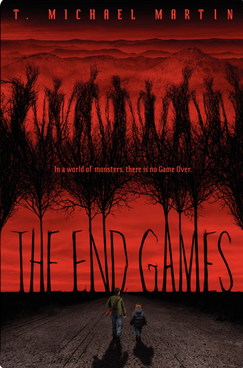
The End Games. When Mike first showed me this cover I was bowled over. The illustrations, the background, the horrible eerie things stretching out of the land noting how the terror can be outside and in your mind along with the red makes it a real standout. And you don't see as many illustrated covers these days. The two brothers, one older protecting the younger heading into the unknown is the epitome of what a good horror story should invoke.