
BLOG
#ArtistTherapy: Filling a Niche & Expectation
There's an expectation, a niche, in the artistic world and sometimes you fill it because you love it and often times you may not. What it comes down to is your passion and not filling others' expectations of what you "should" be creating.
"I create [insert material/genre], but I'm expected to create this..." A few weeks ago, I sat down to catch up with a musician/composer friend I met at a writers conference a few years back. During our chat, both of us being female, African American artists, expectation of what we create arose. My friend is a tremendously talented singer & songwriter and she is writing songs that would fit more in the "folk" realm. But, sadly, being African American this is not what is "expected" of her. Just like I get stares when I tell people my favorite genre of music is "alternative" or "rock." The expectation is that I "should" presumably enjoy hip hop, rap or R&B primarily.
My writing doesn't always deal with race. Not every story, essay, article, or blog post will specifically and indefinitely refer to the "struggle" of people of color. But that isn't to say that my work will never reference it either. If racism, sexism, or any -ism is relevant to the larger story I want to tell, you bet your a** it will appear and hopefully enlighten and entertain.
There's been and will continue to be discussion on the race issue. And perhaps this is the post that finally brings this to light. I have friends struggling selling pieces because the race issue isn't pertinent enough or because it makes those of other races feel "guilty" or because it brings up a history that people already "know" about but can't truly comprehend in this digital age. There's a struggle to create what you want to create because there are gatekeepers with expectations that your work should be "more" this or "less" that and it may not at all fit in with your perception or overall vision for the work.
The stories I am working on about an interracial family do not all stem from racism. For some characters it is a very real aspect of their day to day having grown up before and during the Civil Rights movement. For other characters it's more about identity which may be attributed to race but is not the sole proponent. For some pieces its all about familial relationships, strained and suffering. For some it's about romantic ones. But in the end, for me, not every piece I write will be filled with characters that are stereotypically this or going through a constant "struggle" of being a particular race. I want to create people who are real, living beings and not seen as other but seen as like. And it is in this vain that it can be hard to stay true to your art when the niche to be filled is something that's been done and has proven profitable, something that is assumed, something that is not at all like what you planned your piece to be but the expectation of what a specific group of peoples life is like.
For my friend it's been hard for her to break out when she's not pop, she's folk, she's voice and guitar and minimal. Yet the expectation & what is popular is that she should be Rihanna or Nikki Minaj or whomever is the flavor of the month and will sell. These artists and what they create is not her. And she emphasized this to me. She is not overly aware of her Blackness, but believe me we are aware. And perhaps because of this day and age we do not have it in us to speak to that specificity at this particular time and want to speak more to the point of being someone who has been heartbroken, insecure, distracted, not where they thought they'd be, scared, in love, and so on. These universal ties that can bring us closer to others across the board would be more helpful than ever pigeonholing ourselves over expectations. People are tired of books about homosexuals coming out but what about ones about homosexuals living life? What about books of ethnic characters being superheroes? What about music by the likes of POD a Latino band playing Christian/Hard rock? What about not fitting into a niche and creating one that fits you?
It all comes back to the whole idea of persistence, and also the larger scope of there being a demand. But you have to create to fill a demand that isn't even there. So make what you love. Make what fits in with who you are. And forget what others are creating or what the expectation is. It's about being true to yourself and your art at the end of the day because you are the sole representative for it in whatever form it comes in.
A Celebration of "Fried & True" at Ginny's Supperclub
Ginny's Supper Club hosted three NYC chefs, fried chicken, side dishes, and lots of love for Harlem and food with the release and celebration of "Fried & True: 50 Recipes for America's BEST Fried Chicken and Sides" published by Clarkson Potter.
On June 24th, a tinted and lavish Ginny's Supper Club, under the often bustling Red Rooster in Harlem, hosted a launch to the public and local press for Fried & True: 50 Recipes for America's Best Fried Chicken and Sides compiled by Lee Brian Schrager (with Adeena Sussman). Fried & True features about 100 recipes from chefs/restaurateurs/cooks around the country offering their take on fried chicken in addition to side pairings reflecting the variations of what people of different backgrounds think of when it comes to a historic dish that is steadily becoming part of the "new wave" of food trends.

Fried & True's origins stem from Lee's complete and utter love of fried chicken. Growing up on Long Island it was a staple meal in his home and also a treat purchased and delivered when his parents went out. In the Introduction Lee states that he often orders fried chicken whenever he's out rather than making it himself to taste what others have to offer and how they reflect a change in the perceived tried and true way to make this American classic. Lee's involvement and background in so many aspects of the culinary world, including being the founder of the NY Food & Wine Festival and Food Network South Beach Wine & Food festival, make him a huge name in the industry and someone with an enviable palate.

- Fried & True now out from Clarkson Potter
Three NYC based chefs were featured at the Fried & True celebration, as were their contributions to the book for the evening's menu. Marcus Samuelsson (owner and chef of Red Rooster) who not only greeted attendees but was also working, Elizabeth Karmel of Hill Country BBQ & Hill Country Chicken, and Harlem native with Southern roots Charles Gabriel whose restaurant Charles' Country Pan Fried Chicken was lauded by Lee and Marcus as being the best fried chicken in Harlem, let alone New York City.
Guests received a copy of the book along with tote bags from sponsor Mastercard. But the only way to get a real sense of Fried & True was in the food itself. Attendees got to try recipes from Samuelsson including his coconut fried chicken on a bed of shredded bok choy claw with toasted peanuts, pickled jalapeno, and fried chickpeas; in addition to Elizabeth Karmel's garlic cheese grits with candied country ham and Charles Gabriel's candied yams.
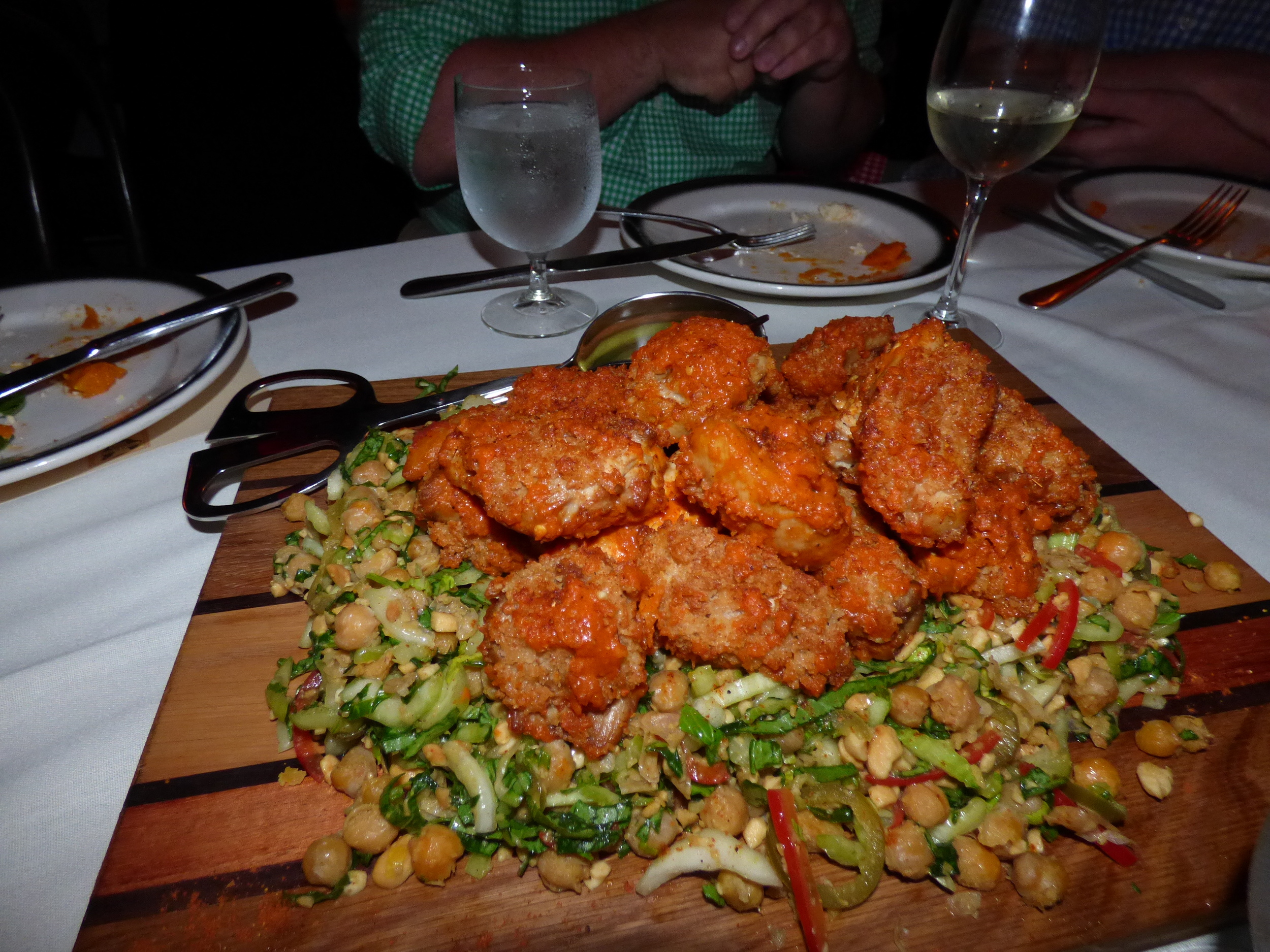
Each dish was brought out family style and there were mutterings/requests for more. Karmel, mouth full, complimented Gabriel on his candied yams (simple with only a handful of ingredients; "a staple to real Southern cooking," he insisted). And Gabriel became a fan of Karmel's garlic cheese grits with ham bits sweetened with a crust of granulated and dark brown sugar. Samuelsson's chicken had a kick as did the bok choy slaw that reflected his signature style of a twist on an American classic while adding in bits of Samuelsson's African and European roots.

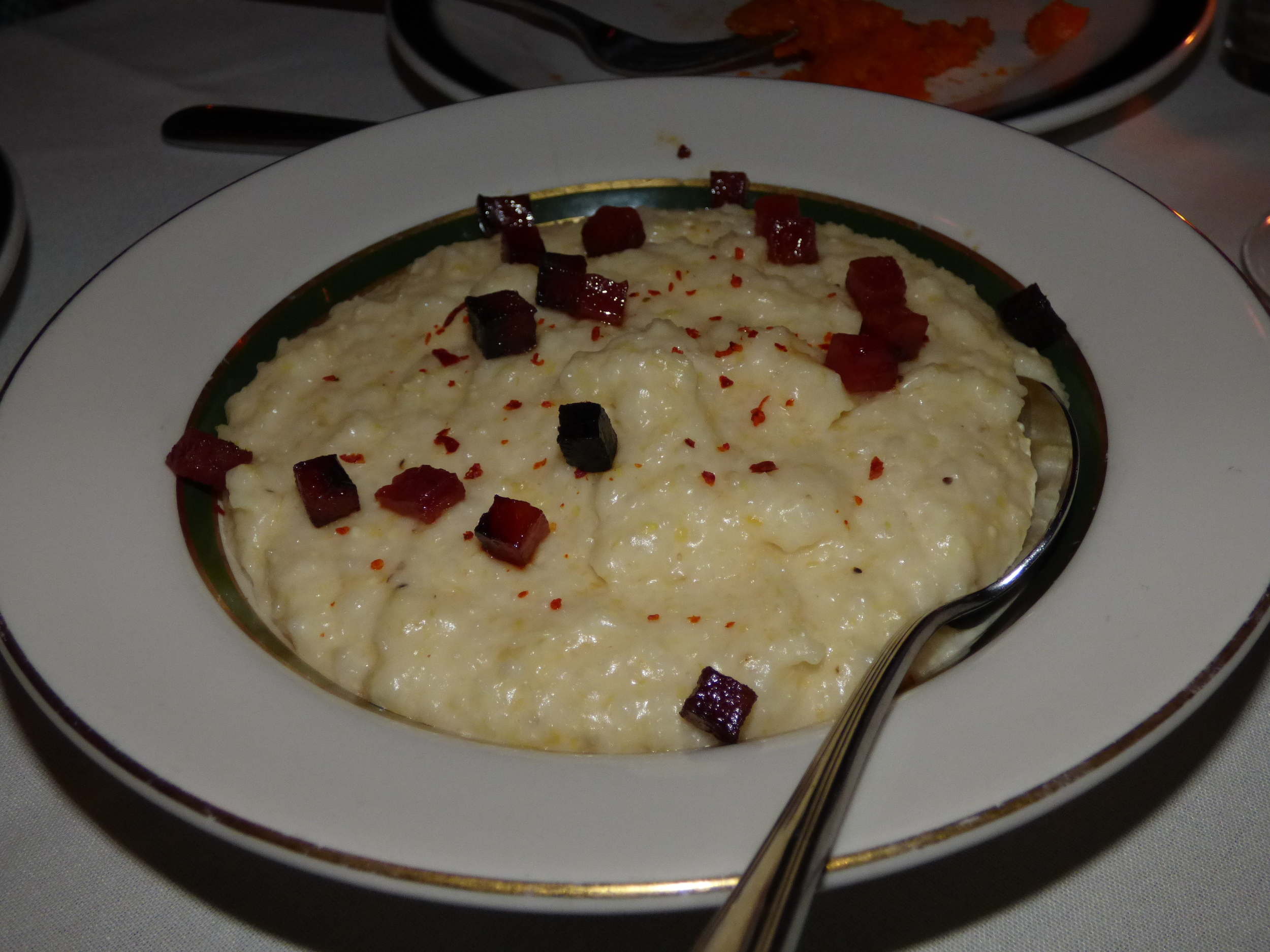
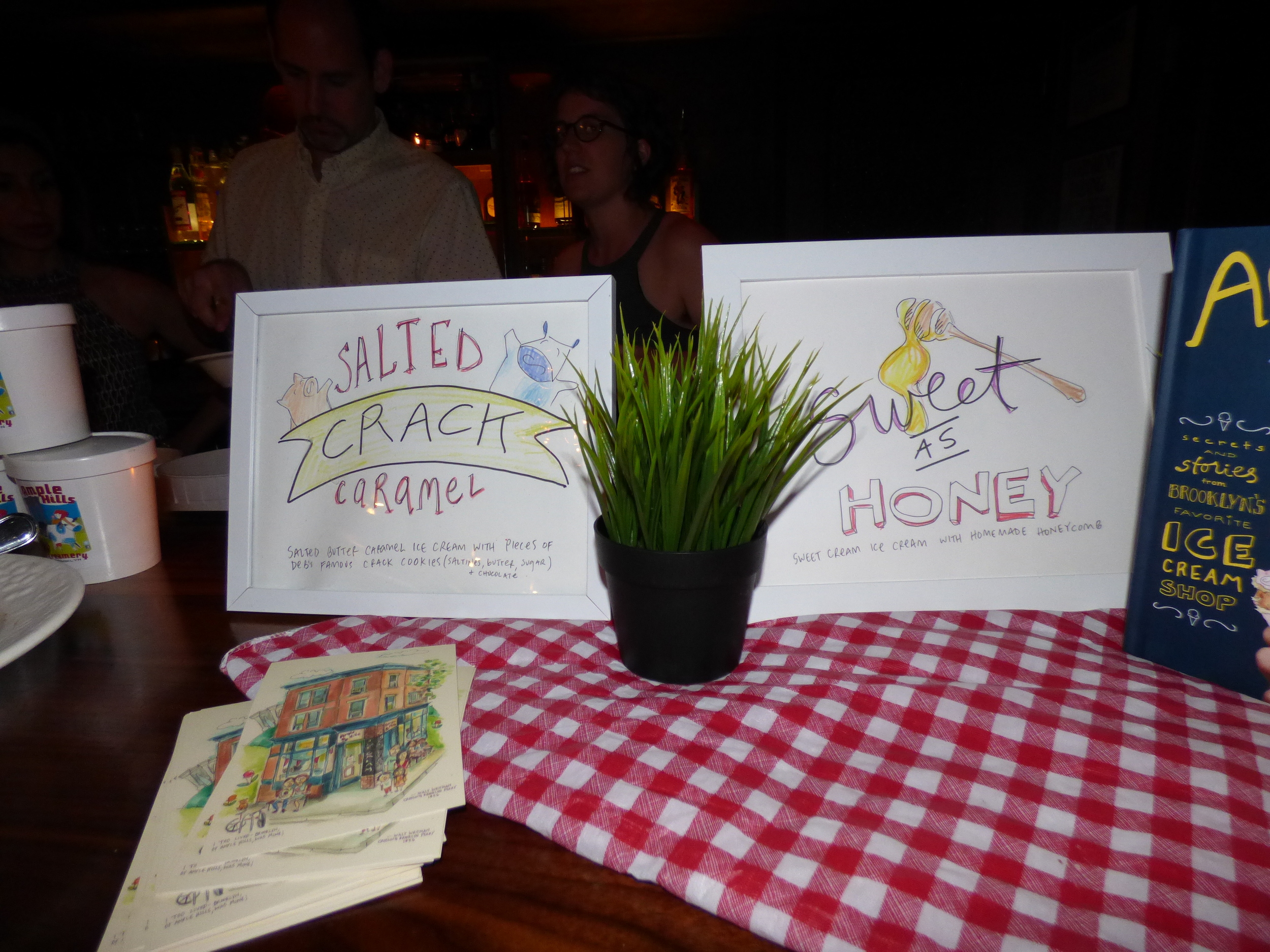
Brooklyn ice cream shop Ample Hills Creamery provided scoops of their popular flavors salted crack caramel and sweet as honey ice cream with toppings for dessert while guests enjoyed music from local artist Farrah Burns and her band.

Fried & True is split up into four sections: Southern Inspiration; American Originals; Pacific Rim Flavors; and Sandwiches, Wings, L'il Bites, and Special Diets. Some of the more heavily reflected regions for the recipes featured include the East coast (New York City has prominent coverage), the South(east), California, parts of the Midwest such as Chicago, and even Portland, OR.
Charles Gabriel being of South Carolina roots and having cooked with his mother at a very young age brings his wisdom and flavors to Harlem not just at his own shop but having been a chef at Copeland's in Harlem for a couple decades. He may be one of the few, if only, true Southern contemporaries bringing good ole down home fried chicken in a big ole cast iron (yes, you will need a cast iron as Fried & True notes in Fried Chicken 101) to make his chicken oh so crispy on the outside and juicy on the inside. Karmel's recipes also fit into Southern Inspiration and Samuelsson's contributions land in the American Originals section.
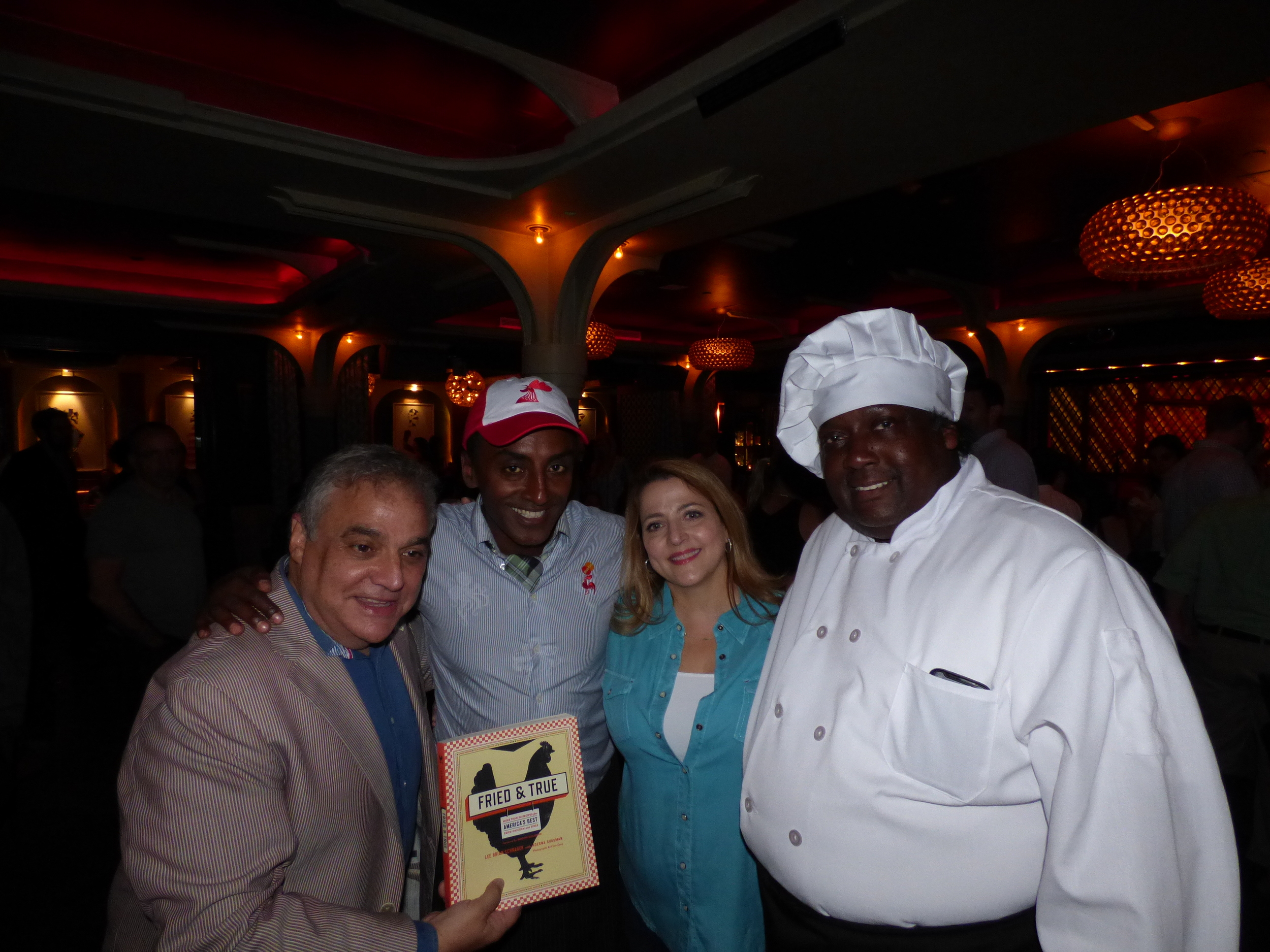
While Marcus Samuelsson may be considered the hot name and grand orator, Gabriel received the spotlight that evening and was someone anyone who hadn't know him before wanted to know. Lee said he absolutely had to have Gabriel's recipes in this book. Marcus echoed that when he first visited Harlem in preparation for his own restaurant that he was informed that he had to go to Charles' Country Pan Fried Chicken on 150th and Frederick Douglass, get some chicken, and then head to Marcus Garvey Park to watch the residents play ball. To him, the combination of watching local ballers and eating Gabriel's chicken culminated in the perfect Sunday.
Gabriel is a tall, shy man with dark skin and a great smile. Once he talks about chicken, about cooking, he opens up, more extroverted and more animated in his talk about enjoying what he does and waking up early and going to bed late. Even after this event he was going straight to his restaurant to prep for the next day and was very much looking forward to closing up for a week to enjoy a vacation and cruise with his family. Gabriel was stopped, repeatedly, during conversation by those wanting his autograph, wanting to know where his shop was exactly, and saying that they'd be back to Harlem going further north this time around and, even with full bellies, were excited to try his food. This made Gabriel grin even wider, surprised and humbled by the celebrity thrust upon him that evening.
Fried & True brings attention to the hot spots and the smaller spots. It even brought "low-key fried chicken lovers out of the woodwork" where the unifier is good, comfort food that is recognizable to many from their childhood. Like Lee says, fried chicken is becoming part of the American "culinary canon" and this celebration of Fried & True's release may be just the resurgence fried chicken and the places that serve it needed.
Interview with Chloe Stinetorf of Chloe Doughy (Delivering fresh and new cookie dough so anyone can feel like a high class baker.)
Chloe Stinetorf of the new cookie dough delivery service Chloe Doughy was kind enough to be up for an interview and also offer a discount to readers for their first month's subscription for her cookies of the month. From a name you can trust, definitely partake in these fine and kitchen-friendly cookies.
You know I love participating in the #NYCBakeSale and I have to say that #NYCBakeSale also has some of the best contributors and supporters in the nation. This year Chloe Stinetorf was kind enough to offer up a one month sample of her doughs at Chloe Doughy as one of the raffle prizes. I entered and surprisingly won! (I rarely win things.)
I was psyched to sign up for and receive the May doughs which included lavender lemon (and the chocolate chip staple that subscribers get every month along with the new flavor). Imagine my delight when I made the chocolate chip and got a chocolatey sweet slightly salty cookie all in one! And being that my computer broke down soon after making these cookies it served as a nice therapeutic solution while I was on hold with tech support.
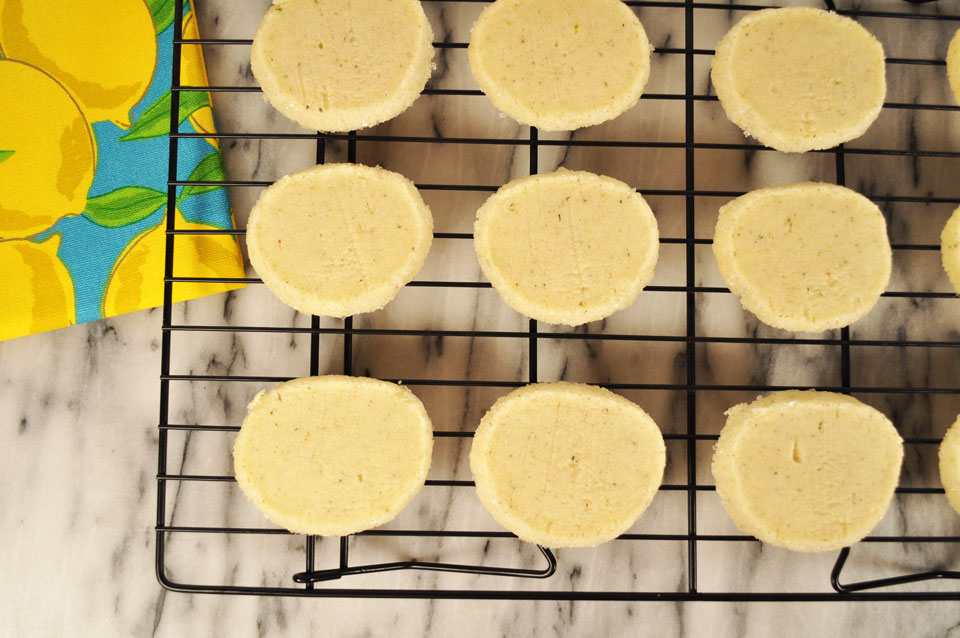
The following week I made the lavender lemon and once again was balled over by the subtlety of the flavors but how well they worked and the lovely crisp shortbread nature of this cookie. After this sampling I--and my co-workers whom I shared these cookies with--know that Chloe Doughy is the real deal and a new New York gem.
~~~~~~~~~~~~~~~~~~~~~~~~~~~~~~~~~~~~~~~~~~~~~~~~~~~~~~~~~~
A lot of people I've spoken to, and even for myself, say that baking started as a family endeavor, a kind of bonding time. This seems to be the case when it comes to you and the creation of Chloe Doughy in having baked with your grandmother in your youth. What is it about cookie dough that you think really strikes people or encourages these kind of memories and positive associations?
A freshly baked cookie right out of the oven tastes and smells delicious, and for many people that triggers happy memories of baking with family. I always think about my grandmother when I'm baking because she has taught me so many recipes and techniques over the years.
~~~~~~~~~~~~~~~~~~~~~~~~~~~~~~~~~~~~~~~~~~~~~~~~~~~~~~~~~~
Why deliver cookie dough? Why not deliver the finished product? Is it that you want to bring unique flavors to people in a way that is “less scary” to those that don't often cook/bake from scratch or a way to enhance the taste factor so that people can enjoy them fresh or are there other factors?
Baking makes me very happy, and my goal with Chloe Doughy is to share that joy with other people. Cookie dough delivery allows people to experience the delight of home baking without the hassle. At Chloe Doughy we say, "Skip to the fun part!" We also love inventing and sharing our unique cookie dough flavors of the month--the variety is exciting for our customers, and we deliver a product unlike anything they can find in stores.
~~~~~~~~~~~~~~~~~~~~~~~~~~~~~~~~~~~~~~~~~~~~~~~~~~~~~~~~~~
It seems that your cookie dough flavors are somewhat seasonally based. For instance, the lavender lemon dough (which my co-workers adored, by the way) feels very summery with the citrus and lavender fragrance. You’ve previously offered orchard crumble and maple snowball dough in the past during cooler months. So what may be in store as we head into a warmer summer and then into fall?
We're excited to announce our July flavor of the month, the Strawberry Liege! The recipe is based on our obsession with the traditional Liege Belgian waffle. Our Strawberry Liege recipe incorporates crunchy Belgian pearl sugar, a crumble topping and sweet fragrant strawberries. We often incorporate seasonal produce and ingredients in our special monthly doughs, and right now strawberries are in season! Our August cookie dough flavor hasn't been announced yet, but we'll give you a hint, it's a tribute to our favorite August holiday . . . Shark Week!
~~~~~~~~~~~~~~~~~~~~~~~~~~~~~~~~~~~~~~~~~~~~~~~~~~~~~~~~~~
Does inspiration hit you out of nowhere or is there a solid something that tethers you to an idea you want to pursue? What inspires you each month for your flavor(s) and how far in advance do you plan your cookie doughs?
I'm often interested in working with a specific ingredient first, and I start there and work my way out, developing a dough that complements that ingredient. For instance, our Maple Snowball cookie for January was inspired by my love of pure Vermont maple syrup and I knew I wanted it to be crunchy and incorporate powdered sugar, and our Glazed Earl Grey came about because I wanted to develop an orange flavored cookie that would pair well with breakfast tea. I'm usually working on 4-5 recipes at once, it takes a long time to get the flavor, consistency, and texture just right. Experimenting with recipes in the kitchen is my favorite part!

~~~~~~~~~~~~~~~~~~~~~~~~~~~~~~~~~~~~~~~~~~~~~~~~~~~~~~~~~~
Chocolate chip is considered the ‘base’ of cookies, I think. It’s simple but quite effective especially when done right. And I have to say of all the store bought, bakery fresh, and homemade chocolate chip cookies I have tasted Chloe Doughy’s is the best. What do you think helps to make a “basic” cookie stand out without too much accessorizing?
Thank you, it's nice to hear that because I've been working on our Classic Chocolate Chip recipe for years! Chocolate chip cookies come in all varieties: crispy, chewy, thick, thin. The list goes on forever! I think the best chocolate chip cookies have something special and memorable to them, for instance I love Tate's cookies because they're so buttery and crispy; there's no other crispy cookie quite like them. For our recipe, I wanted a cookie that was soft and full in the middle and crispy at the edges and bottom. I love having different types of bites in the same cookie! The qualities that make our Classic Chocolate Chip cookie special are also enhanced by the immediacy of eating them fresh out of the oven, which is an important part of the Chloe Doughy experience.
~~~~~~~~~~~~~~~~~~~~~~~~~~~~~~~~~~~~~~~~~~~~~~~~~~~~~~~~~~
What is the end goal for Chloe Doughy? To expand in terms of the amount of doughs or to be able to reach a larger community outside of NYC? Hosting more classes? Or does the hope for the Chloe Doughy brand go beyond that?
First, I want to grow our local NYC business so that we're able to deliver to all five boroughs! I'd also love to sell our cookie doughs at local markets and grocers. We're also working on a shipping option for overnight delivery out of state (stay tuned!) and we're expanding our baking class schedule as well. Our cookie doughs make people happy, so I'm excited to expand and reach more customers.

~~~~~~~~~~~~~~~~~~~~~~~~~~~~~~~~~~~~~~~~~~~~~~~~~~~~~~~~~~
I really like that you have baking classes catered to children of various ages. Many bakeries tend to go after the older sect, but you offer cookie dough classes for both groups. What was the decision for that and, also, what do you aim to help students with in these classes?
My mother is a first grade teacher and I've taught in her classroom a lot over the years--everything from baking to art, even some math! I love the early elementary school age range--they're so full of energy. Baking with young children is a lot of fun, and they love measuring ingredients, whisking, and rolling out dough. I remember baking from a very early age with my family, so it gives me joy to teach other young bakers. I want children who take my classes to become adventurous and bake at home with their families, I also want them to appreciate the care that goes into baking and how special it is to have something homemade.
~~~~~~~~~~~~~~~~~~~~~~~~~~~~~~~~~~~~~~~~~~~~~~~~~~~~~~~~~~
Beyond Facebook, Instagram, Twitter, and Pinterest are there other places online or even at local food fairs or stores where people can find Chloe Doughy products?
Join our mailing list to stay in touch! We always announce when we're going to be selling cookies or dough at local fairs and special events.
~~~~~~~~~~~~~~~~~~~~~~~~~~~~~~~~~~~~~~~~~~~~~~~~~~~~~~~~~~
Chloe is also, very generously, offering a $15 discount to readers for your first month of cookie dough when you sign up for Chloe Doughy. The code is: JENNIFERBAKER
Yup, I'm a code! Thanks so much again, Chloe!

Wesleyan Writers Conference 2014 (Pros & Cons)
Last week I attended the Wesleyan Writers Conference in Middletown, CT. I met cool writers, heard lots of variations on writing techniques, and read many shorts, and ate lots. Here's my summary of pros & cons for the conference in case you may be considering what type of conference may work for you.
For almost 60 years the Wesleyan Writers Conference has been held for several days on the Wesleyan University campus in Middletown, CT and this year was my first time attending. When applying I was aware of the distinct format of this conference in that workshops were not conducted. Instead there were classes on craft lead by faculty for an hour and fifteen minutes over the course of 4 days. In addition, attendees registered for the entirety of the conference would get a one-on-one manuscript consultation with someone on faculty in your genre of choice (poetry, non-fiction, or fiction).
So let's break down the Pros of the conference:
- Community. As I told many other attendees one of the best things about a conference is that I have met many dear friends, fellow artists, and critique partners through them. For several days I get to engage with other artists who are serious about their craft, interested in discussing it and learning more about you, and also enamored with all things literary. I had great conversations with people and learned much from doctors, medical assistants, and students about life that I may not have otherwise.
- Atmosphere. The Wesleyan campus is beautiful, clean, and green. The spaces on campus were open and had many windows. The last two days of the conference it was bright and sunny so as to truly reflect the expansiveness of the campus while also taking in the quaint community that is quiet overall and very residential.
- Faculty. In the classes the faculty structured for these few days there was a lot they wanted to pack in a short amount of time, which I admired. Each member really wanted you to get the bang for your buck in trying to not only examine texts to better your own but also giving exercises to hopefully get those neurons firing. The one-on-one consultation I had with Roxana Robinson was quite helpful. While Roxana may have 'rules' for good prose she also stands by seeing what the writer's intent was. It was one of the first things she asked me when we met. "What did you intend at the end of this piece because this is what I got." And that is key for me.
- Staff. Anne Green was quite friendly when she and I spoke. There had been delays and mishaps in terms of actually getting things settled but Anne is very kind and you really feel like she knows and cares about what you are doing, which is evident since she's been running the conference and the writing department at Wesleyan for years. When she and I met late Wednesday evening she gave me a big ole hug.
- Food. Depending on your dietary restrictions this may or may not be a positive. I would like to note that there were vegetarian options at every meal. Vegan was a bit harder only because of the cheese element in many dishes, but otherwise it was decent. However, if you are gluten free it may be a bit harder as breads were available at every meal and for the first two breakfasts this was a large portion of what was available. But there was always fruit and yogurt and grains as well, as well as vegetables, and sweets! The cost per day for food is over $60 and this, as I was told, was because they pay the food staff very well at Wesleyan.
- Downtime. Because there are no workshops there's no pressure to read and critique a handful of manuscripts prior to the conference. So there's more time for you to go to classes or to lounge around and do your own thing. By days 2 & 3 I did more of the latter to return to an empty suite and write. In classes you did get readings (short ones no longer than 6 pages) and perhaps even a writing assignment but overall there was no need to carry a stack of pages and go through each one repeatedly to discuss them each day.
Other specific highlights for me were Tracie McMillan's talk--which I had hoped would be better attended or better advertised--about Food & Writing and turned into more of a discussion on how to use food to write about other things like ethics as Tracie does. Amy Bloom's reading and talk where she kept it very real insisting on persistence when it comes to being successful as a writer (meaning getting published). Another was Wesleyan alum Alexander Chee and former Wesleyan instructor Paul La Farge's reading on the last full day as their pieces had lots of humor in them. Also Salvatore Scibona's class, which delved deep into the lines and how to edit them better while focusing on specific attendees work kept people enthralled and returning to his class each day.
Moving on to the Cons:
- Connection. Since this isn't my first conference I did have something to compare it to. And again, I applied with the knowledge that there'd be no workshops. I was glad for this particularly because I'm in a workshop at home and steadily reading my CPs work. So a break was nice. However, I did notice that in not having a workshop there was a lack of connection. Yes, I met many cool participants who are fun people and we had great convos but I also realized how much you connect with other participants as well as the instructor in an actual workshop. Often, I was simply a story to a person until we met at the conference and felt like we knew each other more. I have connected with authors I admire because they read my work and heard how I discussed others in class. There's an impression made when you sit with a group of people for several hours a day reading something that they're passionate about. And in Wesleyan catering more to one-on-one sessions than the workshop environment there's a disconnect that I realized I missed. Roxana Robinson was helpful in reviewing my work and was happy to discuss it for as long as I needed (within the 30 minute time frame) but it felt as though I had handed her a check to do a job.
- Boarding. I will also admit that I am biased. For my undergrad and graduate degrees I lived with my mom and later my (now) ex-husband and commuted to and from classes. So whenever I go to a conference and they have boarding it is often on campus and this is when I'm introduced to dorm life. The boarding was a nice set up at Wesleyan. It's a suite with a living room, kitchen, and five separate bedrooms (that lock). Oddly the toilet is separate from a sink that is separate from a shower. Don't ask me why. And in no way will I ever think that sharing one toilet or shower with five people is a good thing. No matter if you are in an industrialized or indigenous society, there should be limits. The beds: hard as rocks. The pillows: so thin they're non-existent. The walls: thinner than those in any NYC apartment I've lived in! The locks: in stereo. You could hear everything your suitemates did from pulling out a chair to turning in bed. Now, we were warned about the thin pillows but the beds were insanely high for all except for one writer who had the build of an Amazon. Before this becomes a Yelp-type rant lemme say that there's not much that could be done because this is a place for teens. I'd say if you can't adapt to your surroundings, then don't do the dorms.
- Scheduling. Things ran late. And it seemed that the focus was on faculty and their thoughts and not on the participants' work. The participant reading was held after 10pm on the last full day of the conference and fellows yet no faculty and only the collegiate staff members were in attendance. Even those who were there for support steadily drifted away after the third or fourth person read tired and ready for the hard mattress. Faculty readings were at 8pm, fellows at 9:30pm and mind you we still had some work to do in classes. There was always something from classes to panels to a craft talk to dinner to a reading with little time in between to do it all. At other conferences I've been to participant readings were in the afternoon so faculty could attend and spread out over a couple days so more people could read. Since this was one of the few times I could hear other participants work I was interested in learning more, not less and not drifting off to sleep while someone was in the middle of a sentence or stanza.
- Organization. Once here, for the most part, it seemed that things were in order. Beforehand not so much. I went weeks before knowing if I got aid and then there was confusion on what aid I was getting and how much. And then I had to get everything together within 3 weeks when I should've had 2 months. There was also confusion in the dissemination of information once here in terms of when things would be available, if I'd get more toilet paper in my suite (thankfully one of my suitemates found some [Thanks, Jane!]), where was this class, how many handouts were needed, did everyone know that the location for dinner had changed, what room was this in, can I use a phone?!? So some hiccups along the way. But Anne always availed herself if and when she could and the staff of Wesleyan students and grads tried hard to accommodate even if they weren't sure of what to do.
- Diversity. In terms of faculty it was lacking, and this includes the fellows who aided in reviewing manuscripts and had craft talks. Johnny Temple (publisher of Akashic Books) was one of the only people to bring up the diversity issue mainly in terms of the lack in publishing as an industry as well as writers. Even the panels, lacking. Beyond Alexander Chee there was not much in the diversity department and it showed. I'm not saying all conferences I've been to have been better at this but there's been at least some indication of such and in showing more diversity in faculty and panelists I can guarantee there'll be more diversity in registrants.
I also want to add that Wesleyan offers scholarships and it's through a very generous one that covered half of my tuition that I was able to attend. In terms of whether or not you'd want to attend I think that comes down to you and your wants/needs. As an introductory conference it may be a good one with classes from faculty that serve as mini MFA or English Lit/Craft sessions for anyone who may be unfamiliar with some details and authors and how people do specific things in their work. I think for anyone who really wants to focus on their work it may not be as helpful depending on who reviews your manuscript and how much time you'd like to delve into it if you feel it needs work. Sometimes hearing a few opinions rather than just one can be more beneficial. I am glad I experienced this conference and met funny, cool, and talented writers. And, despite the pros and cons, getting time in this community and away from the hecticness of home is never a waste.
#ArtistTherapy: Subjectivity Can Be Hard to Understand
While I've always known art was subjective I didn't truly realize how much so until I started querying agents and saw that word come up repeatedly in form responses or feedback. The world is subjective and you have to figure out where you fit in but also why you produce the art you do.
"Maybe I'm not your audience..." You've heard this or said it. Let's not argue, I'm sure you have.
This is subjectivity. The thing that makes people wonder why books that are lauded get so much praise when he/she may think "It's alright." Subjectivity is what allows some books to be critically praised and not sell well and vice versa. It's why many things aren't made public and why others are. And subjectivity is not an easy thing to come to terms with as an artist.
Say you've workshopped a piece of writing or got feedback on an illustration or arrangement that was helpful. You revised as far as you could and ultimately got the "okay" from those whose opinion you trust. The work feels finished. So you start sending it out to others for publication or showings/shows (what some of us will call 'validation') and you get back 'no's. And not necessarily concrete ones either. You are not necessarily getting back reasons for why this isn't working or being accepted, but more so you're seeing a trend of "not for me/us" or "I can't champion this the way I'd want" or "didn't grab me" and with that "perhaps someone else may feel differently as this is a subjective business."
Now, you may hear/read this more in the writing world than others but subjectivity applies in all things. Where some like romance novels others like action, where some like their thrillers dark some like them PG-13 with some humor. Where people like sarcasm others like friendly humor and so on. We have our tastes and in all honesty nothing is universal. There is no universally amazing film, book, song, painting. Yes, the Mona Lisa is loved and revered my many. Shakespeare is a man whose work will more than likely always be taught in schools and honored and adapted. And don't even get me started on The Beatles or the Jackson 5.
My point is when I submit work I have gotten the "not for me/us" "not our market" "someone may feel differently" "I like it but..." and where you are attempting to champion it it seems as though you're getting sucker punched repeatedly when there's a non-distinctive reason for the rejection. But why you may be wondering and hell I do wonder it myself. As artists we're used to getting concrete feedback for how to improve, so what is this "subjectivity" business? What do you mean you can't tell me why? From one end it is hard to comprehend. You've put months, years, decades into this work and it's good. You know it's good. It's won contests, gotten praise, portions may have appeared elsewhere, so why is the whole not working? And it comes back down to the S-word and also the L-word (love). It wasn't until I became an even more voracious reader that I would sort books I read into categories such as: like but didn't love, LOVED--tell everyone(!), didn't like, okay and I see the merits of it, and so on. When you absorb as much work as you're producing you can see that there's a precedent and that even you do it as well. If given a book you liked would you champion it? Nope? Well then you can't ask someone else to either.
I'm not going to get into the other aspects like the monetary or the "trends" or otherwise. I'm looking at this as someone who's gotten (and will get more) rejection but who has also had responses of "loved this." I'm here to tell you that subjectivity will be something that keeps you back but will also push you forward. The phrase "there's something for everyone" is not moot, it's real. People fall in love with new work all the time.
So we come back to the L-word. Do you love it? Because that's what matters. I understand, believe me I do, that putting time and effort into something you love but others don't seem to may feel like a waste. It may seem like your time is not being put to good use but it is. Truly it is. Author Maggie Stiefvater revisited a work she had an idea for and attempted but it did not work at the time. Years later and with success in other works she pursued it again because, you got it, she loved the idea and also felt better equipped to make it something that worked. There are authors who shelve that first book (or books) and sell their third, fourth, or fifth and afterwards whip those other ones out and say, "Hey! Happen to have these too. Wanna look?"
Subjectivity can be a somewhat ugly word or a disheartening one to an artist. But it doesn't mean you work doesn't have merit, it simply means you have to push harder to find a home for it. And maybe the home isn't clear but the progress and work put into it is because when you next create perhaps subjectivity won't be what you see in responses but "yes," a resounding "yes."